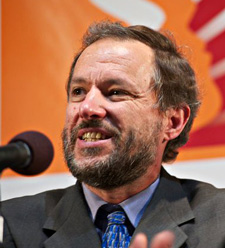
Global Big Brother and the Snowden Hollywood chase

By Richard Falk

The post below is a major revision of another piece on the Snowden Affair that was published in AlJazeera English recently. I have dwelled on the pursuit of Snowden because it raises such vital issues of principle, but also because so much of the public discourse has proceeded on a mistaken understanding of the applicable international law. Beyond the legal guidelines on extradition and asylum that are applicable, there are considerations of world order: protecting dissent and pluralism in a global setting in which the principal political actors are sovereign states that increasingly rely on secrecy and security rationales to constrain democratic open spaces.

What Snowden did was to expose this dynamic of constraint in relation to secret surveillance programs administered by private, for profit, contractors. Also exposed was the ‘Global Big Brother’ implications of extending surveillance to foreign societies and their governments. It is these questions that should receive our attention, and the Hollywood circus chase of Edward Snowden should cease for humanitarian and political reasons.

***********************

I find the discourse surrounding the Snowden Affair bewildering. The latest reports suggest that the United States is using maximum political leverage, including coercive diplomacy, to discourage small Latin American countries from granting asylum to Edward Snowden. It is also complaining that Russia is giving Snowden ‘a propaganda platform’ and expressing its ‘disappointment’ with China/Hong Kong for its earlier refusal to expel Snowden back to the United States to face charges once his passport was cancelled.Read More »

Humankind 2050: Making peace with our futures

By Johan Galtung

Keynote Speech, World Futures Studies Federation 40th anniversary – Bucuresti, România

Future studies, like peace-development-environment studies, is an inter-disciplinary, inter-national effort to get a grip on key issues; divided into preferred futures–utopias–whose?; predicted futures–forecasting–who does it for whom?; and future practice–scenarios bending the predicted toward the preferred–by and for whom?

The title of Ravi Morey’s Looking Backward: 2050-2013 catches future studies in a nutshell: exploring intermediate stages between a fully democratic world government and our 2013 present. The road may pass through a bankrupt USA bailed out by a democratic China in 2025. Some may argue that is already happening, with China – more democratic than the West knows – being creditor No. 1, and the USA – more bankrupt than the USA admits – debtor No. 1; Nos. 1 and 190 among 190 countries.

Like in 1967, in Oslo, for the predecessor organization Mankind 2000 this keynote is on international futures. Preferred futures:Read More »

Political infernos: United States, Turkey and Egypt

By Richard Falk

Written June 28, 2013

Prelude

To begin with, I know of no truly mature political democracy on this, although to be sure some rest on a more stable political base than others. Most importantly, some forces of opposition despair of ever succeeding by democratic procedures, while others pin their hopes on the next election, or the one after that. Some democracies have greater economic stability or can boast of high growth rates, possess a larger private sector and bigger middle class with more to lose, than others. Some states are more vulnerable to foreign interference than others, and some have formidable foreign enemies that seek regime change or something worse.

Perhaps, more victimized than any most modern societies, Germany devastated after World War I was caught in the midst of recovering from a humiliating military defeat accentuated by vindictive victors, a resulting economic depression featuring high unemployment and runaway inflation. Its pathetic enactment of liberal democracy could neither find credible solutions nor adopt principled positions. It should not be surprising that an extreme form of political polarization emerged in response, producing disastrous results not only for Germany but for Europe and the world: Communism versus Fascism. Battles raged between these antagonists in the streets of German cities, and the Nazis emerged triumphant even at the ballot box, helped by the complicity of cartelized big business and the ethos of the Bavarian elites hostile to any hint of democratic politics. The rest is history.

Today, there exist an assortment of deeply worrisome encounters between political extremes brought on by a range of conditioning circumstances. As a first approximation I would mention three disturbing instances, each distinctive, yet each afflicted by destructive polarized politics: Egypt, Turkey, and the United States.Read More »

Today the world was blessed with a new hero: Edward Snowden

By Jan Oberg

Spontaneous thoughts at having seen this interview three times in a row.

One moral individual standing up for true democracy and freedom against one of the most evil systems the world has ever seen.

The Guardian: “Snowden will go down in history as one of America’s most consequential whistleblowers, alongside Daniel Ellsberg and Bradley Manning. He is responsible for handing over material from one of the world’s most secretive organisations – the NSA.

In a note accompanying the first set of documents he provided, he wrote: “I understand that I will be made to suffer for my actions,” but “I will be satisfied if the federation of secret law, unequal pardon and irresistible executive powers that rule the world that I love are revealed even for an instant.”

I am deeply moved by Edward Snowden. Very deeply. Such civil courage. Such moral awareness. Such knowledge. Such intellectual clarity. Such determination combined with the humility of serving a higher cause.

Do I at all understand what this one single, determined individual is up against? How he dares? No, I don’t think I do. It is too great, too unique, too rare in a world of so much opportunism and “somebody else must do what must be done”.

I’m reminded of Gandhi’s dictum that “A burning passion coupled with absolute detachment is the key to all success.”

Today the world was blessed with a hero of such proportions that it is hard to believe it is true. As long as there is an Ellsberg, a Manning and now a Snowden – and thousands of other courageous unsung heroes fighting for a better world, I will not abandon my hope.

For years I have ended my courses and public lectures by saying that I don’t believe much in peace movements but I believe that every human being is, potentially, a peace movement. Snowden is yet another living proof of this.

– Jan Oberg

On Barack Obama’s re-election

By Richard Falk

We share with your editorial (Nov. 11, 2012) the view that one of President Obama’s “singular contributions has been his vision of a world without nuclear weapons.” We would go further, and suggest that realizing this vision would ensure Mr. Obama a legacy of honor, not only for American, but for the world. Your editorial adds a caveat that nuclear disarmament “is a lofty goal that would not be achieved in his second term, or maybe for years after this.”

We dissent from this bit of conventional wisdom that almost always accompanies the affirmation of the goal, almost taking back what was so grandly proposed. In our view there has rarely been a better time to initiate a negotiated process of phased nuclear disarmament, and there is no reason that such a process should be stretched out over a long period. Read More »

EU Commission supports manipulative research for post-democracy

By Johan Galtung

How do the elites of declining empires react? One answer is demoralization. Like 26,000 annual acts of sexual harassment in the US Army leaving little time for killing; and one US soldier on active duty committing suicide every 18 hours–higher than combat deaths–the figures for veterans being one every 80 minutes. Or else, simply giving up empires–like the colonial powers did before and after the official abolition of colonialism (UN Charter Art. 73). Like Moscow outside and inside the Soviet Union, copying England with a Commonwealth of Independent States. Like the USA is partly doing, and partly not, hanging on to the last countries willing to kill for them, like Canada, Norway, Japan, Georgia. And partly not, working on imperial strongholds in Africa and the Pacific; doing the long distance killing themselves.

But what do such dubious elites do with their own peoples? Wise elites wash their hands off imperialism, declare it passé, a mistake, retool their economies for less dependence on resources and markets from and in their peripheries that now process the resources themselves for themselves and others. Read More »

US policy weakens Iran’s pro-democracy movement

By Stephen Zunes

While the outcome of the Iranian elections scheduled for June 14 may be hard to predict, it will make little difference as long as power remains firmly in the hands of Ayatollah Khamenei and other hard-line clerics. Indeed, while there are contending factions vying for the country’s relatively weak presidency, the narrow ideological spectrum within which candidates are allowed to run for public office offers little hope for change — at least through the electoral system.

Following the 2009 election, in which the incumbent right-wing president Mahmoud Ahmadinejad was declared the winner despite his apparent loss to the popular reformist Mir-Hossein Mousavi, the people of Iran rose up in a popular civil insurrection, which was brutally crushed.

While it is hard to guess how soon democracy will come to Iran, the government’s theft of the election and subsequent crackdown — shattering the illusion many Iranians still held that they could work within a rigged political system — may have brought that day closer. Read More »

Ending perpetual war? Endorsing drone warfare?

By Richard Falk

That President Obama chose on 23 May to unveil his second term cautionary approach to counter-terrorism at the National Defense University epitomized the ambiguity of the occasion. The choice of venue was itself a virtual guarantee that nothing would be said or done on that occasion that challenges in any fundamental way the global projection of American military power.

Obama’s skillfully phrased speech was about refining technique in foreign policy, achieving greater efficiency in killing, interrogating the post-9/11 war mentality, and all the while extolling the self-mystifying glories of American exceptionalism. That is, only the United States, and perhaps Israel and NATO, possessed an entitlement to use force at times and places of the actor’s choosing without consulting the UN, respecting the constraints of international law, and heeding the admonition in the Declaration of Independence to show “a decent respect for the opinions of mankind.” Read More »

Destroying Libya and world order

By Francis A. Boyle

DESTROYING LIBYA AND WORLD ORDER
The Three-Decade U.S. Campaign to Terminate the Qaddafi Revolution
by FRANCIS A. BOYLE
ISBN: 978-0-9853353-7-3
$18.95 / 212 pp. / 2013

It took three decades for the United States government—spanning and working assiduously over five different presidential administrations (Reagan, Bush I, Clinton, Bush II , and Obama)—to terminate the 1969 Qaddafi Revolution, seize control over Libya’s oil fields, and dismantle its Jamahiriya system. This book tells the story of what happened, why it happened, and what was both wrong and illegal with that from the perspective of an international law professor and lawyer who tried for over three decades to stop it.Read More »

Meanwhile, Manchester United…

By Johan Galtung

It usually came at the end of BBC broadcasts: now Sir Alex Ferguson is up front, main headline on the International Herald Tribune, first page. Truly impressive, 27 years as Man U coach and manager, sorry CEO; this is now a business enterprise owned by the Glazer family in Florida and the news of his retirement shock its shares at the New York Stock Exchange. Where have all the sports gone?

Up comes the Iron Lady, Margaret Thatcher, with mainstream press harking back to years of greatness centered on strong personalities. She was with Ronald Reagan part of the mid 1980s counter-revolution, breathing short term life in stagnant economies through privatization, busting trade unions, de-industralizing, laying regions of their countries waste, crippling welfare states – ”Rust in Peace” they say. When accused of selling the family silver by privatizing, she said: Yes, back to the family!
Where has all the silver gone?

But she kept the Kingdom United by letting a hunger striking Irish freedom fighter die in prison, and, like Ronald Reagan, Margaret Thatcher showed the colors and sent the army for some islands, Malvinas-Falklands for Thatcher (over Reagan’s mild protest, Monroe territory), Grenada for Reagan.
Where have all the empires gone?Read More »