Democrats share the blame for tragedy of Iraq War

By Stephen Zunes

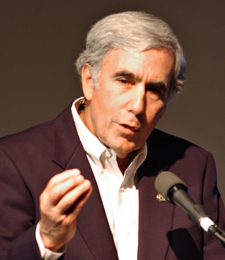
The Democrats who voted to support the war and rationalized that vote by making false claims about Iraq’s WMD programs – a minority of Democrats, but much over-represented in Democratic leadership councils – were responsible for allowing the Bush administration to get away with lying about Iraq’s alleged threat.

Here on the tenth anniversary of the Iraq War, it is important to remember that it was not just those in the Bush White House who were responsible for the tragedy, but leading members of Congress as well, some of whom are now in senior positions in the Obama administration.

Continue reading at truthout

The Iraq War – 10 years later

By Richard Falk

After a decade of combat, casualties, massive displacement, persisting violence, enhanced sectarian tension and violence between Shi’ias and Sunnis, periodic suicide bombings, and autocratic governance, a negative assessment of the Iraq War as a strategic move by the United States, United Kingdom, and a few of their secondary allies, including Japan, seems near universal.

Not only the regionally destabilizing outcome, including the blowback effect of perversely adding weight to Iran’s overall diplomatic influence, but the reputational costs in the Middle East associated with an imprudent, destructive, and failed military intervention make the Iraq War the worst American foreign policy disaster since its defeat in Vietnam in the 1970s, and undertaken with an even less persuasive legal, moral, and political rationale.

Most geopolitical accounting assessments do not bother to consider the damage to the United Nations and international law arising from an aggressive use of force in flagrant violation of the UN Charter, Read More »

Iraq and the betrayal of a people – Impunity forever?

By Hans von Sponeck

Iraq’s recent history includes two far reaching events, on the 2 August 1990 Iraq’s invasion into Kuwait and on 19 March 2003 the US/UK invasion into Iraq. Whether political leaders will draw lessons from these events will be, at best, questionable. Iraqis continue to be wronged. Danger to life and turmoil remain a cruel part of Iraq’s reality in early 2013. The collective suffering of a nation is visibly all pervasive. It can not be hidden.

The Iraqi puzzle of life confirms an endless number of tragedies
Ethnic tension and sectarianism have become a major element in Iraqi politics since the US/UK invasion of 2003, a polarization of inter-group relations  Iraqis had not known before. This explains much of the existing hideous crime including murder, kidnapping, property destruction and, most noteworthy, the deteriorating relationships between Baghdad and the three northern Kurdish governorates.

Since the years of war, sanctions and occupation, Iraq’s once state-of-the-art medical system has all but collapsed. Malnutrition and diseases, almost forgotten in Iraq, such as respiratory infections; measles; typhoid fever and tuberculosis have re-emerged on a large scale. The planned destruction of water and sanitation facilities, especially in the 1991 war, and recurrent drug shortages, throughout the period of sanctions and after the 2003 invasion, promoted significantly ill-being, morbidity and mortality in the country (WHO). Read More »

Envisioning a world without nuclear weapons

By Richard Falk

Book Review

ZERO: THE CASE FOR NUCLEAR WEAPONS ABOLITION
By David Krieger (published in 2013 by the Nuclear Age Peace Foundation); $14.95

I have known David Krieger for the past twenty-five years, and he has never wavered, even for a day, from his lifelong journey dedicated to ridding the world of nuclear weapons and the threat of nuclear war. If I were given to categorization, I would label such an extraordinary engagement with a cause as an instance of ‘benign fanaticism.’

Unfortunately, from the perspective of the human future, it is a rather rare condition, posing the puzzle as to why Krieger should be so intensely inclined, given his seemingly untraumatized background. He traces his own obsession back to his mother’s principled refusal to install a bomb shelter in the backyard of their Los Angeles home when he was 12 years old. He comments in the Preface to ZERO that even at the time he “hadn’t expected” her to take such a stand, which he experienced as “a powerful lesson in compassion,” was especially moved by her unwillingness “to buy into saving herself at the expense of humanity.” (xiv).

Nine years later after Krieger graduated from college his mother was again an instrumental force, giving him as a graduation present a trip to Japan to witness first-hand “what two nuclear weapons had done to the cities of Hiroshima and Nagasaki.” (xiv) The rest is, as they say, ‘history.’ Or as Krieger puts it in characteristic understatement, “[t]hose visits changed my life.” (xiv)Read More »

The world as seen from Mount Everest

By Johan Galtung

The Weekly Mirror published Mondays in Kathmandu is a remarkable mirror of the world seen from above. Prem Kumari Pant, the editor, is a Nepali in the country where Buddha was born in Lumbini. Buddhism, now 9% as against hinduism-brahmanism 80%, migrated to India, and was forced south to Sri Lanka where 5th century buddhist monks invented the Mahawamsa doctrine. They were the “chosen people”, by the Buddha, to make Sri Lanka a home for buddhism. They had not only the right but the duty to eliminate Tamil claims on a part of the land: Go home to where you came from; Sri Lanka is our homeland, language, religion; no buddhist nonviolence and compassion.

Prem Kumari Pant is also chairperson of the Nepal-China society. Read More »

Forget ‘normal’ politics

By Richard Falk

Political life is filled with policy choices that are made mainly on the basis of calculations of advantage, as well as reflecting priorities and values of those with the power of decision. In a constitutional framework of governance the rule of law sets outer limits as to permissible outcomes. The legitimacy of the decision depends on adhering to these procedural guidelines, and the fact that if the societal effects turn out badly it can be corrected by altering the ‘law.’

Of course, all sorts of special interests behind the scene manipulate this process, and the public debate mirrors these pressures. The results of highly contested policy choices usually reflect the power structure (class, race, ideology) more than they do the outcome of rational detached assessments of the public good.

At present, the national public good in the United States is being held hostage to the lethal extremism of the gun lobby as led by the National Rifle Association (NRA), Read More »

Obama – Fulfill your promise of nuclear disarmament!

Richard Falk and David Krieger

This article was originally published by Truthout.

Any great and important goal requires boldness to be achieved. Leadership itself requires boldness and persistence. Shortly after assuming office in 2009, President Obama demonstrated this boldness in a widely acclaimed speech in Prague. To rousing applause, he said, “So today, I state clearly and with conviction America’s commitment to seek the peace and security of a world without nuclear weapons.”

Unfortunately, in the next breath, he reversed direction, offering a familiar reassurance to the military-industrial-governmental complex: “I’m not naïve,” he said. “This goal will not be reached quickly — perhaps not in my lifetime. It will take patience and persistence.” Before finishing this coded message to the security establishment back home, he reversed direction once again, declaring, “But now we, too, must ignore the voices who tell us that the world cannot change. We have to insist, ‘Yes, we can.’”

In a matter of seconds, less time than it would take to launch America’s civilization-destroying (or omnicidal) nuclear arsenal, the new President seemed to engage in a debate with himself. America has a commitment to zero nuclear weapons. However, it won’t happen quickly. But, on the other hand, the world can change and it can happen. It was perhaps an unintended glimpse of the incoherence that results from trying to blend Obama the visionary with Obama the realist. Read More »

The world’s freedom – up or down?

By Jonathan Power

The Cold War ended and the good times began – the big powers stopped using their veto in the UN Security Council, the number of wars fell dramatically, human rights improved all over the world including in Russia and the number of democracies increased substantially.

Where have all the flowers gone? The veto has returned. The number of civil wars has started to rise again. The number of democracies has begun to decrease. Perhaps better human rights practices are still holding their ground – in China they are improving slowly, including a more open press and more freedom for academics in the universities, but in Russia after some opening up under the presidency of Dimitri Medvedev freedoms are now retreating under Vladimir Putin. The Arab Spring continues its uncertain course with Egypt awash with uncertainty. Only in Tunisia does freedom seem secure.

Freedom House has a long history of measuring progress on some of the key human rights indicators- democracy, freedom of the press and the courts. It has produced some interesting results in its new report.Read More »

China’s growing presence in Africa

By Jonathan Power
Writing from Dar es Salaam

Go Into the casino in Tanzania’s capital, Dar Es Salaam and what strikes you? The overwhelming number of players is Chinese. If the Chinese are not quite everywhere in Africa their numbers, their investments and their trade has mushroomed over the last ten years. If one compares Chinese and US investment in Tanzania there is no contest despite Tanzania being one of the US’s favourites.

Overlooked is that China has been in Africa twice before. Read More »

Russia and China: Arms around the Middle East

By Sharmine Narwani

Russia and China have drawn a great deal of censure this past year for resisting UN Security Council resolutions to intervene in the domestic affairs of Syria and Iran.

Why, many ask, would this duo leverage their growing global political clout for two Mideast states that have been so actively marginalised by the other UN Security Council permanent members – the US, UK and France?

And do these new Russian and Chinese positions place them on a collision course with Washington – in the Middle East and elsewhere?

Continue reading at The BRICS POST