Change happens – But How, Why, When and Where?

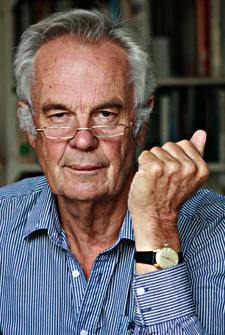
By Johan Galtung

A century ago humanity, particularly in the West, was at the beginning of a major revolution, from horse culture to car culture. Today there are still (FAO-UN Food and Agriculture Organization, 2008) 59 million horses, but (2010) more than 1 billion cars (in 1986 only half of that). In other parts of the world, like Japan and China, there was a revolution to cars, but from bicycles–Beijing went from 6 million bicycles to 4 million cars over a period of 20 years, only from 1990. Japan had an intermediate scooter stage–like in India, Southeast Asia–less so in China.

Imagine 19th century in the West: horses everywhere. Read More »

On Syria: What to do in 2013

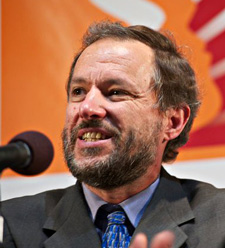
By Richard Falk

I took part last week in an illuminating conference on Syria sponsored by the new Center of Middle East Studies that is part of the Josef Korbel School of International Studies at the University of Denver. This Center has been recently established, and operates under the excellent leadership of Nader Hashemi and Danny Postel, who previously together edited the best collection of readings on the Green Revolution in Iran published under the title The People Reloaded.

The conference brought together a mixture of Syrian specialists, Syrian activists, and several of us with a more general concern about conflict in the region, as well as with human rights and as participants in the heated debates of recent years about the virtues and vices of ‘humanitarian intervention’, what is now being called ‘Responsibility to Protect’ of ‘R2P’ in UN circles and among liberals.

I came to the gathering with a rather strong disposition to present myself as a confirmed R2P skeptic, regarding it as a cynical geopolitical euphemism for what Noam Chomsky labeled as ‘military humanism’ in the context of the controversial NATO Kosovo War of 1999. Ever since the Vietnam War I have viewed all Western claims to use force in the post-colonial non-West with suspicion. Read More »

Russia and China: Arms around the Middle East

By Sharmine Narwani

Russia and China have drawn a great deal of censure this past year for resisting UN Security Council resolutions to intervene in the domestic affairs of Syria and Iran.

Why, many ask, would this duo leverage their growing global political clout for two Mideast states that have been so actively marginalised by the other UN Security Council permanent members – the US, UK and France?

And do these new Russian and Chinese positions place them on a collision course with Washington – in the Middle East and elsewhere?

Continue reading at The BRICS POST

Against world revolution – constructively!

By Johan Galtung

From Alicante, Spain

“Unemployment in Spain Tops 6.1M” – Unemployment rate is 26.6 percent; for those under the age of 25, 56.5 percent; all growing, all EU records. “Bank of Spain inspectors pen damning report about wrongdoing in Spanish banks: look the other way” was the reaction, while the government spends billions of Euros to bail out those banks. (El País, early January 2013).

And this: “300 Madrid health chiefs resign over privatization”; “Locksmiths in Pamplona refuse taking part in evictions involving families with young children”; “Theater chief sells carrots at 13 Euro as entrance ticket” – value-added tax down from 21 to 4 percent for food; “Mothers strip for erotic calendar to drum up funds for canceled school buses”.

A country rapidly de-developing, into low Third World levels, even in health. A country not only saving banks rather than people but also letting the banks get away with crimes. A country reacting with mini-revolutions, nonviolence, civil disobedience against such glaring injustices. A country where the class war is over for the time being; capitalism won and more particularly the bankers and their servants, the politicians, and even more particularly the finance-speculation capital.

And this in a Spain close to 40 years into democracy after 40 years of Franco dictatorship. Constitution + democracy + elections + human rights (also to property) + parliament vs finance capitalism. Weak vs strong.

What is Spain, and EU heading for? What will be fund further down this road?Read More »

A stunning African success

By Jonathan Power in Dar es Salaam

In an article last week, published in The Citizen of Tanzania, Christine Lagarde, managing director of the International Monetary Fund, observed that “in the last decade after emerging Asia Africa recorded the world’s strongest growth rates. “In some cases”, she wrote, “the African lions outpaced the Asian tigers in their first two decades.”

The American and European economic crisis has had only a modest impact on those African economies doing well. “Resilience is home grown”, she says. African countries have been able to take advantage of the strong foundations they have built in the years leading up to the crisis. Since 2000 debt levels fell from over 100% to under 40% of GDP, foreign exchange reserves more than doubled and inflation was halved.

Two thirds of them, including Tanzania, have been able to pursue expansionary policies during the crisis – Keynesian policies of not slamming on the brakes as in Europe and the US – increasing spending on health and education and drawing a circle of protection around the most vulnerable people.

Judging from the substantial spending of the US’s Millennium Challenge Corporation Tanzania is the most successful lion of them all. This aid program is contingent not just on economic and social policies but also on the degree of political freedom and the pursuit of justice.

The US ambassador heaps accolades on Tanzania. The World Bank says Tanzania is “a top performer” and in economic terms has been “a rock of stability”.Read More »

Seeing light: The blogger’s delight

By Richard Falk

While reflecting on my prior blog lamenting the challenges of sustaining civility amid tumult and controversy, I came to appreciate my own partial captivity in realms of darkness. The negativities I tried to discuss are the shadow land of my blog experience, which is more essentially lived in the sunshine of new and renewed friendship, solidarity, mutuality, and the new emotional and spiritual resonances of our era, what I would call, in the absence of greater precision, the emergence of ‘digital love.’

What becomes possible, although there is no doubt that it produces its share of blood, sweat, and tears, are invisible communities of commitment to a better future for humanity, all of it. Such communities keep candles of hope flickering during an historical period of thickening darkness when even the will to species survival seems to be in doubt.

Why else would the world choose to live with nuclear weapons? Why else would political leaders turn their backs on the alarming scientific consensus as to the growing hazards and harms associated with climate change? Why else would the 1% be allowed to indulge super-luxuries while more than a billion struggle daily with the ordeals of poverty?Read More »

The US cliff, swamp, quagmire: Two major proposals

By Johan Galtung

There is more than the fiscal cliff to meet the naked eye.

Wise people – Borosage, Krugman, Stiglitz – some of them economists, see neither the fiscal deficit nor the US debt but the lack of growth as the key problem. They point to Clinton years and how, through growth, the Debt/GDP ratio went from a half to a third. This is important, but then there is a fourth consideration: some Americans are suffering out there. “16 percent” comes up very often, of people and families below the poverty line, not knowing for sure where the food comes from the next day, not having medical insurance. Macroeconomics is blind to human basic needs, yet there may even be solutions hidden in it.

But after the Clinton years came somebody else; increasing expenditure with enormously costly wars making conflicts even worse, and in addition lowering the revenue by reducing taxes on the super-rich. That a fiscal deficit would rear its ugly head, fed by such policies year after year, was a foretold conclusion. Democracy protects the president with a golden parachute, similar to that enjoyed by the CEO of a bankrupt company. But rightly so: he was elected, even re-elected. US voters, you asked for it and you got it!Read More »

Walkers of the World Unite!

By Jonathan Power

When first running for president Barack Obama was made to feel uncomfortable on national television when an inquisitor attempted to pin him down on the inconsistencies of his non-smoking pledge. Clearly Obama had some trouble in not, as he put it, ”falling off the wagon”.

But, maybe, he should get completely off the wagon. It was reported that in the inauguration parade gas-guzzling SUVs were not used. But why did he not go a little bit further and insist that everyone walk?

Here is a man who likes to go to the gym every day, but a 45 minutes walk would do the job just as well and set a car-crazed world the example it needs. We have had bicycling heads of state or government before – look at Queen Beatrix of Holland and today David Cameron, the prime minister of Britain, when he was leader of the opposition cycled to the House of Commons. So why not a walker? That is what Cameron has now become.Read More »

Losing control: A blogger’s nightmare

By Richard Falk

When I started this blog a couple of years ago, the thought never entered my mind that I would need to defend the terrain. Although I knew my views were controversial on some issues, I assumed that those who disagreed strongly would stay away, losing interest, or express their disagreements in a spirit of civility.

To a large extent this has been true, with the glaring exception of Israel/Palestine. Here my problems are two-fold: (1) very nasty personal attacks that challenge the integrity, balance, judgment, and overall demeanor of myself and those that agree with me; (2) very insistent and determined requests to engage my views from highly divergent standpoints, so divergent that I can find no useful meeting ground or value in such exchanges.

By and large, I have excluded defamatory comments from the first group to the extent I have taken the time to monitor the comments section of the blog. I neither feel any obligation to give space on the blog to those who wish me ill, nor do I wish to respond to such allegations unless it seems absolutely necessary to do so. My recent Open Letter to CRIF was an illustration of such a necessity. I have refrained from responding to the UN Watch campaign despite a strong temptation to explain their distortions and deny their falsehoods, which are clearly intended to bring me harm.Read More »

The case against Kerry

By Stephen Zunes

President Obama’s selection of John Kerry as the next secretary of state sends the wrong signal to America’s allies and adversaries alike. Kerry’s record in the United States Senate, where he currently chairs the Foreign Relations Committee, has included spurious attacks on the International Court of Justice, unqualified defense of Israeli occupation policies and human rights violations, and support for the U.S. invasion and occupation of Iraq, thereby raising serious questions about his commitment to international law and treaty obligations.

Furthermore, his false claims about Iraqi “weapons of mass destruction” and his repeated denials of well-documented human rights abuses by allied governments raise serious questions about his credibility.Read More »