For a denuclearized Middle East

By Daisaku Ikeda (*)
© IPS 2012
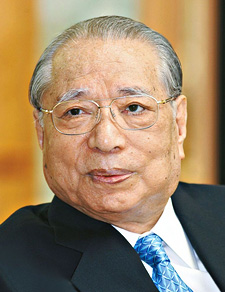
TOKYO, Mar (IPS) – In recent months, the dispute over the nature and intent of the Iranian nuclear development programme has generated increasing tensions throughout the Middle East region. When I consider all that is at stake here, I am reminded of the words of the British historian Arnold Toynbee, who warned that the perils of the nuclear age constituted a “Gordian knot that has to be untied by patient fingers instead of being cut by the sword.”

Amidst growing concerns that these tensions will erupt into armed conflict, I urge the political leaderships in all relevant states to recognize that now is the time to muster the courage of restraint and seek the common ground on which the current impasse can be resolved. Read More »

India uphill or downhill?

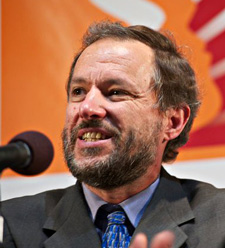
By Jonathan Power

When the distinguished foreign policy expert, former US National Security Adviser, Zbigniew Brzezinski, told me a couple of years ago that he worried about the stability of India I thought he was way off track. Living in Calcutta at the time, democracy seemed to be thriving and both the state of West Bengal and most of the country were very clearly developing fast.

But that was before the crises of the last year. One major financial scandal has followed another. Read More »

Military intervention in Syria is a bad idea

By Stephen Zunes

Although the impulse to try to end the ongoing repression by the Syrian regime against its own people through foreign military intervention is understandable, it would be a very bad idea.

Empirical studies have repeatedly demonstrated that international military interventions in cases of severe repression actually exacerbate violence in the short term and can only reduce violence in the longer term if the intervention is impartial or neutral. Other studies demonstrate that foreign military interventions actually increase the duration of civil wars, making the conflicts longer and bloodier, and the regional consequences more serious, than if there were no intervention. In addition, military intervention would likely trigger a “gloves off” mentality that would dramatically escalate the violence on both sides.Read More »

Hana Shalabi’s hunger strike has ended, but not her punishment

By Richard Falk

As with Khader Adnan, Israel supposedly compromised with Hana Shalabi on the 43rd day of her hunger strike in protest against administrative detention and her abysmal treatment. But Israel’s concept of ‘compromise’ if considered becomes indistinguishable from the imposition of a further ‘vindictive punishment.’

How else to interpret Israel’s unlawful order to coercively exile (not technically deportation because she is being sent to a location within occupied Palestine) Hana Shalabi for three years to the Gaza Strip, far from her home village of Burqin in the northern part of the West Bank, and more significantly, far from her grief-struck family? Read More »

The hypocrite, the fanatic, or Obama?

By Richard Falk
While the headline deals with the Presidential candidates, Falk reflects also on the essence of democracy itself and on whether the US can at all be called a democracy.

The American electorate is facing a presidential election in which there is almost no prospect of a constructive debate. On the Republican side the campaign for the nomination has exhibited the clash of irresponsible and reactionary views, slightly relieved by the libertarian Ron Paul who at least counsel against militarism and the death dance with Israel.

All the Republican presidential hopefuls, except Paul, exhibit a craven distaste for reality when they attack Obama for being insufficiently pro-Israeli, as if 95%+ is insufficient. Such a posture, whether meant seriously or not, expresses contempt for the intelligence and common sense of the American citizenry.Read More »

The face of the crisis – and some alternatives

By Johan Galtung

From Madrid, Universidad Nacional de Educación a Distancia-UNED, Foro Los Nuevos Problemas Sociales, 24 Mar 2012

Here is one of the hidden faces of the economic crisis:

(¶C/¶t) + (¶C/¶S)rS + (1/2)(¶2C/¶S2)q2S2 = rC

The famous Black-Scholes equation to find the “correct price” for financial derivatives. Based on partial derivatives over time, this is classical calculus for continuous change; useful within a zone of stability, but not at the edge of that zone, the tipping points explored in René Thom’s catastrophe theory years earlier.

Black-Scholes is intellectually like calculating increasing speed of an accelerating car heading for a wall or an abyss. But, with warnings, no 1997 “Nobel Prize in Economics” (actually a Swedish State Bank’s prize honoring Alfred Nobel)? And one year later their company “Long Term Capital Management” had lost $100 billion and collapsed. The trade in derivatives is now at $1 quadrillion a year (15 zeros), ten times the industrial economy of the whole 20th century. Many got rich, but the system collapsed. Maybe prison would have been more adequate for intellectual sloppiness?Read More »

Way to end war in Afghanistan

By Jonathan Power

After the Soviet Union invaded Afghanistan in 1979 and got totally bogged down there was a joke circulating in Moscow. “Why are we still in Afghanistan? Answer: We are still looking for the people who invited us”.

Zbigniew Brzezinski, architect of US policy in Afghanistan when he was President Jimmy Carter’s national security advisor, was convinced Afghanistan would become the Soviet Union’s Vietnam. In fact the Soviet Union’s Vietnam has become America’s Afghanistan.

There is truth in both these cynical observations. And there are lies, distortions and self-delusion built into the narrative. Only Russia has been more or less honest. Under President Mikhail Gorbachev it decided to cut its losses and withdraw and was open about the reason it did so.

Today the debate in the US is contorted. Read More »

Get the law and politics right in Iran now!

By Richard Falk

In his important article in the New York Times, March 17, 2012, James Risen summarized the consensus of the intelligence community as concluding that Iran abandoned its program to develop nuclear weapons in 2003, and that no persuasive evidence exists that it has departed from this decision.

It might have been expected that such news based on the best evidence that billions spent to get the most reliable possible assessments of such sensitive security issues would produce a huge sigh of relief in Washington, but on the contrary it has been totally ignored, including by the highest officers in the government. Read More »

Syria – here are some solutionS and roadS to them

By Johan Galtung

We all feel desperate watching the horrible killing, feeling the suffering of the bereaved, the whole people. But, what to do?

Could it be that the UN, and governments in general, have a tendency to make the same mistake, again and again, of putting the cart before the horse? The formula they use is generally:

[11 Get rid of No. 1 as key responsible, using sanctions; then

[2] Cease-fire, appealing to the parties, or intervening, imposing;

[3] Negotiation among all legitimate parties; and from that

[4] A political solution as a compromise between the positions.

It looks so logical. There is a key responsible, President Assad, ordering the killing; get rid of him by all means. Then the cease-fire, the fire ceasing; then negotiation, and then the solution emerges. Logical, yes; but maybe not very wise.Read More »

Afghanistan: The war turns pathological – Leave!

By Richard Falk

The latest occupation crime in Afghanistan is a shooting spree on March 11 by a lone American soldier in the village of Balandi in the Panjwai District of Kandahar Province of Afghanistan. 16 Afghan civilians, including women and children, were shot in their homes in the middle of the night without any pretense of combat activity in the area.

Such an atrocity is one more expression of a pathological reaction by one soldier to an incomprehensible military reality that seems to be driving crazy American military personnel on the ground in Afghanistan. The main criminal here is not the shooter, but the political leader who insists on continuing a mission in face of the evidence that it is turning its own citizens into pathological killers.Read More »