Waging War against Iran is a Criminal Act, in Violation of International Law

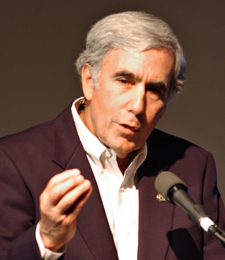
By Francis A. Boyle

Article 2 (3) of the United Nations Charter requires the pacific settlement of the international dispute between the United States and Iran. To the same effect is article 33 and the entirety of Chapter VI of the United Nations Charter that mandate and set up numerous procedures for the pacific settlement of the international dispute between the United States and Iran. And of course Article 2(4) of the U.N. Charter prohibits both the threat and use of force by the United States against Iran.Read More »
Muslim extremism in proportion

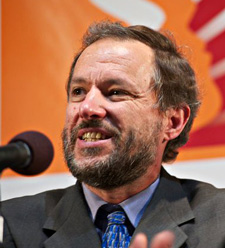
By Jonathan Power
 
Between them the Arab Spring and Boko Haram of northern Nigeria are doing a good job of putting Sharia law on the map. These two extremes in fact show dramatically how Sharia interpretations can vary from destructive madness as in Nigeria to calm accommodation, even liberalism, as in Tunisia.Read More »

Remembering the best and the worst of 2011

By Richard Falk

2011 was an exciting and pivotal year in many respects, although its main outcomes will remain inconclusive for years to come.  We will learn in 2012 whether we are moving closer to fulfilling our hopes, dreams, and goals or are trying to interpret and overcome a recurrence of disappointment and demoralization with respect to progressive change in world affairs. The stakes for some societies, and for humanity, have rarely been higher.Read More »

The 10th anniversary of the Euro – the creation of a politically united Europe?

By Jonathan Power

Writing in 1751 Voltaire described Europe as “a kind of great republic, divided into several states, some monarchical, the others mixed but all corresponding with one another. They all have the same religious foundation, even if divided into several confessions. They all have the same principles of public law and politics unknown in other parts of the world.”
Ten years ago, this January 1st,  in a way that Charlemagne, Voltaire, William Penn and Gladstone, the early advocates of European unity, could only dream, a united Europe became a reality. A single currency was the most dramatic of the steps taken towards what surely one day will be a single political entity.Read More »

Iraq: Remembering those responsible

By Stephen Zunes

The formal withdrawal of US troops from Iraq this month has led to a whole series of retrospectives on the invasion and the eight and a half years of occupation that followed as well as a host of unanswered questions, including – given the tens of thousands of Americans and others on the US government payroll, many of whom are armed, who are remaining in Iraq – just how total the withdrawal might actually be.

In any case, of critical importance at this juncture is that we not allow the narratives on the war to understate its tragic consequences or those responsible for the war – both Republicans and Democrats -to escape their responsibility.Read More »

As the US and Iran confront each other, where is diplomacy?

A pro-peace perspective since it is not enough to criticise the US, Israel, Iran or anybody else

By Farhang Jahanpour

The war of words between Iran and the West has reached dangerous proportions, and it may easily get out of hand. It is clear that the majority of people in the West and in Iran do not wish the hostilities to develop into an open conflict, but events – and rhetoric – have a life of their own and have a tendency of getting out of control and leading to unintended consequences that would harm both sides. So, instead of ratcheting up the rhetoric, it would be wiser and more productive to make some serious efforts for finding a solution to the crisis, rather than intensifying it.Read More »

A nuclear nightmare in the making

NATO, Missile Defense and Russian Insecurity. And what if you look at it from their side now?

By David Krieger and Steven Starr

In the aftermath of the Cold War, the North Atlantic Treaty Organization (NATO), has become increasingly powerful. It was created in 1949 as an alliance of Western military forces to protect against the perceived military threat posed by the Soviet Union and the Eastern bloc countries.

With the breakup of the Soviet Union and the Warsaw Pact, NATO has expanded by adding former Soviet bloc countries, moving to the borders of Russia. It has also engaged in military actions, notably in the former Yugoslavia, Afghanistan and Libya.

For the past several years, the US and NATO have been pursuing the deployment of an integrated missile defense system in Western, Eastern and Southeastern Europe, as well as in surrounding waters. The Russians have protested vigorously that the planned system will undermine its nuclear retaliatory potential and thereby its security. Read More »

The anonymous person of the year

By Biljana Vankovska

There is something very bizarre and alike in the selection of the 2011 Nobel Peace Prize winners and the Time’s person of the year. Coincidence (or rather not), the three Nobel laureates (two of them from Liberia and one from Yemen) and the Protester are all female and pictured as “ordinary” activists, i.e. actresses in the developments that marked 2011.Read More »

In defence of Love

By Biljana Vankovska

In the eve of the holiday season last year I had decided to devote my column to a nonconventional theme. Instead of a usual text for this time of a year I wrote about happiness, the one that is not a gift of/by the state/politics but the one that is achieved in spite of it. My readers graded it quite poorly. Aware that the same may happen again I have decided to dedicate this last column in 2011 to a similar issue. This time it is a short and unexpected tractate in defence of love.Read More »

India is unwilling to be drawn into US-China conflicts

By Shastri Ramachandaran

Deputy Chief of the People’s Liberation Army Ma Xiaotian’s visit to New Delhi for Sino-Indian defence dialogues today is an affirmation that neither country will allow periodic irritants to derail bilateral talks.

Ma’s visit shows a resolve on the part of the two countries to ensure that differences do not become an obstacle to keep up communication by sticking to scheduled exchanges. There is a realization in both capitals that any rift between the two neighbors would be exploited by powerful forces which are unhappy with the growing cooperation and trade links between the Asian giants. Read More »