
TFF PressInfo # 400: Moscow & Washington – Last chance to get it right?

By Jonathan Power

January 24th 2017.

The great flaw in ex-president Barack Obama’s record was his policy towards Russia. Going against everything he had said and written about before he became president, one action after another antagonised the Russians – his early proclamation that he wanted Georgia and Ukraine in NATO, his de facto coalition of convenience for a crucial couple of days with the anti-democratic, anti-Russian, neo-fascist, demonstrators in Ukraine, the further expansion of NATO, despite an earlier promise not to, made by President H.W. Bush, to the Soviet president, Mikhail Gorbachev, and his inability to cooperate with the Russians and Iranians over Syria.

No wonder the Russians are reported to be delirious that Donald Trump is now president, a man who has said nice things about Russia’s President Vladimir Putin.

If the two meet sometime soon maybe there will be an end to this unnecessary hostility. The Moscow-Washington relationship is the most important political issue in the world and this may well be the last chance to get it right.

Russia and the US have never fought each other in the 200 years of their relationship. Russia aided the North during the Civil War and sent warships to prevent England and France supporting the confederacy. During the World Wars the two were close allies.

However, they came near to catastrophic war during the Cold War when Russia armed Cuba with nuclear weapons. This will never happen again. It chilled the blood down to zero on both sides. But one can imagine limited armed clashes on the Estonian-Russian border, nuclear sabre rattling, a more intimate alliance between China and Russia, an urge to sabotage, as was done during the Cold War, any diplomacy or interventions made by the other and a continuation of both countries keeping their long-range nuclear weapons on hair-trigger alert.

Under H.W. Bush post-Cold War relations got off to a good start. Nevertheless, the US treated Russia as a defeated nation that could be taken advantage of. Read More »
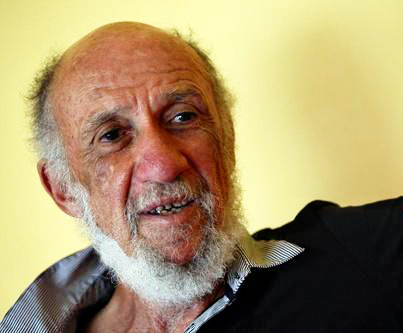
Turkish realignment: Prospects amid uncertainty

By Richard Falk

December 3, 2016

In recent months the Turkish President, Recep Teyipp Erdoğan, and his principal advisors have not made it a secret that they are reconsidering Turkey’s relations with neighbors, with the countries of the region, and with leading geopolitical actors.

The Early Agenda of AKP

When the Justice and Development Party (AKP) came to power in 2002 it set about almost immediately to fashion a post-Cold War foreign policy based on the idea that it was time to supersede the Cold War posture of almost total Turkish deference to the United States, especially within NATO and bipolar contexts, and depict a conception of Turkish interests developed in Ankara rather than adhere to Washington’s blueprint. In its early period of national leadership, the AKP seemed to pursue four interrelated international goals:

– resolve the Cyprus conflict;
– give priority to seeking full membership in the European Union (EU);
– improve diplomatic and political relations with Arab World;
– seek continuity in U.S./NATO/EU relations, but with overall independence.

During the Foreign Ministry of Abdullah Gul, reflecting and incorporating some of Ahmet Davutoğlu ideas and his ambitious conception of the proper Turkish international role, this new assertiveness of Turkish foreign policy achieved with impressive results. Turkey’s signature approach of ‘Zero Problems with Neighbors’ (ZPN) was initially seen as the adoption of a regional conflict-resolving perspective, and given early credibility by transforming relations with Syria from hostility to harmony.

Continue reading here…

TFF PressInfo # 399: US Congress woman Tulsi 
Gabbard (D) visits Syria

By Jan Oberg


A brilliant blow to US/NATO
 policies and mainstream media 


Lund, Sweden – January 26, 2017

Tulsi Gabbard* and former peace presidential candidate Dennis Kucinich (D) have just visited Aleppo and Damascus in Syria and met citizens, religious leaders and President Assad.

Watch here how CNN tries to frame her as siding with Assad:


Starting out with Twitter girl Bana with President Erdogan (one more time – how stupid does CNN think we are?) and then showing no interest in what she reports because it doesn’t fit the deceptive Western narrative. 


Much more important, however, listen to what Gabbard says in just 6 minutes about:Read More »

Glenn D. Paige 1929-2017 – Pioneer of studies of nonkilling and peace

By Chaiwat Satha-Anand,
TFF Associate

At the 16th International Peace Research Association (IPRA) conference held in Brisbane, Australia in 1996 under the guidance of Ralph Summy with the theme” Creating Nonviolent Future”, Glenn D.Paige began his keynote address titled: “To Leap Beyond Yet Nearer Bring: from war to peace to nonviolence to nonkilling” by recounting another IPRA meeting held in Yokohama, in 1980.

At that meeting, a question was raised as to whether it would be possible for IPRA to take up the subject of “nonviolence”.

A distinguished European researcher responded in the negative saying that nonviolence “would discredit peace research”.

Six years later in 1986 at the IPRA conference held in Sussex, Theodore Herman convened what I believe to be the first IPRA nonviolence commission. Later in 1988 at the IPRA meeting held in Rio de Janeiro, Herman asked Paige to help convene the next nonviolence commission. Paige became the convenor of the nonviolence commission in the 1990 IPRA conference held in Groningen, Netherlands. [Papers from this conference were published in Gandhi Marg Vol.14 No.1 (April-June 1992)]

I attended the first IPRA conference in Rio de Janeiro in 1988. Glenn Paige was my teacher and mentor. Read More »

TFF Photo Story: Faces of Aleppo. Just out of 4,5 years of occupation hell

By Jan Oberg

January 25, 2017

Unique photos from Eastern Aleppo in Syria when it was finally liberated on December 11-12, 2016.

The people you see here have just come out to freedom from 4,5 years of the occupation by what can be called RIOTs – Rebels-Insurgents-Opposition-Terrorists – mostly the latter.

And most of them with some kind of support by NATO countries. 

Western media, politics and humanitarian organisations focus on the victims from Eastern Aleppo who left to RIOT territories elsewhere, such as Idlib, after the liberation – family members and supporters of the occupiers. 

That’s not the whole truth about Aleppo.

They conveniently ignore the thousands of other Aleppians: Those who were happy beyond words to see all of Aleppo back under the control of the Syrian government.

These are the people in this photo story. They are among the 13 million Syrians who, according to the UN in Syria, are in need of humanitarian assistance – thanks to U.S. – non-UN – sanctions since 1979 and thanks to the war since 2011.

They too need and deserve the world’s attention and help.All of them and not just the politically chosen few. 

Faces Of Aleppo by Jan Oberg on Exposure

Until the immense historical significance of the liberation of Aleppo is understood much better by many more and the biased Western media coverage has changed we will continue to highlight important but hidden dimensions of the conflicts in Syria.

Because peace will be impossible within the present dominant Western narrative and discourse.

And given the incomprehensible suffering of the Syrian people and the destruction of their society since 2011 possibilities for peace – rather than war – should occupy anyone with a human heart. 

If you agree, please use the hashtag: #keepfocusonaleppo

* * *

If we do not care about the single individual, can we care about humanity?

My other stories have had quite a lot of texts. You may check them out to get the background and situation.

Here I just want you to see and reflect on how the Allepians I met expressed happiness, despair, hope, kindness but also anger at one and the same time. Pictures can say much more than words, particularly when we contemplate mindfully on what there is to see in every and each face of these victims of what is often called high politics – which often implies low morality.

So, please don’t rush. See and empathize.

© Jan Oberg 2017. Under no circumstance may the photos in this series be reprinted, reproduced or otherwise used without my prior consent.

2017 World economy and economics

By Johan Galtung

Two closely related points, as a starter.

This column has argued Lifting the Bottom Up as economic approach in all weathers, bad, fair, good, to mitigate any suffering, and for them to enter the economy as producers and consumers, not as “cases”.

This column has also argued judging Trump not by his poisoning words, nor by commentators’ words, but by his deeds. White-male-workers-no college is not the US bottom, but they were heading down. Now lifted up the Trump way, by keeping/bringing back industry to the “Rust Belt”. Ford Motor Company just did that, GM may be next.

If outsourcing to Mexico – under the euphemism “trade” served poor Mexican workers, maybe–but it serves rich elites in both countries.

45 percent tariff on Chinese goods: a non-starter. US homes are filled with affordable “Made in China”. To de-industrialize was US stupidity; to re-industrialize will take time. Keep what is, bring back what was. Other countries may learn from Trump and not trade themselves away.

The general 2017 world economic outlook is bad. Key problem for the West: industry is now also in the hands of other countries to meet their demands and for exports (Chindia). How could that happen? Because:

Economists have a Theory I of diachronic stages, from primary via secondary to tertiary sectors, agriculture->industry->services. Time for services has come, domestically, and as export to import food and manufactures. TI promotes trade; but makes societies vulnerable if trade fails, and may cause huge primary-secondary sector unemployment.

Hence, alternative Theory II: synchronic co-existence of sectors, at state-provincial-local levels. Each sector is a way of life that appeals to different persons or to the same person at different stages. TII promotes self-reliance–not self-sufficiency, filling gaps with trade–high employment if automation is controlled and not seen as a law of nature, personal enrichment, and protection of nature.Read More »

Evaluating Obama’s foreign policy

By Jonathan Power

January 17th 2017

When President Barack Obama leaves office will the world be better or worse than eight years ago?

Taking the big picture, so often obscured by the wars and uprisings that dominate the front page, more often than not he has resisted the foreign-policy establishment, most importantly in Syria, which makes a fetish of “credibility”. Obama has argued that “dropping bombs on someone to prove that you are willing to drop bombs on someone is just about the worst reason to use force”.

In a long interview last April with Jeffrey Goldberg in Atlantic Magazine Obama made the point, “Where am I controversial? When it comes to the use of military power. There’s a playbook in Washington that presidents are supposed to follow that comes out of the foreign policy establishment. The playbook prescribes responses to different events, and these responses tend to be militarised responses. In the midst of an international challenge like Syria, you get judged harshly if you don’t follow the playbook, even if there are good reasons why it does not apply”.

Nevertheless, despite his good principles, Obama leaves behind a Middle East in more of a mess than it was. The war in Afghanistan continues with the Taliban gaining the upper hand. The US has got partially sucked into an unnecessary and cruel war in Yemen with its support of the Saudi air force. The American invasion of Libya, along with France and the UK, liberated not a country but a hornets’ nest.

The relationship with China is better in some aspects but worse in others. Read More »