TFF PressInfo # 385: Turkey’s coup – another example of the West’s disintegration

By Jan Oberg

Was it just a group of amateurish military people who believed that they knew how to make a coup? Was the brain behind it a 75 year old Islamic leader or ’guru’ Fatullah Gülen sitting in Pennsylvania and remote controlling the whole affair through his followers in Turkey? Was it perhaps the U.S.? State Department and CIA – who were tired of President Erdogan’s unpredictability and policies vis-a-vis Russia and ISIS?

Many more or less realistic and conspiracy-like theories have emerged since it happened about a week ago. I have no particular expertise on Turkey and no access to intelligence data but I guess it is reasonable to think of this coup having been master-minded by Erdogan and the people around him and/or that he had early warnings about it but let it happen – which fits with his words that it was a gift from God.

It’s the least unlikely hypothesis. Why?

1. In a half-hour long interview, Erdogan tells Aljazeera how it all happened that night. It is a remarkably distancing, blurred recollection without cohesion and with little credibility coming from a man who was the centre or it all and allegedly the object not only of a coup d’etat but an attempt too on his life. (See it at (). It is as if he was really not present, shocked or surprised.


2. The attempted coup seems too amateurish to have been a US/ CIA thing.


3. It is rather unlikely, given the security apparatus and Erdogan’s top control, that this coup had not been on the radar at an earlier stage.


4. Even if the dialogue-oriented, moderate Fatullah Gülen should be a wolf in sheep’s clothing, I don’t find it particularly credible that he should exercise such power and mastermind the whole thing from that far away. It requires extremely detailed knowledge of an insider kind to make a successful coup.


5. Very strangely, those who took over power for a few hours never appear on the radio stations and TV screens they controlled. We didn’t see a coup leader at all. To speak to the people is what any coup-maker does first.
Read More »
Too many American nuclear bombs – also in Turkey

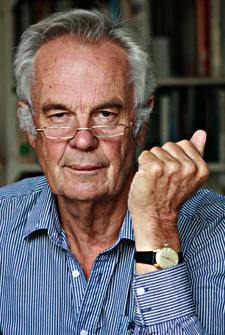
By Jonathan Power

July 26th 2016

The Incirlik air base in southeast Turkey- from which U.S. pilots launch bombing raids on ISIS forces in Syria – is home to about 50 B-61 hydrogen bombs. That makes it NATO’s largest nuclear storage facility.

Each bomb has a yield of up to 170 kilotons, nearly a dozen times more powerful than the weapon that destroyed Hiroshima. The bombs are stored in underground vaults within aircraft shelters that in turn are protected by a security perimeter.

Last week Incirlik was in the headlines because it appears it was one of the command centres of the attempted coup, meant to topple President Recep Tayyip Erdogan.
After the coup had been put down the commander of Incirlik was arrested and charged with complicity in the overthrow attempt.

Jonathan Marshall in Consortium News, who has been researching this year the inner workings of the base, reports, “The security of the bombs is premised on them being defended by loyal NATO forces. In the case of Incirlik that loyalty proved uncertain at best. Power to the base was cut after mutinous troops used a tanker plane from the base to refuel F-16s that menaced Ankara and Istanbul”.

He goes on in his latest report to observe, “One can easily imagine a clique of Islamist officers in a future coup seizing the nuclear bombs as a bargaining chip with Ankara and Washington or, worse yet, to support radical insurgents in the region.”

Jeffrey Lewis, a nuclear proliferation expert at the Middlebury Institute of International Studies at Monterey, asks, “Does it seem like a good idea to station American nuclear weapons at an air base commanded by someone who may have just helped bomb his own country’s presidential palace?”Read More »

Unity with Europe is the answer to Turkey’s attempted coup

By Jonathan Power

July 20th 2016.

Europe is under attack from both ends. In the west Brexit, the referendum to take Britain out of the European Union (EU). In the east Turkey, which is not formally a member because of the veto made by the conservative last president of France, Nicolas Sarkozy.

Both have led to dreadful consequences. Britain because the EU was made for Britain, although the hard work was done by France and Germany. It is meant to bring together the countries of Europe who were antagonists in two world wars by means of an economic union in order to bind Europe together so its countries would never fight another European war. Britain leaving shatters that profound political pact.

Turkey has both been dealt a mean hand and, under President Recep Tayyip Erdogan, shot itself in the foot.

First, because of its economic advance; second, the fact that it is a bridge between Europe and Asia, literally so since a bridge links the two parts of Turkey (the Asia it borders on is Islamic); and, thirdly, because it has long been an important member of NATO, many European countries, not least Britain, have wanted it to be admitted into the Union. (The US too holds a long-time policy that supports entry for Turkey.)Read More »

Narrating Turkey at a time of national crisis

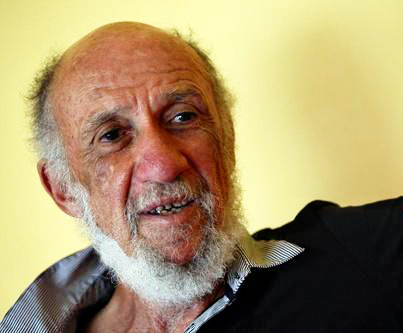
By Richard Falk

A night before the attempted coup of July 15th, in conversation with an elegant secular business leader and permacologist in the seaside town of Yalikavak I was surprised by the intensity of her negativity toward the government, expressed with beguiling charm. She insisted that Turkey had hit rock bottom, that things in the country could not get worse. I felt speechless to respond to such sentiments that struck me as so out of touch with the reality of Turkey.

This woman lives in a beautiful, secluded country house nearby, enjoys an extraordinarily successful career, is associated with a prominent Turkish family, possesses an engaging personality by any measure, and from all appearances lives a harmonious and satisfying modern life of comfort, good works, and human security.

And yet she is totally alienated by the Turkish experience of Erdoğan’s prolonged leadership, which she alternatively describes as ‘autocratic’ and ‘Islamic.’ I mention her as the foregrounding of the typical mindset encountered among Turkish secular elites, displaced from their positions of control that lasted until the Kemalist hegemony began to weaken, and an outlook that confines political discussion to enclaves of out of touch likemindedness.

When I politely demurred during our dinner, suggesting that while there were justifiable criticisms of the AKP patterns of governance and of Erdoğan’s political style, especially since 2011, Turkey when compared with other countries in the region and its own pre-AKP past, and taking some account of a variety of challenges, still offers the region a positive example of what can be achieved by an energetic and ambitious emerging economy under what had been until recently generally stable political conditions.

There are heavy costs of various kinds that should be acknowledged along side this somewhat affirmative picture—human rights have been abridged, journalists and academics suppressed who voice strong public criticisms of Erdoğan, and the Turkish state that he leads.

There have also been a variety of charges of corruption and contrary well grounded charges of a ‘parallel government’ operating under the secretive authority of the Hizmet movement led by ‘the man in Pennsylvania,’ Fetullah Gülen, a mysterious Muslim cleric who preaches a moderate message. He is alleged to be the mastermind of the subversion of the Turkish state, and is accused by Erdoğan as having orchestrated the failed coup, and on this basis, Turkey has formally demanded his extradition to face criminal prosecution.

Arriving in Istanbul in the afternoon of July 15th with the expectation of participating in a conference the next morning held under the auspices of Koç University on the theme “Migration and Securitization of Europe: Views from the Balkan Corridor.” Listed in the program as the keynote speaker I felt quite nervous as to whether my prepared remarks captured the intended spirit of the event, but I will never know as an immediate personal impact of the attempted coup was a phone call to our hotel room at 2:00 AM telling us that ‘unfortunately’ it was necessary to cancel the conference…

Continue reading here

Tony Blair- Evil big enough to be charged for war crimes

By Jonathan Power

The crime of aggression (“planning, preparation, initiation or waging of a war of aggression”) was described by the Nuremberg Tribunal that tried Nazi leaders as “the supreme international crime differing only from other war crimes in that it contains within itself the accumulated evil of the whole”.

President George W. Bush and British prime minister, Tony Blair, have been accused by many as war criminals for starting the war against Iraq and, second, for not watching carefully enough to make sure that war crimes carried out by individual soldiers were not covered up, and for the torture that Bush initiated and Blair appeared to tolerate.

Did Blair lie over the reason for going to war with Iraq – the supposed stockpile of weapons of mass destruction that Iraq possessed? It depends how you define lie. If you define lie as saying this cat is black when in fact it’s white he didn’t on the big issues. But what he did do was to give the impression the cat was assuredly white when in fact it was a sort of greyish.

But as the just published government commissioned report made by a distinguished civil servant, John Chilcot, has made clear the caveats were left out of intelligence briefings and the presentation was polished by the prime minister’s office.

We in the public didn’t have the pre-polished version but Blair did and he must have known in his mind, if not his heart, he was taking a gamble with the evidence. Read More »

Escalating conflicts on the way to peace and justice


Photo Jonas Jonzon

By Majken Jul Sørensen & Jørgen Johansen

This article is a short version of a text which was first published with the title “Nonviolent Conflict Escalation” in Conflict Resolution Quarterly, 2016. DOI: 10.1002/crq.21173. In this longer article you can find references to all our sources.

”We have mapped all the conflicts in the world” a senior researcher at PRIO (Peace Research Institute Oslo) told one of the authors at a seminar a couple of weeks ago. If that was true, it would be pretty impressive.

Each of the seven billion people living on earth at the moment are likely to have a considerably number of conflicts every year with their partners, neighbours, friends and family members.

However, the large majority of these conflicts are dealt with in a peaceful and creative manner. Although they can feel burdensome in the heat of the moment, many of them are a way for people to grow as persons and learn more about themselves and each other.

But of course, it was not all these conflicts the senior researcher at the seminar had in mind. She was talking about the UCDP/PRIO Armed Conflict Dataset which includes violent conflicts involving at least one state. However, her statement is symptomatic for an attitude which seems to be widespread within mainstream peace and conflict studies: because they so often focus on violent and destructive conflicts, their language gets “contaminated”.

Thus there is a strong tendency to associate conflict with violence and something undesirable which should be avoided and de-escalated. Just as important, this perception of conflict also ignores all the large-scale societal conflicts fought along nonviolent lines.

In this text we examine some of the ways that nonviolent stakeholders have deliberately and persistently escalated conflicts, and show how such escalations have been fundamental for them to achieve their goals. These actors have created visibility for hardly recognised injustices and highlighted issues that have endured in the shadows of history.

This approach is the opposite of preventing conflicts; rather, it aims to escalate them in order to create change. It counters both the association of conflict with violence and contributes to a deeper understanding of nonviolent resistance. Read More »

The Chilcot Report and the basic question: Why?

By Gunnar Westberg

After the terrorist attack on the World Trade Centre in New York on the 11th of September 2001 President George W. Bush felt the need for revenge. Since years back, the US had developed plans to attack Iraq. Its dictator Saddam Hussein had been left in power after the First Gulf War in 1991, a war which the father of George W. Bush had left unfinished.

The real reasons for this renewed war on Iraq are not known.

Saddam Hussein had previously had a program to produce nuclear weapons. After thorough investigations lead by the UN representatives Rolf Ekéus and Hans Blix it became clear that all weapons of mass destruction had been eliminated. There were no nuclear weapons.

However, Saddam Hussein could of course start the production of nuclear weapons at some point in the future. And the US leaders choose to disregard the reports by the UN inspectors. “I do not want the smoking gun to be a nuclear detonation over Manhattan” said Condoleezza Rice, Secretary of State, and on the TV screen a mushroom cloud rose over New York. That picture spoke more strongly than the reports by Hans Blix.

The UN Security Council did not support an attack on Iraq. There were demonstrations against the war, in the USA and in the world, probably the biggest peace and pre-war demonstrations in the world at any time. But the decision to go to war seems to have been taken, unchangeable.Read More »