PressInfo # 309: Learn conflict and peace in 20 minutes

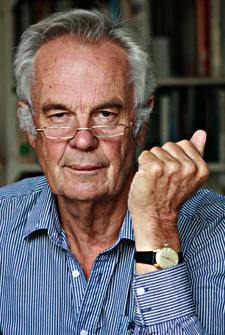
By Jan Oberg

Jan Oberg

The world is full of unnecessary violence and human suffering. Do you know anyone who’d like it to continue like that?

If we educate ourselves and look outside the box, we can create a better world for all. Peace and security can be learnt, making conflict illiteracy and most of the violence a thing of the past.

Below is how – not in a column of 800 words but in a twice as long mini text book. It’ll enable you to think new thoughts and take the first steps into a hitherto closed but beautiful landscape.

Here we go:

Conflict happen. They are basically a good thing. There is no human community without conflict – and if there were it would be a dictatorship, or utterly boring. But how good are we – citizens, media and politicians – at dealing with conflict? Why do we often see violence where it could have been avoided and large violence where only a little, applied early, could have stopped large and long wars?

First a couple of ‘credos’ based on a few decades of experience:

• Conflicts are usually much more complex than presented by the parties and those who intervene in them; many have existential dimensions too.

• If we could learn to analyse and understand conflicts and reduce early, over-emotional side-taking – like we have medical expertise investigating diseases and treating patients instead of condemning them – we would have a more peaceful and just world with much less suffering.

• Conflicts is a problem standing between parties – their solution is not located only in individuals but in changing everybody’s goals, attitudes, behaviour and visions of the future.

• Conflicts can be solved/managed better if we address them sooner rather than later.

• The moment violence has been introduced we face a much bigger problem: the original issue plus the humiliation, anger and wish for revenge. Read More »
TFF PressInfo # 308: Minsk – A fragile 2nd step

By Jan Oberg

Jan Oberg

Let’s be cautiously optimistic; the meeting did not break down and a ceasefire document was signed. But that is a minimum in this extremely tense situation. One would have hoped for more than what seems to be a revision of the first Minsk agreement.

What are the next steps for this ceasefire agreement to lead to a peace plan, the two things being vitally different?

First, what no one talks about, it seems: A rather large UN peace-keeping and peace-making force with a unit of some 8.000-10.000 robust military from countries completely neutral to this conflict. The classical three legs: military, civil police and civil affairs, perhaps 20.000 in all.

Why the military component? Because the OSCE can monitor and report but it cannot enforce. And because the parties don’t trust each other. And why should this agreement be more durable than the first without it?

If on the 16th of February some shots are again fired by a madman on either side, hell will break lose and accusations fly. And if this agreement doesn’t hold either, we are close to a large-scale war and the U.S. will pour in its weapons (if not before).

What is needed is something like Read More »

TFF PressInfo # 307: This is no time to ship lethal arms to Ukraine

By Jonathan Power

February 10th, 2015

Please put your hand up if you support giving lethal arms to the Ukrainian army and also supported the US going to war with Iraq in 2003 and with Libya in 2011, the former which unbalanced much of the Middle East and the latter which has left a country almost destroyed, semi-ruled by malicious militias.

Also raise your hand if you supported in 1998 the West going to war against Serbia in order to wrest away its province of Kosovo and give it independence- a move which ironically Russia (and Spain, worried about its Basques) opposed, arguing that this would set a precedent for territorial separation by force of arms.

If you supported all these three interventions don’t take offence if I question your judgment on the issue of arms for Ukraine.

I am trying to work out where President Barack Obama stands on all this. His vice-president, Joe Biden, seems to be running with the foxes while he himself is running with the hares. Take the president’s interview on CNN the weekend before last. Until then the official White House line had been that the crisis was instigated by President Vladimir Putin to block Ukraine from creating a democratic government.

But in that broadcast, as my esteemed fellow columnist, William Pfaff, has observed, “Obama conceded to an American TV audience that the official US narrative concerning the war in Ukraine isn’t true”.Read More »

Viewing “American Sniper”

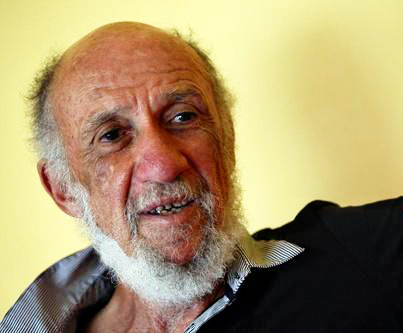
By Richard Falk

Richard Falk

American Sniper was released on Christmas Day, 2014. It is a movie version of Chris Kyle’s memoir, American Sniper: The Autobiography of the Most Lethal Sniper in U.S. Military History, with 255 kills, 160 officially confirmed by the Department of Defense. The movie set in Iraq is directed by Clint Eastwood, Bradley Cooper plays the part of Chris Kyle, and Sienna Miller is brilliantly cast in the role of his wife, Taya.

American Sniper is a fictionalized movie version of the war stories associated with Chris Kyle’s experience as a Navy SEAL in the Iraq War as recounted in his best-selling memoir. The film can be viewed from a variety of angles, including even as one more indictment of war as hell.

A second line of interpretation focuses on the intense psychological tensions experienced by this single American soldier and his comrades caught up in the horrors of urban warfare in Iraq. A connected theme are the adverse impacts of Kyle’s war service on his family that is made to cope with the complex and contradictory traumas of his absence (confronting his potential death on a distant battlefield) and his alienated presence whenever he returns, a scarred individual who longs to go back to Iraq to resume his assigned role as ‘legendary sniper.’

Multiple scenes in the movie portray Kyle as haunted by his service. In his book, Kyle consistently treats his victims as “savage, despicable.” At one pointRead More »

Pope Francis and religious cosmopolitarianism

By Richard Falk

Richard Falk

January 10, 2015

Points of Departure

Perhaps, the most hopeful recent development in human affairs is the emergence of Pope Francis as the voice of global conscience. Although Francis speaks with papal authority to the 1.2 billion Catholics in the world, he also increasingly speaks with human authority to the rest of us. How significantly this voice will resonate might be viewed as the ultimate test as to whether ‘soft power’ is overcoming the geopolitical death dance that imperils the human species as never before.

When visiting occupied Palestine in May of 2014 Francis prayed at the notorious Israeli separation wall in Palestine that the World Court had ordered dismantled as unlawful back in 2004. The pontiff chose to pray near a scrawled graffiti that read ‘Pope, we need some 1 to speak about justice.’ While in the Holy Land Francis articulated what justice should mean in relation to the Palestinian reality: the pope called the existing situation ‘increasingly unacceptable,’ defied Israel by speaking of the ‘State of Palestine’ while touring the West Bank, and urged the establishment of a ‘sovereign homeland’ for the Palestinian people where there would be freedom of movement (so long denied).

By this visit and declaration, Pope Francis indirectly underscored the ethical insight of Nelson Mandela and Archbishop Desmond Tutu that after the collapse of apartheid in South Africa, the great symbolic moral challenge directed at the conscience of humanity is the empowerment and liberation of the Palestinian people. Such an affirmation also confirms Francis’ credentials as an independent world leader who will not defer to Washington’s craven submission to Israel’s continuous trampling upon Palestinian rights.

More broadly, Pope Francis has made it repeatedly clear that he is a critic of global inequality and of a capitalist world economic system that has produced ‘plunder of nature,’ a ‘frenetic rhythm of consumption,’ and worship of ‘the god of money.’ Above all, according to the German cardinal, Walter Kasper, this is a pope who “wants to lead faith and morality back to their original center” in authentic religious experience.

Such leadership is definitely taking a form thatRead More »

TFF PressInfo # 306: Islam is not the problem. But keep your own house in order

By Jonathan Power

February 3rd 2015

The beheading of a Japanese journalist does not represent Islam. Saddam Hussein did not represent Islam. Bashar al-Assad does not represent Islam. Muammar Gaddafi of Libya did not represent Islam. The regular beheadings in Saudi Arabia for “crimes” such as adultery don’t represent Islam.

Likewise, the US dropping nuclear bombs on Hiroshima and Nagasaki didn’t represent Christianity. Nor did the torture practiced in Northern Ireland. Nor did the Buddhist-led atrocities against the Tamils of Sri Lanka represent Buddhism.

Nevertheless, it is probably true that in the late twentieth century a high percentage of the world’s violent conflicts took place inside the Muslim world or against non-Muslims. But that does not mean they were supported by a majority of Muslims. Indeed, I would surmise that they were approved by less than 1% of Muslims.Read More »

TFF PressInfo # 305: A theory of China

By Johan Galtung

Johan Galtung

2 February 2015 at the Penang Institute, Penang

A theory serves comprehension, prediction and identification of conditions for change. Seven such historical-cultural pointers will be indicated for China; using the West in general, and the USA in particular, for comparisons. The presentation draws on countless dialogues in China over 40 years, since 1973.

* China: in time, as dynasties; West: in space as empires.

Look at a histomap combining world history and geography, time and space: China shows up through 4,000 years as relatively coherent dynasties with complex transitions – and the West as empires–birth-growth-peaking-decline-fall, like the Roman, UK and now US empires – duration vs bubbles that burst; as China-centric vs hegemonic.Read More »

Bringing peace in Pakistan

By Jonathan Power


January 27th 2015

It looks like the recent slaying of 130 school children by rabid Islamic extremists finally has brought a halt to the long time policy of Pakistan facing both ways. Pakistan, because of policies developed over decades by its all-powerful army and its intelligence service, the ISI, has long played both ends against the middle.

On one end is the West, especially the US, trying to tug Pakistan into its orbit, so that it becomes a strategic partner in defeating the Afghan Taliban and its associates, and bringing peaceful democracy to Afghanistan. At the other end is what has been seen as the need to encourage and support the Islamic warriors in their effort to wrest a good slice of Kashmir away from India and, besides that, to make sure that Afghanistan under American tutelage doesn’t fall into the reach of Indian influence and thus threaten Pakistan’s deepest interests.

This clash of policies hitherto has been settled, say many, in favour of the militants, with the ISI for decades giving them arms, training and direction.Read More »

Pope Francis, Salman Rusdie, and Charlie Hebdo

By Richard Falk

Richard Falk

Prefatory Note
This post is a much modified piece published a few days ago in AlJazeera English, and republished elsewhere on line. As many have now done it tries to enlarge the context in which the Charlie Hebdo events are understood beyond a highlight film clip in ‘the war on terror.’ The alleged link between the Chouachi brothers and Al Qaeda of the Arabian Peninsula (AQAP) allows the attack on Charlie Hebdo to be experienced as the French 9/11, and with this a return of France to a status of post-colonial geopolitical relevance.
Without grasping the relevance of how the dominant treat the dominated within our societies and throughout the world, we are consigning ourselves to many repetitions of the private and public horrors experienced in France on January 7, 2015.

There is some common ground, but not much. The killings in Paris last week were horrifying crimes that expose the vulnerability of democratic societies to lethal vigilante violence, whether facilitated from outside or as a spontaneous expression of homegrown psychopathic alienation. Beyond this naked, morbid reality associated with the murder of the Charlie Hebdo cartoonists, police officers, and the supermarket hostages there is nothing but darkness, and in that darkness some dangerous monsters lurk.

We can be again thankful for the moral clarity of Pope Francis who a few days ago in the impromptu setting of a plane taking him from Sri Lanka to Manila shined a light upon the darkness. Unlike those who so ardently wielded the slogan “Je suis Charlie” the Pope understood that free speech without limits is an invitation to indulge the worst negative impulses that will then operate as viruses destroying the vital organs of the body politic.

What Pope Francis underscored was the impossibility of reconciling dignity with hurtful insults,Read More »

The irrelevance of liberal Zionism

By Richard Falk

Richard Falk

January 4, 2015

Frustrated by Israeli settlement expansion, excessive violence, AIPAC maximalism, Netanyahu’s arrogance, Israel’s defiant disregard of international law, various Jewish responses claim to seek a middle ground. Israel is criticized by this loyal opposition, sometimes harshly, although so is the Palestinian Authority, Hamas, and activists around the world. Both sides are deemed responsible in equal measure for the failure to end the conflict.

With such a stance liberal Zionists seek to occupy the high moral ground without ceding political relevance. In contrast, those who believe as I do that Israel poses the main obstacle to achieving a sustainable peace are dismissed by liberal Zionists as either obstructive or unrealistic, and at worst, as anti-Israeli or even anti-Semitic.

Listen to the funding appeals of J Street or read such columnists in the NY Times as Roger Cohen and Thomas Friedman to grasp the approach of liberal Zionism.

These views are made to appear reasonable, and even just, by being set off against such maximalist support for Israel as associated with AIPAC and the U.S. Congress, or in the NY Times context by comparison with the more conservative views of David Brooks (whose son currently serves in the IDF) who published a recent ‘balanced’ column lionizing Netanyahu, “The Age of Bibi” [Jan. 2, 2014].

Of all the deformed reasoning contained in the column, perhaps the most scandalous was comparing Netanyahu to Churchill, Read More »