The year 2015 – What are we in for?

By Johan Galtung

Johan Galtung

Three, maybe four dramatic, global processes are unfolding.

First, the West–particularly USA, Israel, France – fighting very violently and counter-productively to keep their grip on the world.

Second, Eurasia, spearheaded by Russia-India-China in BRICS (Brazil, Russia, India, China, South Africa) expanding and consolidating, successfully and nonviolently.

Third, Islam expanding and consolidating, partly by conversion to Islam, partly through the dream of a new caliphate, partly violently.

Fourth, Latin America and Africa in the old Third World expanding and consolidating, spearheaded by Brazil-South Africa in BRICS.

If you want to live drama, you have chosen the right year.

The basic conflict is the first against the other three; the declining against the emerging. After some time conflicts among the three will show up, particularly Islam with the other two.

Economically right now Read More »

TFF PressInfo # 304: Wisdom of expression

By Jan Oberg

Jan Oberg

My answer is simple: the issues surrounding the horrific attack on Charlie Hebdo disappeared so fast because the general Western reaction was ill-considered/phony and therefore unsustainable. But there is actually still quite a lot to be discussed.

Secondly, European politicians and media chose – quite uniformly for a professed pluralist society – to not discuss the possible causes. The more convenient interpretation was that the perpetrators were just madmen and people like that should be hunted down and eliminated (like IS in Syria and Iraq).

Without causal analysis we can more easily go straight for more “security”, intelligence, surveillance and more police and military in the streets – in short, symptom treatment.

Further, when we deny human beings any motives we de-humanise them and then they don’t deserve to be heard or treated as humans. Evil is always ‘the other.’

The attack on Charlie Hebdo was not an attack on the entire Western culture, democracy or freedom of expression as such. The perpetrators would hardly know such a concept.

It was an attack at one weekly magazine for what it had misused freedom of expression to do.

Misused?

Freedom and wisdom of expression can be combined. There are at least 4 reasons why we should be proud of the principle of freedom of expression and therefore be wise enough to not misuse it or make it a weapon against others. Read More »

TFF PressInfo # 303: Visit Iran in 2015 and see it for yourself

By Jan Oberg & Farhang Jahanpour

January 23, 2018

It’s a civilization of its own, very diverse and immensely rich, proud and hospitable.

It’s a country for lovers of history, architecture, religion, classical or contemporary art, literature, films, nature and landscapes – and, most of all, fellow human beings.

The Iranians are easy to get in contact with anywhere you go, also no animosity against Westerners. They are eager to talk politics and culture and if you are open yourself you’ll soon find yourself at a family table. And the food is high quality, things taste nature more than industry.

You’ll get much more value for your foreign currency in Iran than in most other countries.

It is safe – as safe as any European country and much safer than the rest in the Middle East. It is comparatively cheap. You may obtain your tourist visa at the local embassy but also upon arrival. (Special procedure for U.S. citizens, though).

By just going there you’ll get a more balanced view of Iran than you can possibly get from your media.

You’ll build people-to-people bridges and gain mutual respect and – for sure – make friends. And – who knows? – make a little peace too.

So, we’ve put together just a few of links to a diversity of aspects of what the visitor is likely to experience – just to wet your appetite…

UNESCO World Heritage sites in Iran

Rick Steves – the most surprising country…

Life in the streets of Tehran

Scenary and landscapes

Why is Rumi the best-selling poet in the U.S.?

Tehran’s longest avenue

Persian cuisine

Isfahan – beauty and history

Panoramic views of Shiraz

Classical music

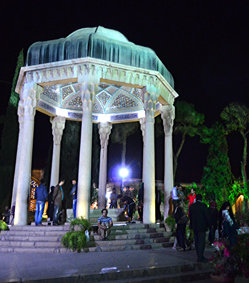
Dick Davis, author, “The Face of Love: Hafez and the Poets of Shiraz

Love and Pomegranates – Artists and Wayfarers on Iran

Life in Iran – An Australian journalists explorations

The luxurious Iranians

Yazd – centre of Zoroastrian culture

UNESCO world heritage – Tabriz Basar complex

Teahouses and coffee shopsRead More »

Misunderstood fundamentalism

By Jonathan Power

January 20th 2015

In his book “Faith and Power” Edward Mortimer, the former foreign affairs columnist for the Financial Times, when writing about Rishid Rida, the great Islamic intellectual of the first half of the twentieth century, asked himself if Rida was “fundamentalist” since he was an admirer of the militant Wahhabi puritans of Saudi Arabia. “I do not think so”, concluded Mortimer, “although I must admit that the precise meaning of this word when used in the context of Islam eludes me.”

At a time when the West is again aroused – because of the attack on Charlie Hebdo – by the actions of extreme Islamic fundamentalists we should note that it is astonishingly difficult to define fundamentalism either in Islam or Christianity. If it means “an effort to define the fundamentals of one’s religion and a refusal to budge from them once defined then surely anybody with serious religious beliefs of any sort must be fundamentalist in this sense”.

In Christianity there are many strains of fundamentalism. The Catholic Church, which abhors Enlightenment liberalism, is clearly fundamentalist when it comes toRead More »

TFF PressInfo # 302: Interview with “Iran Review” – and a word about intellectual freedom

By Jan Oberg

Jan Oberg

Lund, Sweden, January 21, 2015

I visited Iran for a third time in December last year, participating in the international UN-endorsed conference, WAVE – World Against Violence and Extremism.

I gave interviews to some ten agencies and media but the longest was this exclusive one by a passionate and very professional 24-year old Iranian journalist, Kourosh Ziabari, for the esteemed Iran Review.

The distorted image of Iran

TFF has been engaged with an in Iran the last three years. We believe that the general image in Western media – covering almost only Iran’s nuclear program, human rights violations and Iran as a threat to the world – is neither objective nor fair.

It conveniently omits the harmful effects on the Iranian society of Western policies since the days of the US-UK coup d’etat against the democratically elected President of Iran, Dr. Mossadegh, in 1953.

Whether intended or not, this type of media coverage risks contributing to deeper conflict and legitimise future violence – rather than mutual understanding and peace.

It is therefore imperative to go there and see for yourself. More about that in the next TFF PressInfo.

What TFF tries to do in Iran

TFF has these aims with its work in Iran:

a) Fact-finding: to simply learn first-hand about its history, culture, people and how they think on all levels; by traveling around and interviewing people, as many and different as possible.

b) To influence the image in the West of IranRead More »

“Je ne suis pas Charlie.”

By Chaiwat Satha-Anand*

The Paris march for unity on Sunday, January 11, 2015 attracted more than a million people and world leaders including Germany’s Merkel, Britain’s Cameron, Turkey’s Davutoglu, Israel’s Netanyahu, and Palestine’s Abbas, among others. This extraordinary action by leaders and citizens is in response to perhaps the bloodiest week in the last half of a century in France with 17 dead.

It began with the killing of 12 people at a previously little known satirical magazine “Charlie Hebdo.” French President Francois Hollande warned that the threats facing France is not over even after the three perpetrators were dead.

The threat is real, however, not only because of information gathered by various intelligence agencies, but also because the violence and what has followed indicates a rift in the way Europe, and in fact the world, is moving in the context of fierce contestation of different ethics/values people are willing to die and for some – to kill for.

This article is an attempt to argue that the motto “Je suis Charlie”, while commendable in terms of solidarity with victims of senseless violence, transform the killing into politics of identity with potentials for further deadly conflict in the present context if certain existing signs are properly understood.

Signs
Arguably in response to the killing in Paris, there are reports of Muslims becoming targets of more frequent attacks: women’s veils have been pulled at, pork thrown at mosques Read More »

Memoir sketch: Championing lost causes

By Richard Falk

Richard Falk

By chance I was reading César Vallejo’s poem, “Black Stone on a White Stone,” in a translation by Geoffrey Brock, and was struck by the opening stanza:

I’ll die in Paris in the pouring rain

a day I have a memory of already.

I’ll die in Paris—I won’t try to run—

a Thursday perhaps, in Autumn, like today.

Without being literal, I was reminded that I could appraise my death while alive, and not leave a final reckoning to some solemn memorial event in which speakers are challenged to find humorous anecdotes to lighten the occasion, otherwise uttering honorific platitudes quite unrelated to the experiential core of my being.

I had been thinking quite a bit recently about ‘lost causes.’

Recently I gave a lecture at Columbia University on this theme, inspired by Edward Said’s seminal late essay “On Lost Causes” (1997) in which he ties together the ‘nobility of failure’ as portrayed in literature with his own unswerving dedication to the Palestinian struggle for a just peace. On that occasion, Read More »

TFF PressInfo 301: Open Letter to Klaus Schwab of the World Economic Forum

By Kamran Mofid

To:
Prof. Klaus Schwab,
Founder and Executive Chairman,
World Economic Forum
Switzerland

Dear Prof. Schwab,

I notice that you hope the 2015 WEF meeting will be a “starting point for a renaissance of global trust”. This is a noble aim, very important and timely. Thus, as the Founder of Globalisation for the Common Good Initiative (GCGI) I wish to endorse and support you in this aim.

Today in many parts of the world, the so-called market, and the values of consumerism, underpinned by the “Black Friday” values, have become increasingly dominant and are now seriously threatening our global future, both in terms of our care of the planet and in increasing societal rivarly and conflict.

In the process we have lost trust in everything. This is why I believe your aim is so important. In the global society in which we now all live, it is essential for our common survival and wellbeing that we build cultures of trust, being prepared to take risks for the common good.

Trust surely comes from the experience of a relationship – an in-depth experience – which by its nature is rooted in values that are not necessarily economic or monetary.

At the basis of such trust is an understanding that, in spite of our differences, we have our humanity in common. Archbishop Desmond Tutu speaks of ‘that African thing, Ubuntu’ – the notion that a person is only a person through other persons. A person with ‘Ubuntu’ is open and available to others; all others, for we are incomplete without each other. Ubuntu echoes the insight of John Donne, that ‘No man is an island ….. I am involved in mankind’, and that was in the seventeenth century, long before globalisation and the Davos Forum.

Having said that, I firmly believe that if you truly wish to bring about an environment of trust between the 99% who have never come to Davos and the top 1% that always do, then, it is important to sincerely ask why there exists such a high level of mistrust beween the two?

Continue reading Kamran Mofid’s argument and proposals to the World Economic Forum at the homepage of Globalisation for the Common Good Initiative (GCGI)

And read more about Dr. Kamram Mofid and the GCGI here.

Could it be the world is getting better?

By Jonathan Power

January 13th 2015.

We have much to be glum about at the onset of 2015- the latest is the killings by ultra Islamists of the cartoonists in Paris. But we are brainwashed with bad news. “If it bleeds it leads”. One plane crash is worth more airtime than news that we are winning the fight against early death.

The World Health Organization has some telling facts. Over the last two decades infant deaths have fallen by a half. Measle deaths by three-quarters and both tuberculosis and maternal deaths by a half. AIDs-related illnesses have been cut by over a quarter. In 1960 one in five children died before the age of 5. Today it is one in 20, and falling.

Developing countries have caught up far more quickly in health than in wealth. For instance, Vietnam has the same health as the US had in 1980 but at present the same income per head as the US had in 1920.

Despite the Great Recession of the last six years poverty has plummeted. Although most of that drop has happened in China and India it has also happened in most Third World countries.

Population growth is slowing. Read More »

Paris – and then?

By Johan Galtung

Johan Galtung

January 12, 2015

What happened–known all over the world–is totally unacceptable and inexcusable. As inexcusable as 9/11, the coming Western attack and the Islamist retaliation, wherever. As inexcusable as the Western coups and mega-violence on Muslim lands since Iran 1953, massacring people as endowed with personality and identity as French cartoonists. But to the West they are not even statistics; “military secrets”.

However, the unacceptable is not unexplainable.

In this tragic saga of West-Islam violence, spiraling downwards, the way out is to identify the conflict, what is this violence about, and search for solutions. I wonder how many now pontificating on Paris–a city so deep in our hearts–have taken the trouble to sit down with someone identified with Al Qaeda, simply asking, “what does the world look like where you would like to live?” I always get the same answer: “a world where Islam is not trampled upon but respected.”

“Trampled upon” sounds physically violent. But there are two types of direct violence intended to harm, hurt: physical violence with arm-arms-army; and verbal violence, with words, symbols. For instance with cartoons, with a touch of art giving them some impunity; for some. A human being–body, mind, spirit–can be hit somatically, mentally, spiritually. Maybe symbolic violence even hits more deeply?

The naiveté in blaming the secret police for not having uncovered the brothers on time is crying to the heavens. What happened to Charlie Hebdo was as predictable Read More »