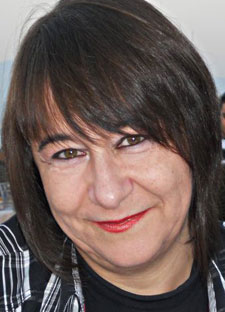
The EU foreign policy: Ten wishes

By Johan Galtung

Speech given in Brussels to the European External Action Service, Free University, October 8, 2013

The EU is in a crisis mainly of its own making. Some of it is economic and can be solved by strict control on speculation, separating savings and investment banks, by gradual debt forgiveness, by lifting the bottom up, the most miserable communities, by the GIPSI (Greece, Italy, Portugal, Spain, Ireland) countries cooperating, by stimulating agricultural cooperatives with direct sales points, etc. But much of it is political; the EU has become invisible on the world scene, incapable of a foreign policy building peace and security, also much too tied to US and Israeli fundamentalisms and too anti-Islamic.

The following are some ideas about steps that can be taken.

The EU glittering success as a peace zone is much needed in zones of war and where war threatens: the Middle East, Central Asia, East Asia. A Middle East Community, of Israel with five Arab neighbors (Lebanon, Syria, Jordan, Palestine, Egypt); a Central Asian Community of Afghanistan with eight neighbors (Iran, Pakistan, five former Soviet republics, Ashad Kashmir) with open borders (crucial for the Pashtuns and others); and a North East Asia Community (with two Chinas, the two Koreas, Japan, Mongolia and the Russian Far East (now with Khabarovsk as capital) could all benefit from EU opening its archives, telling how it all happened, sharing a major learning experience for humanity.

A United Regions added to the UN but with no veto powers, of the EU, AU, SAARC, ASEAN and the coming Latin America and the Caribbean, Organization of Islamic Cooperation, Middle East, Central Asia, North East Asia could take shape and become a key tool of global governance.

EU and Crisis Management. There are many of them, and there will be more crises given the legacy of colonialism constructing countries, putting together what did not belong together, dividing what did. An example are the four Sykes-Picot colonies: Iraq and Palestine for England, Lebanon and Syria for France, built-in catastrophes, now exploding. The EU will have to recognize the responsibility of some members, and then listen to what all the parties want, trying to arrive at a bridging perspective. Generally speaking, two approaches:

* federation within, with high autonomy for the nations and democracy within each part – but not an all over “one person one vote” which would result in the majority dictatorship of the most numerous nation;

* confederation, community, between, with open borders for nations that belong together to travel freely.

For Syria this would mean both respecting the Sunni majority and the minorities protected by Shia rule, with a two-chamber parliament, territorial for the provinces and non-territorial for the nations, with veto rights in matters concerning their identity. EU should send well trained mediators to the crisis area to understand the parties, and facilitate dialogue between them at the local level, many places.

EU and the use of military force. Should be Chapter 6 peace-keeping, not Chapter 7 “peace enforcement” (a contradiction in terms). Given the strong attachment to their goals of autonomy, a ceasefire with no image of a solution will be used for rest, smuggling of arms and redeployment; the road to ceasefire passes through a vision of a solution, not vice versa. The role of peace-keeping is to prevent violence, not to use it, and with that in mind peace-keepers should have military expertise and weapons for self-defense; some police training for crowd control; nonviolence training; some mediation training to know how to understand and facilitate dialogues; be 50% women more focused on human relations, less on control; and be so numerous that we can talk about a blue carpet, not only blue helmets.

EU-Third World, mostly former colonies: time is overdue for some reconciliation. Just compensation for the genocide and sociocide–killing social structures and cultures–is out of question, but joint understanding is not. Mutually acceptable textbooks about that period would be very useful, building on the German experience rewriting text books for reconciliation.

West-Islam. At the political level Turkey should become member, making Istanbul a hub for positive West-Islam relations. North Cyprus should be recognized; all of Cyprus – unitary state, federation or confederation – should be an EU member. A dialogue of civilizations could aim at combining Western pluralism with Muslim closeness and sharing for mutual benefit. The Western approach to the Catholic-Protestant divide might be useful for Shia-Sunni understanding.

Russia. Historically the many invasions were from West to East with two exceptions: Russia hitting back after Napoleon and Hitler. There is room for reconciliation based on such facts rather than the paranoid use of the image of Russia, like of China, as peril.

China. The main Silk Road was not a track in the desert and the mountains but a major Buddhist-Muslim East Asia-East Africa sea lane for 1000 years, 500-1500; destroyed by the Portuguese and the English in the name of their Kings. Time for reconciliation – including gunboat “diplomacy”, opium export, and colonization of Macao-Hong Kong is overdue. And an EU recognizing Israel partly because of two thousand years old history might also recognize some Chinese ocean rights with a much more recent history–in no way leaving out joint Chinese-ASEAN ownership of some of the islands, and joint Northeast Asian Community in due time of Senkaku-Diaoyu islands, and others, with their EEZs.

Eurasian Partnership. The EU is a peninsula on the Eurasian continent; increasingly connected by excellent railroad links mainly built by the Chinese, coming ever closer together. This is the time to add an Eurasian orientation to a Trans-Atlantic one, today in abeyance, waiting for he USA to recover and stop spying on the world.

All this is feasible: with realism in the brain and idealism in the heart.

Originally published at Trancend Media Service here.
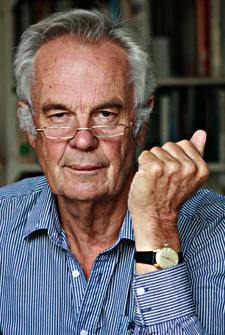
Time overdue to cut nuclear weapons

By Jonathan Power

At the time of the “Cuban Missile Crisis” in 1962 when the Soviet Union secretly shipped into Cuba nuclear weapons and the US, under President John Kennedy, threatened to bomb them, the world came as close to nuclear war as it ever has. Robert McNamara, the US Secretary of Defence, wondered if he would ever see another sunset. At universities students marched. The crisis ended when Kennedy agreed – with only a handful of his inner circle knowing this – to remove US nuclear missiles in Turkey which, with their short flight times, threatened Russia as much as the Cuban missiles threatened the US.

Many years later in June 1982, after only modest progress in mutually reducing nuclear weapons on each side, around three-quarters of a million demonstrators gathered in New York’s Central Park demanding a freeze on nuclear weapon production. The New York Times reported that “it was the largest demonstration in American history”.

But in 2013, despite more cutting, the Cold War over, the two old adversaries still have 6,400 nuclear weapons. Read More »

Criminalize war!

By Johan Galtung

Nobody has brought this simple message to the world like the Perdana Global Peace Foundation in Kuala Lumpur, Malaysia. As the leader, Mahathir Mohammad, Malaysia’s fourth prime minister says:

“Peace for us simply means the absence of war. We must never be deflected from this simple objective”.

So they organize compelling exhibitions and conferences to highlight the atrocities and horrors of war, starting with World War I, often in cooperation with Muhammadiyah Yogyakarta University in Indonesia. A very clear message from the Southeastern part of the world to the Northwestern part: Stop It! All your rules of war add up to its legitimation; wars get ever worse as measured by the percentage of non-combatant, civilian casualties; from about 10 percent in World War I to 90 percent in the Vietnam and other wars at the end of the 20th century. They dare refer to crimes as “unintended consequences”, “collateral damage”.

Take Norway, a “peace nation”, as example; not the USA an Israel with their gods, the idea of being chosen, and exceptionalism. See what Norway does against the spirit of UNSC-United Nations Security Council Resolution 1973 to protect civilians, promote cease-fire and mediate a political solution in Libya. And against the UN Charter Article 2 outlawing war.

According to testimony by pilots on the Norwegian Broadcasting Corporation “Brennpunkt” (In Focus), 25 percent of the bombing was planned with goals selected in advance. Read More »

Israel’s politics of deflection: Theory and practice

By Richard Falk

General Observations

During my period as the UN Special Rapporteur for Human Rights in Palestine on behalf of the Human Rights Council I have been struck by the persistent efforts of Israel and its strong civil society adjuncts to divert attention from the substance of Palestinian grievances or the consideration of the respective rights of Israel and Palestine under international law. I have also observed that many, but by not means all, of those who represent the Palestinians seem strangely reluctant to focus on substance or to take full advantage of opportunities to use UN mechanisms to challenge Israel on the terrain of international law and morality.

This Palestinian reluctance is more baffling than are the Israeli diversionary tactics. It seems clear that international law supports Palestinian claims on the major issues in contention: borders, refugees, Jerusalem, settlements, resources (water, land), statehood, and human rights. Then why not insist on resolving the conflict by reference to international law with such modifications as seem mutually beneficial?

Of course, those representing the Palestinians in international venues are aware of these opportunities, and are acting on the basis of considerations that in their view deserve priority. It is disturbing that this passivity on the Palestinian side persists year after year, decade after decade. Read More »

Soon an accord on Iran’s nuclear program?

By Jonathan Power

Now that Iran and the US have agreed to negotiate over Iran’s nuclear program hopes are rising that a deal can be made that will end the 34 year-long mutual estrangement.

But wait a minute. Before we discuss the possibilities of such a deal coming to fruition there is lurking in the wings a would-be putative saboteur – Israel. At the UN last September Prime Minister Benjamin Netanyahu presented to journalists a caricature of an Iranian nuclear bomb and with a marker pen drew a red line near the top. He made it clear there was a step in the Iranian nuclear program that would be a step too far. The implication was that Israel would make air strikes on Iran’s nuclear facilities, just as it did against Iraq’s Osirak reactor in 1981 and Syria’s in 2007. Netanyahu appears convinced that Iran is on the nuclear bomb route and that President Barack Obama is in danger of being irresponsible.

Israel did not inform the US in advance of the attacks on Osirak or the Syrian reactor. Perhaps, if it feels that the Americans have got it wrong in the present negotiations, it would do the same again. After all, say the Israelis, it is Israel that is the most likely target of an Iranian bomb.

This is ludicrous thinking since Israel could retaliate with its huge stock of nuclear weapons. That is deterrence enough.Read More »

Is Macedonia a state?

By Biljana Vankovska – Билјана Ванковска

Recently a short statement (from a longer interview) that “Macedonia and Bosnia are post-Yugoslav states that, in fact, are not states because Bosnia is a protectorate of some kind and Macedonia is a type of an ambiguously collapsed state which never united in order to be able to fall apart” echoed as an earthquake with the public.

Even “Vodno” [President’s office] was visibly upset and angered at the statement of one of the most authoritative professors and public intellectuals from the area of former Yugoslavia, Zarko Puhovski. He is one step away of being labeled persona non grata. The very fact that part of the establishment dramatically took to heart a media statement of a professor from a third country, as if said by an influential political factor or a center or power, is a clear indication of the accuracy of the thesis that we are not a true state. By the way, Puhovski had given statements such as: Serbia is “an unfinished state”, Kosovo is “ a caricature of the other independent states in the region”, and that there is more democracy in the Central Committee of the Communist Party of China than in EU.

Can you imagine a serious state reacting to a media assessment of an intellectual, regardless of his influence? At the same time, our authorities are deaf to the criticism that comes from the citizens, the domestic intellectuals, and even those that come from EU, OSCE, and the State Department. Read More »

The Westgate Mall massacre: Reflections

By Richard Falk

The carefully planned attack by al-Shabaab on civilians in Nairobi’s Westgate Mall carried the pathology of rage and the logic of fanaticism to unspeakable extremes. Imagine deciding on the life or death of any person, but particularly a child, by whether or not they could name the mother of Mohammed or recite a verse from the Koran.

Islamic fanaticism should be condemned with the moral fervor appropriate to such a violation of the most fundamental norms of respect for innocence and human dignity. To gun down at random whoever happened to be shopping at Westgate Mall on the fateful day of September 21st is to carry political violence beyond a point of no return.

Of course, even fanatics have a certain logic of justification that makes their acts congruent with a warped morality. In this instance, the al-Shabab case rests on a vengeful response to the participation of the Kenyan army units in a multinational military operation of the African Union in neighboring Somalia. This AU operation, reinforced by U.S. drone attacks and special forces, has led to the severe weakening of al-Shabab’s political influence in Somalia, provoking an evident sense of desperation and acute resentment, as well as a tactic of making those that interfere in Somalia’s internal politics bear some adverse spillover effects.

But if such an explanation is expected to excuse the demonic actions at Westgate, in any but equally depraved pockets of alienated consciousness, it is deeply mistaken. Read More »

The violence of Psalm 21

By Richard Falk

There is some difficulty in reconciling humanistic ethics with biblical scripture that has disturbed me recently. If a religious text nurtures morally unacceptable impulses that are acted upon either consciously or sub-consciously in political domains, how can these adverse influences be repudiated without purporting to claim a hegemonic status for a secular reader?

Even a religiously oriented person such as myself, who rejects deference to whatever is contained in the most holy of books if it conflicts with conscience, is troubled by this tension between what we believe to be right and what can be found in the holiest of books. In the West, where the specific religious roots of political authority are rarely acknowledged directly, the problem persists, especially in claims by the state to deal with its enemies at home and abroad.Read More »

War is not over when it is over – A review

By Mira Fey

When discussing conflicts and military interventions, the aftermath is neglected by state leaders and the mainstream media. The traumatizing effects of the conflict itself and the following intervention on the civilian population that is supposed to be protected are ignored.

Aside from being in the line of fire and being forced to fight for one of the belligerents, these effects include a mass exodus of refugees, a division of the population into opponents of the intervening force and “collaborators” resulting in persecution and often torture of the latter, and more human rights violations, now by the occupying force.

While men often are the visible victims of forced recruitment, persecution and torture, women, young girls, and children are the silent sufferers. They are subjected to beatings, rapes, and domestic violence from returning tortured husbands trying to regain at least some respect through oppressing the most vulnerable ones.

Ann Jones wants to give these women a voice. (Continue here)

Mira Fey’s CV

Became TFF Associate in August 2013

MIRA FEY
Avenue de Miremont 46 | 1206 Geneva, Switzerland | mirafey@gmail.com • Blog

EDUCATION
– M.A. International Relations/Political Science Autumn 2013 to Spring 2015
The Graduate Institute of International and Development Studies (IHEID), Geneva, Switzerland
– B.A. International Relations Autumn 2010 to Spring 2013
Malmö University, Sweden
Thesis: The Importance of National Discourse for IR – Critical Discourse Analysis of US Congressional Debates on the Secure Fence Act of 2006 (Passing Grade A/Excellent)
– Related Coursework: Global Political Economy, Regionalization and Globalization, Human Rights
Erasmus Exchange Autumn term 2012
Coventry University, United Kingdom
Related Coursework: Global Organized Crime, Comparative Politics and Governance

EXPERIENCE
Various positions, most recent: Vice President and Head of Program Coordination Autumn 2011 to Spring 2013
Malmö Association of Foreign Affairs (UF Malmö) Coordinating the department for program and the communication with other departments and the university
Academic Writing Tutor Autumn 2011
Malmö University
Volunteer in various NGOs
Tumaini Centre, Tanzania Autumn 2008
Project for street children
AIDS-Hilfe Wuppertal e.V., Germany Summer 2008
Organization offering support and counseling for victims of HIV/AIDS
Foyer Keraman, France Summer 2007
Institution for handicapped persons Assisting in social activities Translation for French-speaking clients

SKILLS & ABILITIES
Team Work Society, Coventry University
Communication proficient with Windows 7 and Microsoft Office 2010
Languages German, English; limited working proficiency in French and Swedish