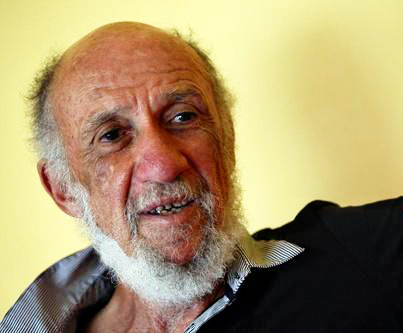
The Failure of U.S. foreign policy in the Middle East

By Richard Falk

Prefatory Note: What follows is a modified version of the Morton-Kenney annual public lecture given at the University of Southern Illinois in Carbondale on November 18, 2015 under the joint sponsorship of the Department of Political Science and the Paul Simon Public Policy Institute.

The Failure of U.S. Foreign Policy in the Middle East

While focusing on the ‘failure’ of American foreign policy in the Middle East it is relevant to acknowledge that given the circumstances of the region failure to some degree was probably unavoidable. The argument put forward here is that the degree and form of failure reflected avoidable choices that could and should have been corrected, or at least mitigated over time, but by and large this has not happened and it is important to understand why.

This analysis concludes with a consideration of three correctible mistakes of policy.

It is also true that the Middle East is a region of great complexity reflecting overlapping contradictory features at all levels of political organization, especially the interplay of ethnic, tribal, and religious tensions internal to states as intensified by regional and geopolitical actors pursuing antagonistic policy agendas. Additionally, of particular importance recently is the emergence of non-state actors and movements that accord priority to the establishment and control of non-territorial political communities, giving primary legitimacy to Islamic affinities while withdrawing legitimacy from the modern state as it took shape in Western Europe. Comprehending this complexity requires attention to historical and cultural background, societal context, and shifting grand strategies of geopolitical actors.

I.

From many points of view American foreign policy in the Middle East has been worse than a disappointment. It has been an outright failure, especially in the period following the 9/11 attacks of 2001. Even such an ardent supporter and collaborator of the U.S. government as Tony Blair, the former Prime Minister of the United Kingdom, has acknowledged as much in a recent set of comments where he basically says that the West has tried everything, and whatever the tactics were relied upon, the outcome was one of frustration and failure. Read More »


School mediation – problems and solutions

By Johan Galtung

The world wave of mediation has reached school systems all over; in some countries less, in others more. Like in Spain, as evidenced by this heavily oversubscribed seminar on school mediation. When asked to express what they want to see happen in schools, the most frequent answer was convivencia, living togetherness. In one word, not as a composite concept. Like in Japanese, the one word is kyosei.

What does it mean, concretely? I would interpret it as positive peace at school. Something behavioral: cooperation for mutual and equal benefit. Equity. Something attitudinal, emotional resonance, I enjoy your joy, I suffer your suffering: Empathy. Harmony.

But the school is a big, holistic place. Not only children, but also adults, teachers and staff. And parents. Positive togetherness within and between all these four groups? A huge order.

Many simplify this to togetherness among children, and not positive, only less negative. Less bullying, to protect victims – parents demand that – and to use teacher time for teaching, not keeping discipline–the staff demands that. However, it all hangs together.

In addition, simplification runs against another big world wave of two values: diversity and equality, against homogeneity-verticality. Read More »

Bombing ISIS is not the solution

By Jonathan Power

November 17, 2015

The Barbarians are not at the gate. There is no need for a rush to war as the French president, Francois Hollande, suggests.

The Americans did this after 9/11 and raced into Afghanistan with the intention of eliminating Al-Qaeda. They failed and they are still in Afghanistan – America’s longest war ever. They have become bogged down in fighting Afghani movements including the Taliban. Some of the Taliban may have hosted Al Qaeda for a while, but accounts suggest they weren’t happy about it. They certainly don’t today.

In Harvard University’s magazine, “International Security”, Professors Alexander Downs and Jonathan Monten report they have studied over 1000 military interventions over many years. It is very rare that there has been success.

Bogged down, bogged down. These two words should resonate in every Western (and Russian) leaders’ head. Vietnam, Iraq, Afghanistan, Lebanon and Libya. (Also Russia in Afghanistan and in Chechnya).

There is such a long list of failure. Give one good reason why it should be different this time.

Think of Read More »

China wants Taiwan

By Jonathan Power

November 10th 2015

President Xi Jinping of China has poked us in the eye again. What you see is what you get. In the case of his meeting last Saturday with Ma Ying-jeou, Taiwan’s president and leader of the Kuomintang Party, it tells the world that if it plays its hand quietly, even gently, China, if it is shrewd, can in the end win re-unification.

The leaders of the two parties, the communists and the Kuomintang, the Republican claimants for power, hadn’t met since 1945 during aborted peace negotiations. A while later the Kuomintang, facing defeat from Mao Zedong’s communist army, fled the mainland to Taiwan.

Beijing has over a thousand rockets aimed at Taiwan. The US supplies arms aplenty to Taiwan – some of which, provocatively, need American cooperation and participation to be fired. Despite that China cis capable of overwhelming the island’s defences.

But in reality both sides need each other. Read More »

Quo Vadis, Europe – Where are you going?

By Johan Galtung

Written before the violence in Paris.

Answer: Nowhere, because Europe does not exist. On the axis of five stages of positive peace, the process came to a standstill at stage 3. They made miracles out of stage 1– cooperation for mutual and equal benefit – and were good at stage 2 – empathy with each other, your problems are also mine, your solutions are also mine. And then the long march through the corridors of institutionalization, stage 3, solidifying; from French-German cooperation to the ever changing treaties for an ever deeper European Union.

And then it stopped.

Stage 4 – fusion of the member states into one Europe – is not there and will not come for some time. But stage 5 – transmission to others who learn region-building from EU achievements and mistakes – works.

What went wrong? In daoist terms, there were strong forces for a holon, a holistic Europe, but the counter-forces were even stronger.

And they were many.Read More »

TFF PressInfo # 349 – Burundi’s crisis and the world’s inability to prevent violence

By Jan Oberg

Lund, Sweden, November 9, 2015


The big – not great – powers of the world have embassies everywhere, plenty of intelligence services, special forces on the ground and satellites in space. They can even hit and kill individuals they don’t like.

They can intervene here and there and everywhere – particularly if they have economic or strategic interests or their own nationals are in danger.

These very weeks they can squander incredible sums of taxpayers’ money on new nukes and huge paranoia-based military exercises in a Europe – to which over a million refugees come because these big – not great – powers have contributed to the destruction of their houses, villages, life opportunities, whole countries and cultures.

So it’s amazing what the big ones can do. It would be impressive if it wasn’t so destructive and self-defeating. Again and again.

The only things they don’t seem capable of, however, is to:

a) fulfil their self-appointed mission called Responsibility to Protect and prevent violence where they have no interests and to

b) contribute to making life better for all and create genuine peace, justice and development.

Take Burundi.

There is a colonial history as well as a history of genocide, extreme poverty and corruption, ten years of economic and other mismanagement under the ever more authoritarian rule of Pierre Nkurunziza.*

Since April this year, there have been tons of indicators that something really bad could happen. The trained observer cannot fail to see the pattern, the incremental, systematic increase of repression of the people.

It’s all well summarised in this background article. 

And what do the big powerful do over 6 months with this potential crisis, possibly civil war or genocide – knowing full well about it?

Absolutely nothing!Read More »

US and China clash at sea

By Jonathan Power

The US has done a daring and – some would say – dangerous thing. Towards the end of last month it sent a destroyer to sail within 12 nautical miles of two man-made islands claimed by China in the South China Sea. China was outraged. The Blogosphere went wild with nationalist denunciations of American attempts to encircle their country. The press wasn’t much quieter.

It’s all about control of the seas, not about who owns the islands, but it is laced with a good deal of bad behaviour on both sides. As with Taiwan China reaches into the past – as President Xi Jinping did recently – to justify a present day claim. In fact the past is a little murky. Besides, it has been overtaken by the UN Law of the Sea, of which China is a member. This makes clear that China has no right to forbid foreign warships’ passage within 12 miles of an artificial island. Nevertheless, China is right to point out that the Law of the Sea is neutral on claims that existed before it came into effect.

The Law of the Sea also makes clear that artificial islands – which some now are – do not give China control of the surrounding seas. Read More »

Cultures of war, cultures of peace

By Johan Galtung

We have war and peace, theory and practice. And deeper down cultures of war and peace, notions of what the world is or could be. The latter is not necessarily peace, could also mean removing obstacles to war.

Timothy Snyder, “Hitler’s World” (NY Review of Books, 24 Sep 2015) and Greg Grandin, “The Kissinger Effect: The relentless militarism of the national-security state and its perverse justification begin with Henry Kissinger” (The Nation, 28 Sep 2015) are both on that line.

Hitler’s World derives from Darwinist struggle for niches, with survival of the fittest. His niche is not the whole world but what is needed to feed the German people, and here Ukraine plays a major role. The food chain is key to the image, with humans on top, eating animals and plants, but not eaten by them. So also for the human species, divided in races with the Aryan race on top, “fittest” as evidenced by domination all over; never slaves. On top of them are the Germans; their state not an end but the military arm obliged to be strongest.

To Hitler that world is natural, and inherently stable. Values, equality, human rights, equal right to life, Christianity, capitalism, communism, are anti-natural. For Hitler such ideas…

Continue here

Israel’s apartheid state

By Jonathan Power

October 27th 2015.

Albert Einstein once said that “insanity is doing the same thing over and over again and expecting a different result”. That’s how it seems to be with President Obama sending his Secretary of State, John Kerry, to attempt to resurrect the talks about talks between Israel and Palestine.

No one knows if the renewed unrest among young Palestinians who are confronting Israel again with stones and knives – and in return bullets are fired to quell the protests – is going to lead to a third Intifada. The signs are not propitious. If not today then certainly tomorrow. Israel is running an apartheid state which, as was South Africa’s, has a termination date built in.

What has happened to Obama’s pledge seven months ago to “re-evaluate” US policy on Israel? At the UN the US as usual digs in its heels when Israel is admonished.

France has suggested that the UN Security Council adopt a resolution that would outline the basic parameters of a just political settlement. The proposal would contain a deadline for agreement. If broken by Israel the rest of the world would be encouraged to pressure it with a tight economic boycott. This is the best idea suggested for a long time. Europe alone, Israel’s biggest trade partner, could bring Israel to its knees.

Failing success in changing Israeli minds a one-state solution is surely inevitable. The present partial de facto one will become a sort of de jure one.

At present the leadership of Palestine is pursuing a makeshift policy that circumvents the status quo. The Palestinian leader, Mahmoud Abbas, has said that Palestine has plans to join 63 international organisations and conventions. This it is now able to do,Read More »

Corruption: Theory, Prognosis, Solutions?

By Johan Galtung

Our focus is on transactions: I give something to you, you give something to me. The double flow of which lo social is made.

We then limit the focus to economic transactions, of factors of production–resources, labor, capital, technology, administration–and products–goods, services. The public sector may control the factors; extraction-production-distribution-consumption is done by the public or private (or both) sectors, depending on the type of economy. In modern economies a money flow will be part of economic transactions.

And we generalize (Felipe Briones) to transactions of any kind:

• I pay you for losing the soccer match and I win my bet against odds;
• our state pays you for voting against your bill not to our liking;
• we pay your campaign for public office if you vote in our favor.

In all cases, the power moved from decision-makers to money-holders.

Limited or general, transactions tend to be complex: multiple double flows, triple, quadruple; more or less interconnected, etc.

The definition of corruption rests on a distinction between open and hidden transaction aspects, “above and under the table”, Read More »