Aage Bertelsen (1901 – 1980) – Danish educator for peace

By Jan Oberg & Johan Galtung*

Lund and Kuala Lumpur, July 2014

Introduction

He was a tall man and a great man, a visionary, pacifist, civil resister, educator and philosopher. He took life more seriously than most and he could be playful and fun like a child. His life’s guiding principle was ”Engage in your time!” and while he wrote and talked a lot he also did it. His name was Aage Bertelsen, he was born in Denmark in 1901 and died on August 15, 1980.

Bertelsen’s imprint on history is two-fold. First, with his wife Gerda he was a prime mover of one of the groups, the Lyngby Group, which organised the rescue of altogether 7.220 Danish Jews into safety in Sweden in October 1943 during the German occupation of Denmark – more here. The Lyngby Group – Lyngby is north of Copenhagen – got about 1.000 of these in safety by organising their nightly transport onboard small fisher boats over the Sound between Denmark and Sweden.

In this he deserves a place in international contemporary history for its humanity, civil courage and as an example of non-violent struggle against occupation.

Secondly, Bertelsen was an educator of and for peace. His life work educational efforts included his family and friends, his pupils over 22 years at the Aarhus Cathedral School in Aarhus, Denmark, the general public as well as national and international leaders.

He lived in pre-Internet times and very little is publicly available today about this renaissance man. From two rather different, but compatible, perspectives we’ve taken it upon us to remind the world about him – friends and colleagues of his as we happen to be.
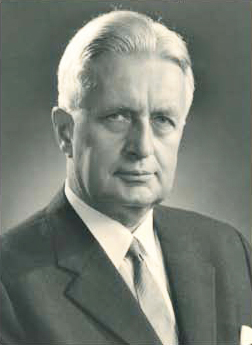
Headmaster Aage Bertelsen in 1961 Photo: Elfeldt, Copenhagen


Why now, over 30 years after his death? Read More »

Seven Roads to Happiness

By Johan Galtung

… Would be the title in English of a book this author just published in Norwegian, Syv veier til lykke (Oslo: Kolofon 2014); with excellent photos by Aase Marie Faldalen. And, very befitting for a book with that title: the book quickly made it to the Top 10 on a best-seller list, of course as No. 7. There will be translations but have a peek here and now.

Why does a peace researcher, concerned with peace theory and practice, write a “how-to” book about happiness, well-being? Read More »

The world right now: A Mid-Year Report

By Johan Galtung

Time to take stock. The shot in Sarajevo 100 years ago inspires narratives of 19-year old Gavrilo Princip killing the successor to the throne of an empire and his pregnant wife as the event unleashing mutual mass murder (INYT, FAZ 28-29 June 2014). Not the empire annexing Bosnia-Herzegovina on October 6, 1908 (Art. 25 of the 1878 Berlin Congress of “great powers”).

Maybe the inhabitants did not like it?

Moral of that stock-taking: watch out for terrorism, not for empires and occupation-colonialism; and protect leaders, not people.

ISIS (Islamic State of Iraq and the Levant, alternatively translated as Islamic State of Iraq and Syria and Islamic State of Iraq and al-Sham) comes up. TIME 30 June: The End of Iraq. Maybe Iraq – that highly artificial English colonial entity encasing Shia Arabs, Sunni Arabs and Sunni Kurds–never started?

Like its French colonial neighbor Syria – adding Alawite Arabs, Christians, Jews and others? Ever heard about Sykes-Picot and their czarist Russian allies?

Can such crimes just pass, with no counter-forces?

Watch out, a key point about ISIS – now comprising a major part of IS – is as a bridge over the English-French colonial divide, in favor of a Sunni Arab caliphate. Like it or not, these are very strong forces from the past in the daylight of the present. Read More »

Spain 2050 – Ten predictions

By Johan Galtung

Alfaz; History group, Municipio, Spain

Can we know the future? Rhetorical answer: can we know the past?

We rewrite history all the time, not because facts become dubious and new facts appear, but because our angle, perspective, changes. Say, from a series of kings, presidents etc. and their exercise of military and political power to economic and cultural changes in the life of common people, in their wellbeing and identity. Quite some change.

Will we arrive at that single, true, objective perspective?

No, objectivity may be multi-subjective, not inter-subjective. This is why Al Jazeera is so much better for knowing the present than CNN, which presents the US angle, and if there are other angles a US “expert” will give the final interpretation. Al Jazeera presents many angles of many parties and leaves final interpretations to the viewer.

How can we shed some light into the future? Basically there are two approaches: the Cartesian based on extending trends, and daoism based on holism and dialectics. They do not exclude each other.

Thus, there are three world trends that certainly affect Spain…Read More »

Good, innovative governance – what is that?

By Johan Galtung

Pretoria, South Africa, Keynote

Governance is politics, power–political-economic-military-cultural; decisions-carrots-sticks-ideas. Politics is about problems of realizing one goal; about conflicts realizing incompatible goals. Contradiction = danger+opportunity; the art of the impossible.

Answer: Good Governance GG = CC Creative Conflict-transformation.

This includes diagnosis, who are the parties, their goals and the incompatibilities; prognosis, from frustration to aggression/apathy, from prejudice-discrimination to hatred-violence; therapy, conflict solution-transformation, proposing creative visions of a new reality where the goals are compatible and new conflicts more easily handled.

Two examples of creative, good governance from Norway and Europe: Read More »

Mexico: 50 Peaceful Peace Policies

By Johan Galtung & Fernando Montiel

Toluca, Estado De México; Workshop on Drug Traffic and Violence

Background
300.000 kg of cocaine to USA via Mexico annually; 60% of marijuana producers had lived in misery, US$ 2/day; the drug traffic profit in Mexico was US$ 59 billion, 5% of GNP; 80% was spent on corruption; 125,000 were arrested since 2006; with an impunity of 98%.

Background
2,000 weapons from USA to Mexico daily; 5.5 million legal and 20 million illegal arms in Mexico; 100,000 have died in the “war on drugs” from 2006; 30,000 disappeared; 42+ journalists killed (more than in Afghanistan); 50,000 military troops involved by 2006, 130,000 by 2009, 50,000 in 2012, 32,000 in 2013; US$ 16.6 billion spent on insecurity and violence, 1.34% of GNP.

Conclusion
Due process of law and violence did not reduce drug traffic and violence; a drug-arms-violence-police-military complex had evolved. No general prevention, maybe not even individual prevention. A discourse-change took place: the perpetrators were seen less as evil and more as products of the domestic and regional contexts. The new approach was prevention by eliminating causes. The goal is reduction of drug traffic and of violence, and even if related they were seen as two different goals not necessarily served by the same means.

Question
Which are these means, causes to be handled?Read More »

Peace Studies: Ten Basic Points

By Johan Galtung

Foreign Policy Studies, University of Malmö, Sweden

Thanks for wanting a summary of key points in “Galtung Peace Studies”. I was just honored with a “Lifetime Award” by world sociology, 60+ years; in short, time for summary with an author’s caveat: no substitute for reading books.

[1] 1951: Peace studies=peace theory+peace practice; applied science, with an explicit value–peace–with practice-indicative theories and theory-testing practice; like health studies, unlike social sciences. Model: peace to violence as health to illness; Diagnosis-Prognosis-Therapy produced health by weakening pathogens-strengthening sanogens; try the same for peace by weakening bellogens-strengthening paxogens. Mantra: through interdisciplinary, international, interlevel research.

[2] Like in illness violence=suffering of body-mind-spirit, also of the bereaved; unlike in illness, an intended act of commission, a perpetrator-victim relation, a crime, epitomized by aggressive war. Body wounds may be healed but stigma, shame, humiliation, hopelessness, hatred, fear, revenge may settle in mind and spirit as trauma. To judicial approaches, sentence and punishment–against theft of cherished property, violence to the body and sexual violence – add victim – and context-oriented approaches like having less property, more company, no provocation and context-oriented approaches as for instance un-uniformed citizens as vigilantes in public space, etc.

But the antidote to violence is peace: a structure of positive interaction, a culture of nonviolence, focus on the positive in the yin/yang of others and on change from violent to peaceful relations, rather than on party attributes; relations carry more causal weight and are irreducible to attributes: see relation logic-buddhism-daoism.

[3] Peace was liberated from the state focus to cover five levels:Read More »

Norway 2050: An image

By Johan Galtung

In Oslo, 200 Years after the 17 May 1814 Independence Constitution

And why did that happen? The Treaty of Kiel 14 January 1814 between UK-Sweden of the anti-French Sixth Coalition and Denmark-Norway allied to Napoléon made Copenhagen cede Norway to Sweden.

And why did that happen? Because Russia with unspeakable suffering had won the 1812 war with Napoléon–that winner of battles and loser of wars; Waterloo 18 June 1815 was still far away. All described in one of the best books ever written, Leo Tolstoy’s War and Peace (1869); written, it has been said, as if Life were the author.

Norwegians used the time after the Treaty well for independence with a Constitution, before Sweden invaded and Norway capitulated: the Convention of Moss 14 August 1814. No Sweden-Norway under Stockholm, only a joint king and foreign policy, both Swedish; dissolved in 1905.

And how was the gratitude expressed to Russia and Russians?

Nothing; only the same paranoid fear of the big neighbor, never forgiving Russia for having been attacked by the Vikings, now more than a thousand years ago, presumably plotting the revenge ever since.Read More »

TAP+TPP = “All But China” = TAP+TIPP?

By Johan Galtung

Washington is working hard to reconquer slipping world hegemony; in the Anglo-American tradition assuming that No. 2–this year maybe No. 1 economically–is an enemy, instead of deepening cooperation.

In addition to military confrontation, NATO (North Atlantic Treaty Organization)-AMPO (Japan-US Security Treaty) against SCO (Shanghai Cooperation Organization) over Crimea-Ukraine, economic exclusion; isolating China like they try to isolate Russia over Ukraine. Together in SCO, with new ties being spun daily in the budding Eurasia and giga gas deals in the making, “isolation” of the most populous and largest countries in the world seems out of touch with reality.

Bordering on the Asian sub-continent and the Islamic world most of them might actually lean toward China-Russia, or prefer being open to “isolators” and “isolated” alike.Read More »

Homage to International New York Times

By Johan Galtung

On the table are some old clippings mainly from that remarkable paper; in my mind the International Herald Tribune, IHT, from 1857 and a part of my reality for about fifty years. Maybe an addiction? Hard to live without. The recent name change to International New York Times was understandable but too specific geographically, not global. The Honolulu papers, well located, are often more global.

Why homage? Not for the news coverage; usually the news “fit to print”. The news that do not contradict too openly the world views carried by US and Israeli foreign policies, even if this has improved considerably recently. Nor for the editorials, they are usually on the same line and also, sorry, frankly, often boring.

No, the homage is for the articles, essays even, at a very high level in what is after all a newspaper, a paper with news. Those essays often carry discourses that are wide ranging, way back into the past, far into the future. We are not talking about agree-disagree but about broadness, openness, even globally.

Take William Safire 30 September, 1991Read More »