Syria: U.S. involvement could make things even worse

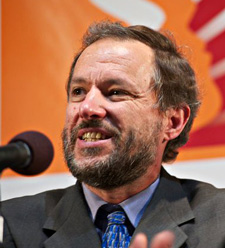
By Stephen Zunes

A comprehensive analysis by Zunes of chemical weapons in the Middle East and U.S. policies in this regard can be found here

The worsening violence and repression in Syria has left policymakers scrambling to think of ways our governments could help end the bloodshed and support those seeking to dislodge the Assad regime. The desperate desire to “do something” has led to increasing calls for the United States to provide military aid to armed insurgents or even engage in direct military intervention, especially in light of the possible use of chemical weapons by the Syrian regime.

The question on the mind of almost everyone who has followed the horror as it has unfolded over the past two years is, “What we can do?”

The short answer, unfortunately, is not much.

This is hard for many Americans to accept. Read More »

Is it immigration versus the working class?

By Jonathan Power

Every developed country is importing cheap labour, although much less so during this time of the Great Recession, yet all too rarely are the pro and con arguments discussed with real profundity.

A new, incisive, book “The British Dream” by David Goodhart, the founder of the magazine, “Prospect”, dares to deal with the shibboleths. There are many commonalities in Britain that apply to countries as varied as France, the US, Thailand and Qatar.

Goodhart’s conclusion about immigration is that what we might generalize and call the “working class” point of view is essentially correct: “We have had too much of it, too quickly, and much of it, especially for the least well off, has not produced self-evident economic benefit.”

This viewpoint is anathema to the liberal intelligentsia, businesses and many governments. In Britain, after years of gate-closing under Prime Minister Margaret Thatcher, Tony Blair, a well trodden liberal, opened the gates wide. Businesses could smooth the wheels of the economic motor with workers prepared to work for lower wages, work night shifts, do the unpleasant jobs and thus grease the wheels of the economy. Liberals focused on the argument about giving a helping hand to some of the world’s poor and led to a welcome broadening of the culture with new foods, restaurants and music.Read More »

Syria – toward a Swiss solution?

By Johan Galtung

We all feel desperate watching the horrible killing, feeling the suffering of the bereaved, the whole people. But, what to do?

Could it be that the UN, and governments in general, have a tendency to make the same mistake, again and again, of putting the cart before the horse? The formula they use is generally:

1. Get rid of No. 1 as key responsible, using sanctions; then
2. Cease-fire, appealing to the parties, or intervening, imposing;
3. Negotiation among all legitimate parties; and from that
4. A political solution as a compromise between the positions.

It looks so logical. There is a key responsible, President Assad, ordering the killing; get rid of him by all means. Then the cease-fire, the fire ceasing; then negotiation, and then the solution emerges. Logical, yes; but maybe not very wise.Read More »

The Chemical Weapons Charade in Syria

By Sharmine Narwani

Let us be clear. The United States can verify absolutely nothing about the use of chemical weapons (CWs) in Syria. Any suggestion to the contrary is entirely false.

Don’t take it from me – here is what US officials have to say about the subject:

A mere 24 hours after Washington heavyweights from the White House, Pentagon, and State Department brushed aside Israeli allegations of chemical weapons use in Syria, US Secretary of Defense Chuck Hagel and the White House changed their minds. They now believe “with varying degrees of confidence” that CWs have been used “on a small scale” inside Syria.

For the uninitiated, “varying degrees of confidence” can mean anything from “no confidence whatsoever” to “the Israelis told us” – which, translated, also means “no confidence whatsoever.”

Too cavalier? I don’t think so. The White House introduced another important caveat in its detailed briefing on Thursday:

“This assessment is based in part on physiological samples. Our standard of evidence must build on these intelligence assessments as we seek to establish credible and corroborated facts. For example the chain of custody is not clear so we cannot confirm how the exposure occurred and under what conditions.”

“The chain of custody is not clear.” That is the single most important phrase in this whole exercise. It is the only phrase that journalists need consider – everything else is conjecture of WMDs-in-Iraq proportions.

I asked a State Department spokesperson the following: “Does it mean you don’t know who has had access to the sample before it reached you? Or that the sample has not been contaminated along the way?”

He responded: “It could mean both.”Read More »

Nationalism is a dangerous thing

By Jonathan Power

Former British prime minister, Margaret Thatcher, would never have agreed with her French counterpart, the late President Francois Mitterand, who said “Nationalism is war”. To her nationalism was necessary and good and she felt much as Mitterand’s predecessor, Charles de Gaulle, who said of the French nation,“it comprises a past, a present and a future that are indissoluble.”

But the nationalism that Thatcher fought for was a largely negative force. It antagonized the other members of the European Union. She did not believe her country could learn from them how to carry out economic reform without severe social disruption. She went to war with Argentina without trying to enlist the US as a mediator because it lent towards Argentina’s side.

One can date European nationalism from the Treaty of Westphalia in 1648 Read More »

Abenomics and the State of Japan

By Johan Galtung

From Kyoto, Japan

When Prime Minister Shinzo Abe was forced out of office on September 2007 his focus had been on a strong foreign policy, against the peace Article 9 in the constitution, rewriting history and patriotic education, but not on economic improvement. This time Abe has added strong economics, dubbed abenomics; including the hyper-capitalist TPP, Trans-Pacific Partnership. Not to irritate the US, Abe-LDP (Liberal Democratic Party) sees itself as the guardian of Japan’s security against China and North Korea.

On April 4 the Bank of Japan announced a policy of QE, “quantitative easing” – Orwellian for printing money–doubling the circulating money to 270 trillion yen in two years to turn Japan’s 0.3% deflation to 2% inflation. With so much yen around devaluation follows, making Japan more competitive. With the Bank of Japan buying state bonds, public works could follow, for employment. With both, economic growth.

As a consequence the dollar soared, from 76 yen some years ago to 100; the Nikkei market index soared to above 13,000 for the first time since August 2008, and Abe’s approval rating to 70%. So far so good.

And then, what happens? The hope is to regenerate the golden 1960-70-80s Japan. But both the world and Japan have changed.Read More »

Reflections taking off from the Marathon murders

By Richard Falk
Written April 19, 2013 – before the manhunt ended

The dominant reactions to the horrific bombings on April 15th, the day of the running of the Boston Marathon, as well as the celebration of Patriots Day, have been so far: compassion for the victims, a maximal resolve to track down the perpetrators, a pundit’s notebook that generally agrees that Americans have been protected against terrorist violence since 9/11 and that the best way to prevail against such sinister adversaries is to restore normalcy as quickly as possible.

In this spirit, it is best to avoid dwelling on the gory details by darkly glamorizing the scene of mayhem with flowers and homage. It is better to move forward with calm resolve and a re-commitment to the revolutionary ideals that midwifed the birth of the American nation. Such responses are generally benevolent, especially when compared to the holy war fevers espoused by national leaders, the media, and a vengeful public after the 9/11 attacks that also embraced Islamophobic falsehoods.

Maybe America has become more poised in relation to such extremist incidents, but maybe not. It is soon to tell, and the somewhat hysterical Boston dragnet for the remaining at large and alive suspect does suggest that the wounds of 9/11 are far from healed

For one thing, the scale and drama of the Boston attack, while great, was not nearly as large or as symbolically resonant as the destruction of the World Trade Center and the shattering of the Pentagon. Also, although each life is sacred, the magnitude of tragedy is somewhat conveyed by numbers, and the Marathon incident has so far produced three deaths as compared to three thousand, that is, 1/1000th of 9/11.

Also important, the neocon presidency of George W. Bush, was in 2001 prior to the attacks openly seeking a pretext to launch a regime-changing war against Saddam Hussein’s Iraq, and the 9/11 events, as interpreted and spun, provided just the supportive domestic climate needed for launching an aggressive war against the Baghdad regime. The Iraq War was undertaken despite the UN Security Council failure to lend its authority to such an American deadly geopolitical venture and in the face of the largest anti-war global demonstrations in human history.

In 2001 the preferred American grand strategy, as blueprinted by the ideologues of the American Enterprise Institute and the Hoover Institution, was given a green light by the Bush/Cheney White House even in the face of the red lights posted both at the UN and in the streets of 600 or more cities around the world.

Although there are many distressing continuities that emerge if the Obama presidency is appraised by comparison with the counter-terrorist agenda of his predecessors, there are also some key differences of situation and approach. Read More »

USA-East Asia looking in the abyss

By Johan Galtung

From Kyoto, Japan

It has never been this bad since the 1950-53 Korea war.

October 1962, the Cuba-USSR-USA crisis, comes to mind. There were horror visions of mushroom clouds. A proud Cuba, with a strong leader-dictatorship, a social revolution in the near past, was denied a normal place in the state system, bullied by the USA and some allies with sanctions and boycotts into isolation for now more than 50 years.

Soviet Union shipped nuclear-tipped missiles for deployment as close to USA as the US missiles deployed in Turkey to Soviet Union. And in that was the solution, tit for tat, one nuclear threat for the other, in negotiations kept secret, ultimately revealed by McNamara.

Three countries were involved in 1962; in the current crisis five countries, a pentagon and not two but three nuclear powers:

North Korea China

South Korea Japan

– with the USA-Japan and USA-South Korea alliances pitted against the tacit China-North Korea alliance.

With the unreconciled traumas, of Japan having colonized Korea 1910-45, attacking China and USA during the Pacific War 1931-45; USA using nuclear bombs against Japan 1945; occupying Japan and South Korea; North Korea attacking South Korea; UN-USA counter-attacking, including China (MacArthur), ending in 1953 with an armistice; then 60 years of immensely frustrating quest for unification with the annual USA-South Korea+ Team Spirit exercises close to North Korea.

And, more recently, the USA-China competition for the No. 1 economic world position, the US effort to build economic alliances with the EU and with the Pacific in Trans-Pacific Partnership, and then the Japan-China conflict over the Daiyou-Senkaku islands. To top it: North Korea’s threatening with nuclear weapons, fascist like anybody threatening to turn others into ashes, but so far only verbal violence.

Nonetheless, even against a background like that, there are some ways of defusing this Three against Two pentagon.Read More »

There is no alternative but to negotiate with North Korea

By Jonathan Power

The diplomats and pundits were right: transition after the death of Kim Jong-il in North Korea, they said, might well produce an unstable and frightening situation. Kim Jong-un, his son, is a cut off the old block.

But they forget too easily America’s stance in the negotiations that began during the presidency of Bill Clinton. It led to major progress and the unprecedented visit to Pyongyang by his Secretary of State, Madeline Albright, which was meant to pave the way for Clinton’s own visit which was likely to lead to major changes in the relationship. (The demands of the Camp David Israel-Palestine-US negotiations in the last days of his administration meant it couldn’t be fitted in.)

After seven years of erratic US policies under President George W. Bush – met by equally erratic and bellicose North Korean ones – the Bush Administration’s negotiations ended up achieving almost the same as Clinton’s, albeit with no plan to take the final, big step, as Clinton had planned.Read More »

A ray of hope in Iran’s next presidential election

By Farhang Jahanpour

The next crucial round of Iranian presidential elections will be held on 14 June 2013. It has just been officially reported that Hassan Rowhani has declared his candidacy for the election.(1) Rowhani is an influential reformist politician and cleric. He was the chief Iranian nuclear negotiator under President Mohammad Khatami, who negotiated successfully with the Troika of European countries, UK, France and Germany.

Under his supervision, his team agreed to temporarily suspend nuclear enrichment and reprocessing activities for two years during the course of the negotiations.(2) Uranium enrichment was resumed after his successor, Ali Larijani, who was appointed Iran’s nuclear negotiator on August 14, 2005 by President Mahmud Ahmadinejad shortly after assuming power, said that European countries had not lived up to their promises to help Iran with peaceful nuclear technology. Khatami’s government had threatened to resume enrichment if there was no progress in negotiations with the West, but the resumption of enrichment took place under Ahmadinejad’s government.

So far, the long, lackluster list of the candidates who have officially declared their candidacy is made up largely of the so-called Principlist wing of the Iranian politics. This term applies Read More »
