Seeing in the dark

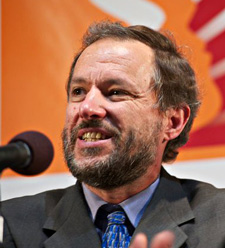
By Richard Falk

Seeing in the Dark with Victoria Brittain

As with the best of journalists, Victoria Brittain has spent a lifetime enabling us to see in the dark! Or more accurately, she has shined a bright light on those whose suffering has been hidden by being deliberately situated in one or another shadow land of governmental and societal abuse, whether local, national, or geopolitical in its animus.

These patterns of abuse are hidden because whenever their visibility cannot be avoided, the liberal mythologizing of the decency of the modern democratic state suffers a staggering blow. In recent years this unwanted visibility has permanently tarnished the human rights credentials of the United States due to the spectacular exposés of the horrifying pictures of prisoner abuse at the Abu Ghraib prison in Iraq or various reports of grotesque treatment of Guantanomo detainees.

As with Bradley Manning and Wikileaks, the U.S. Government should be embarrassed by its response: a preoccupation with these unwelcome leaks of its dirty secrets, while manifesting indifference to the substantive disclosures of its endorsement of torture and other crimes against humanity. But it is not, and that has become and remains a deep challenge to all of us who wish to live in a society of laws, not sadistic men, a society based on ethics and human rights, not cruelty and dehumanization.

Once such secrets have been revealed, all of us are challenged not to avert our gaze, being reminded that upholding the rights and dignity of every person is the duty of government and the responsibility of all citizens, and when flagrant and intentional failures along these lines remain unchallenged, the credentials of decency are forever compromised.

This is but a prelude to commenting briefly upon Victoria Brittain’s extraordinary recent book of humane disclosure, Shadow Lives: The Forgotten Women of the War on Terror (London: Pluto, 2013; distributed in the United States by Palgrave Macmillan). Brittain is a journalist who not only sees in the dark, but what is even rarer among the restless practitioners of this profession, she stays around long enough to listen. Read More »

Shipping death and destruction to Syria

By Sharmine Narwani

“The weapons of choice in (today’s) new conflicts are not big-ticket items like long-range missiles, tanks, and fighter planes, but small and frighteningly accessible weapons ranging from handguns, carbines, and assault rifles on up to machine guns, rocket-propelled grenades, and shoulder-fired missiles,” explained William Hartung more than a decade ago in an article entitled The New Business of War.

“Because they are cheap, accessible, durable, and lightweight, small arms have been a primary factor in the transformation of warfare from a series of relatively well- defined battles between ‘two opposing forces wearing uniforms’ to a much more volatile, anarchic form of violence,” says Hartung, now director of the Arms and Security Project at the Center for International Policy in Washington DC. “More often than not, today’s wars are multisided affairs in which militias, gangs, and self-anointed “rebels” engage in campaigns of calculated terror, civilian targets are fair game, and the laws of war are routinely ignored.”

“The ready availability of small arms makes these conflicts far more likely to occur, far more deadly once they start, and far more difficult to resolve once the death tolls mount and the urge for revenge takes hold.”

Hartung could have been describing Syria today. And no – the anarchic, violent rebels he describes in his article do not appear everywhere else in the world except in Syria. They are the Syrian prototype.Read More »

The UN Arms Trade Treaty is not perfect

By Jonathan Power

US presidential candidate Jimmy Carter described arms sales as a “cancer”. But once in office Carter achieved little in controlling them.

In President Bill Clinton’s first term Amnesty International questioned the US government about the use of American military helicopters and armoured vehicles involved in human rights abuses in Turkey. Under pressure from Congress the State Department compiled a report on human rights violations by the Turkish armed forces. It concluded there was “highly credible” evidence that US-supplied arms and jet fighters had been used to subdue Kurdish villages.

Later, in 1996, the US temporarily suspended the sale of advanced attack helicopters. But two years later there were fresh reports that hundreds more armoured vehicles had been sold. The US Defence Secretary visited Turkey and reportedly lobbied on behalf of American companies wishing to co-produce advanced helicopters there. In that same year an American company sold 10,000 electric shock weapons to the Turkish police.
Read More »

The future after oil: Six proposals

By Johan Galtung

Keynote Speech – Doha, Qatar – 2 April 2013

Peak Oil: Challenges and Opportunities in the GCC-Gulf Cooperation Council Countries

Distinguished Participants!

The organizers deserve high praise for setting this key, almost existential for some, issue on the agenda for an international conference. Oil and gas being limited there obviously is a peak–in the North Sea some years ago for Denmark, the UK and Norway. But this conference is not only about whether the peak is behind us, right now, in the future, and in that case when; but about and then what. Diagnosis, prognosis, therapy.

However, the peak may be more due to demand than to supply; more due to the problems caused by converting the energy stored in fossil fuels than to the extraction becoming too expensive to pay off. To the contrary, the more expensive the higher the profits as percentage of the costs, and given the oil-gas addiction the richest in a very inegalitarian world can always pay. In a better world energy for daily needs should be as freely available to everybody as walking on a street, or as health and education in a decent welfare state (they still exist). We risk fossil energy for the few only, not a peak.

On the demand side, all over, more or less, there is a turn to the alternative: the many green energy conversions. “The Surgeon General has decided that smoking is bad for you” has a follow up: “fossil fuels are bad for us“. We are not there, but it also took much time for high numbers to give up smoking. A massive shock, and compelling evidence of a causal connection, is needed. The increase in natural disasters and the erratic climate may soon provide that.

The world sees other peaks. Peak US Empire – not USA – with China coming up, Peak West with Rest coming up, headed by BRICS, Peak inter-state wars with inter-nation violence coming up. It’s a very dynamic world.

China burns coal-oil-gas, but is also a massive pioneer in green energies with photovoltaic and solar cells and electric cars, produced in ever greener ways. In the USA highly effective coal-oil-gas lobbies prevent the greening and promotes ecologically bad extraction. Politicians are bought by banks, banks invest in that extraction.

The world is moving East, the East is moving green. And so are millions. Read More »

BRICS – impossible to ignore – draws clear red lines on Syria and Iran

By Sharmine Narwani

The BRICS just became impossible to ignore. At the close of the Fifth annual BRICS Summit in Durban, South Africa last week, there was little question that this group of five fast-growing economies was underwriting an overhaul of the global economic and political order.

The eThekwini Declaration issued at summit’s end was couched in non-confrontational language, but it was manifestly clear that western hegemony and unipolarity were being targeted at this meeting.

The BRICS hit some major western sore spots by announcing the formation of a $50 billion jointly-funded development bank to rival the IMF and World Bank. Deals were signed to increase inter-BRICS trade in their own currencies, further eroding the US dollar’s status as the world’s reserve currency.

A series of unmistakable challenges were dealt to old world leaders: reform your institutions and economies – or we’ll do it ourselves.

Intent on filling a leadership void in global economic and financial affairs, the BRICS also began to draw some firm political lines in the sand.Read More »

Who is left? Who is right?

By Jonathan Power

It goes back to the French revolution of 1789. At the Revolutionary Convention the most radical of the insurgents decided to seat themselves on the left side. “Why not on the other side, the right side, the place of rectitude, where law and the higher right resided, when man’s best hand could be raised in righteous honour?” wrote Melvin Lasky in Britain’s intellectual monthly, Encounter. “Anyway they went left, and man’s political passions have never been the same.”

When Oskar Lafontaine, the West German finance minister, broke with Chancellor Gerhard Schroder in the early days of the last Social Democratic government, he explained it was “because my heart beats on the left.” The right could never say that, even David Cameron, prime minister of Britain, who likes to make out that he is liberal, at least on the environment and foreign aid. When Humpty-Dumpty insisted on his own “master-meanings” he reassured Alice, “When I make a word do a lot of work like that, I always pay it extra…….”

Those who want to study the ambiguities and contradictions of intellectual leftists Read More »

Why does the West fail to understand reality ?

By Johan Galtung

Economic power: the West being overtaken by the Rest, with growth rates for the USA, Euro zone and Japan being respectively 0.1, -0.9, -0.2 (Italy -2.8), against Brazil 1.4, Russia 2.9, India 4.5, China 7.9.[i] BRIC.

Military power: the West being defeated by the Rest, now paying dearly for the missing peace treaty and normalization with North Korea; with the Viêt Nam, Afghanistan and Iraq anti-terror wars lost, and Libya and Mali, Syria and Iran immune to “military solutions”;

Political power: the West as minority, the UN General Assembly rejecting 138 to 9 with 41 abstentions the US veto approach to Israel;

Cultural power: non-Western models of development, like Buddhist and Muslim, Japanese and Chinese add to “Western universalism”;

Social power: focused on domestic power and increasing social inequalities expressed as indignation, Occupy and Arab Spring, now focused on the ratio between CEO and average worker income: getting it down to at most 10, from 500. See the Swiss referenda.

We are already far into a world economically dominated by BRIC, Read More »

Open Letter – about the blogosphere and free speech

By Richard Falk

I have had a recurrent struggle to set boundaries on the comments section of this blog. At first, I was determined to have an open forum welcoming critical commentary on any issue, excluding only those comments that seemed struck me as clear instances of hate speech.

This approach seemed to work okay except with respect to Israel/Palestine, which increasingly attracted either long argumentative comments posing a list of rhetorical questions or angry serial comment contributors that insulted me as well as others who had submitted comments that were interpreted by them as being pro-Palestinian or hostile to Israel and Zionism.

There was no symmetry in the sense the blog received no serial or long provocative comments written by those who more or less supportive of the Palestinian struggle for justice. From blog readers I received mixed reactions, but I was most persuaded by those who expressed dismay about the tendency to fill the comments section with insults and counter-insults or with argumentative views that did not invite serious dialogue.Read More »

Don’t blame the Iraq debacle on the Israel lobby

By Stephen Zunes

Given the enormous tragedy of the U.S. invasion of Iraq, the war’s tenth anniversary has inevitably raised the question of “why?”

As many of us predicted in the lead-up to the war, the official rationales for the U.S. invasion of Iraq—namely, that Iraq possessed “weapons of mass destruction” and had operational ties to al-Qaeda—were false. And the corrupt, inept, and repressive sectarian government the United States helped establish in Baghdad has undermined any pretense that the war was about democracy.

There are a number of plausible explanations, ranging from oil to strategic interests to ideological motivations. One explanation which should not be taken seriously, however, is the assertion that the government of Israel and its American supporters played a major role in leading the United States to invade Iraq.

The right-wing governments that have dominated Israel in recent years and their U.S. supporters deserve blame for many policies that have led to needless human suffering, increased extremism in the Islamic world, and decreased security, as well as rampant violations of international legal principles. The U.S. invasion of Iraq, however, is not one of them.

Arguments Supporting Claims of a Major Israeli Role in the U.S. Invasion of Iraq

There are four major arguments made by those who allege a key role by Israel and its American supporters in leading the United States to war in Iraq:Read More »

Reading these Palestinian prison diaries: A moral obligation

By Richard Falk

The Prisoners’ Diaries: Palestinian Voices from the Israeli Gulag
Edited by Norma Hashim, in close collaboration with the Centre for Political & Development Studies, Gaza, 2013.

Download the pdf version of Prison Diaries for USD1.99. The printed book will be available at http://www.palestinemall.net from 17 April 2013.

There are many moving passages that can be found in these excerpts from prison diaries and recollections of 22 Palestinians. What is most compelling is how much the material expresses the shared concerns of these prisoners despite great variations in writing style and background. A few keywords dominate the texts: pain, God or Allah, love, dream, homeland, steadfastness, tears, freedom, dream, prayer.

My reading of these diaries exposed me to the distinct personal struggles of each prisoner to survive with as much dignity as possible in a dank and poorly lit circumstances of isolation, humiliation, acute hostility on the part of the prison staff, including abusive neglect by the medical personnel. The diaries also confirmed that even prolonged captivity had not diluted the spirit of Palestinian resistance to Israeli occupation, but on the contrary had intensified it.

A strong impression of the overall illegitimacy of Israel’s encroachment on the most fundamental rights of the Palestinian people is also present on virtually every page.

Although not professional writers, the sentiments expressed have a special kind of eloquence arising from their authenticity and passion. A female prisoner, Sana’a Shihada, on learning that her family had been spared the demolition of their family home, describes the ordeal of her interrogation in a poetic idiom: “..the anger of the interrogators was like snow and peace to me [an Arabic saying that conveys a sense of being ‘soothing’]. I felt the pride of the Palestinians, the glory of Muslims, and the brightness of honesty. I knelt to Allah, thankfully. My tears fell on the floor of the cell, and I am sure they dug a path which those later imprisoned will be able to see.” Read More »