Doing Business with Israel: Increasingly Problematic

By Richard Falk

Note
Published below is a letter prepared by the European Coordination of Committee and Associations for Palestine (ECCP) and endorsed by John Dugard, Michael Mansfield, Eric David, and myself; it urges adherence to guidelines relating to corporate and financial activity with unlawful economic activities in Israel and occupied Palestine, and is guided by principles similar to the BDS campaign; it is notable that today the Presbyterian Church by a close vote (310-303) voted to divest itself of shares in three corporations engaged in legally and morally objectionable activities in Israel. There is a growing momentum associated with this new nonviolent militancy associated with the global solidarity movement supportive of the Palestinian struggle to gain a just peace, including realization of rights under international law.

European Coordination of Committees and Associations for Palestine (ECCP)

On 24-26 June, 37 European companies from 11 EU Member States will travel to Israel as a part of an EU led “Mission for growth” project that aims to “promote partnerships between Israeli and European companies 
active in sectors identified as leading and developing industries in Israel.”

Among Israeli companies participating in the “Mission for growth” are those deeply complicit in Israel’s occupation and apartheid policy. The previous delegation of “Mission for growth” took place on 22-23 October last year in Israel, where 97 european companies from 23 EU Member States meet with 215 Israeli companies from the different industrial sectors.

In this open letter supported by Richard Falk, John Dugard, Michael Mansfield and Eric David, ECCP member organisations call on the European companies to abandon their plans to be involved in the project. Read More »

Israel-Palestine: Beyond the liberal imaginary

By Richard Falk

Prefatory Note:
What follows is a letter to the NY Times responding to their editorial of June 6, 2014, which was not accepted for publication. I publish it here as a post because I believe it identifies some of the continuing ways in which public opinion on the relationship between Israel and Palestine continues to be distorted on Israel’s behalf in American media sources that have the undeserved reputation of being objective and trustworthy. The New York Times has long ranked high on this list, if not at its top!

This letter is particularly concerned with the misleading characterizations of Hamas, and the failure to pass judgment on the Netanyahu leadership as ‘extremist.’

*****************

To the Editor, New York Time

Re “Israeli-Palestinian Collision Course” (editorial, June 6, text reproduced below):

You are correct that this is an opportune time to take account of Israel-Palestine peace prospects in light of failed direct negotiations and subsequent developments. It is misleading, however, to equate Israel’s accelerated expansion of settlements with the formation of the Fatah-Hamas unity government. Israeli action continues a pattern of flagrant violation of the 4th Geneva Convention while the Palestinian action is a constructive move that could finally make diplomacy on behalf of all Palestinians legitimate and effective.Read More »

TFF PressInfo: Violence against children has become an epidemic

By Jonathan Power

Three Israeli teenagers murdered on Palestinian soil. One Palestinian boy burnt to death whilst alive in an apparent retaliation. Over the years of conflict thousands of children have been killed although many more on the Palestinian side than the Israeli.

According to the Old Testament’s Book of Numbers, Moses, when leading the trek to the “Promised Land”, once ordered all the women and children in one hostile tribe in their way, the Midianites, to be killed. Moses is as an important figure to Muslim theologians as he is to Jewish yet I’ve never come across the writings of a major theologian in either religion loudly condemning this mass murder.

The killing of the innocents in the “Promised Land” goes on three thousand years later. Last year eight Palestinian children (six boys and two girls) were killed and 1,265 were injured in the occupied Palestinian territories either by Israeli settlers by Israeli security forces. No Israeli children were killed in 2013.

Four Palestinian boys were killed by Israeli security forces in the Al Jalazun, Jenin and Ayda refugee camps. Incursions into the camps increased by 60 per cent compared with 2012. The 1,235 children injured in the West Bank (155 under the age of 12) are more than double the number injured in 2012 (552). 49 children were injured directly by Israeli settlers. Eight Israeli children were injured in Israeli settlements by Palestinians. Read More »

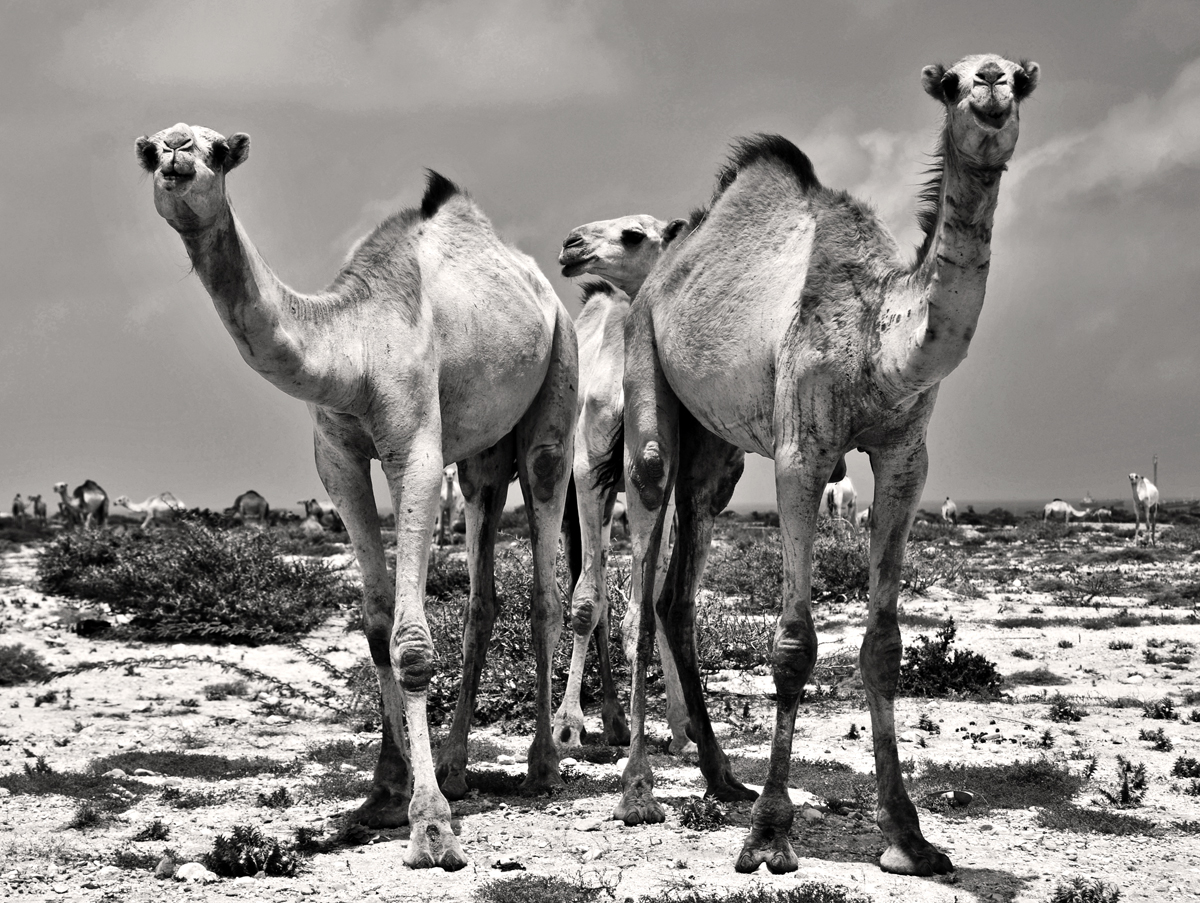
TFF PressInfo – Somaliland – A Peace and Photo Mission

By Jan Oberg

Lund, Sweden, July 1, 2014

This PressInfo is about place you’ve probably never visited nor know a lot about: Somaliland.

TFF today publishes the report from a mission there in May 2014 – to the capital Hargeisa, the harbour town of Berbera and to Burao.

With the report in photos and texts we seek to alert you to this indeed unique and interesting country.

Somaliland declared itself an independent state out of Somalia in 1991 and is still not recognised by a single government in the world.

But against all odds Somaliland has made considerable progress.

It isn’t easy to develop when you are marginal to the aid and investment sources, have no foreign embassies and can’t be a member of inter-national organisations. Read More »

China is not going to be a miracle

By Jonathan Power

The Nobel-prize winning economist, Robert Fogel, believes that China will grow at an average rate of 8% until 2040, by which time it will be twice as rich as Europe in per capita terms. His model is based partly on so-called geometric growth. An example: If my ancestors had invested a penny in 1800 at a compound interest rate of 6% a year above inflation it would now be worth $280,000.

Sounds good, but it isn’t. The chances of this happening are nil. Indeed I would go as far as to say that China remains a classic case of hope over experience, reminiscent of de Gaulle’s famous comment about Brazil: ”It has a great potential and always will”.

In the 1970s it was Brazil, Read More »

The world right now: A Mid-Year Report

By Johan Galtung

Time to take stock. The shot in Sarajevo 100 years ago inspires narratives of 19-year old Gavrilo Princip killing the successor to the throne of an empire and his pregnant wife as the event unleashing mutual mass murder (INYT, FAZ 28-29 June 2014). Not the empire annexing Bosnia-Herzegovina on October 6, 1908 (Art. 25 of the 1878 Berlin Congress of “great powers”).

Maybe the inhabitants did not like it?

Moral of that stock-taking: watch out for terrorism, not for empires and occupation-colonialism; and protect leaders, not people.

ISIS (Islamic State of Iraq and the Levant, alternatively translated as Islamic State of Iraq and Syria and Islamic State of Iraq and al-Sham) comes up. TIME 30 June: The End of Iraq. Maybe Iraq – that highly artificial English colonial entity encasing Shia Arabs, Sunni Arabs and Sunni Kurds–never started?

Like its French colonial neighbor Syria – adding Alawite Arabs, Christians, Jews and others? Ever heard about Sykes-Picot and their czarist Russian allies?

Can such crimes just pass, with no counter-forces?

Watch out, a key point about ISIS – now comprising a major part of IS – is as a bridge over the English-French colonial divide, in favor of a Sunni Arab caliphate. Like it or not, these are very strong forces from the past in the daylight of the present. Read More »

TFF PressInfo: If militarism continues, humankind is doomed

By Jan Oberg

Both NATO and the EU has just announced that their members will now invest more in the military. It’s indicative of the lack of creativity in both organisations, it is self-defeating and counter-productive.

But have you seen it put on top of any agenda and debated? You haven’t, it is so normal – and the argument is that we are threatened. That’s called fearology: Making tax payers pay even more by making them scared.

The military sector is a parasite on society

The military sector produces much less employment than the civilian per invested dollar. It’s a huge burden on the economy because it swallows creativity, research and development badly needed to solve humankind’s real problems.

Weapons don’t belong to a market, there is no competition – the state is the only buyer – and thus tax payers must cover the systematic cost overruns.

We are told that there is economic crisis and we must cut down on hospitals, schools and human care everywhere. But this we can afford?

But what if the military did solve our problems?Read More »

Worse world or better world?

By Jonathan Power

War is all over the place. It seems. Not just Syria and Iraq but now inside Pakistan. Not to mention Somalia and Sudan. Yet paradoxically there has never been less war.

Sweden’s Uppsala University Conflict Data program is about to publish its results for 2013. It reports that the number of conflicts in the world increased by one between 2012 and 2013 – pace all the press and TV coverage which sometimes gives the impression that half the world is going up in smoke.

Since the Cold War ended the number of conflicts claiming more than 1,000 deaths has declined by 50%. There were 15 conflicts of this size in the early 1990s. Today there are only seven.

In 2013 six peace agreements were signed – which is two more than the year before.

The number of democratic countries was 69 at the end of the Cold War. Today there are around 120. The number of autocracies has declined in that time from 62 to 48.

The American foreign policy elite appears unaware of these trends. Read More »

Spain 2050 – Ten predictions

By Johan Galtung

Alfaz; History group, Municipio, Spain

Can we know the future? Rhetorical answer: can we know the past?

We rewrite history all the time, not because facts become dubious and new facts appear, but because our angle, perspective, changes. Say, from a series of kings, presidents etc. and their exercise of military and political power to economic and cultural changes in the life of common people, in their wellbeing and identity. Quite some change.

Will we arrive at that single, true, objective perspective?

No, objectivity may be multi-subjective, not inter-subjective. This is why Al Jazeera is so much better for knowing the present than CNN, which presents the US angle, and if there are other angles a US “expert” will give the final interpretation. Al Jazeera presents many angles of many parties and leaves final interpretations to the viewer.

How can we shed some light into the future? Basically there are two approaches: the Cartesian based on extending trends, and daoism based on holism and dialectics. They do not exclude each other.

Thus, there are three world trends that certainly affect Spain…Read More »

TFF PressInfo: What to do now in Iraq?

By Jonathan Power

June 17th 2014

Is it “you reap what you sow”? The US electorate that voted twice for President George W. Bush should ask itself the question. The growing strength of ISIS and Jabhat al-Nusra, represents a grave threat to the future of the Middle East and the US has no one to blame but itself.

ISIS (The Islamic State of Iraq and al-Sham), it is being said, could eventually reconfigure the Middle East if it is able to seize significant chunks of Iraq and Syria, the Arab world’s two strategic centrepieces, spanning the Mediterranean to the Persian Gulf.

ISIS has begun setting up a proto-state in parts of Syria and Iraq, with its own courts, police and public services. According to the well-informed Middle East watcher, Robin Wright, “ISIS has become the most aggressive and ambitious extremist movement in the world. It is also the most deadly and the most accomplished, dwarfing its parent, al-Qaeda, in influence and impact”.

US policymakers understand from painful experience that military aid will not simply pressure Iraq’s Shia prime minister, Nurial al-Maliki, with his autocratic sectarianism, to make serious concessions to Iraqi Sunnis, and thus help dry up the waters in which ISIS swims.

But what else can President Barack Obama do? Read More »