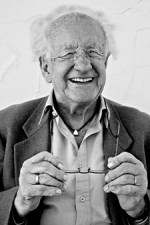
The world right now: A Mid-Year Report

By Johan Galtung

Time to take stock. The shot in Sarajevo 100 years ago inspires narratives of 19-year old Gavrilo Princip killing the successor to the throne of an empire and his pregnant wife as the event unleashing mutual mass murder (INYT, FAZ 28-29 June 2014). Not the empire annexing Bosnia-Herzegovina on October 6, 1908 (Art. 25 of the 1878 Berlin Congress of “great powers”).

Maybe the inhabitants did not like it?

Moral of that stock-taking: watch out for terrorism, not for empires and occupation-colonialism; and protect leaders, not people.

ISIS (Islamic State of Iraq and the Levant, alternatively translated as Islamic State of Iraq and Syria and Islamic State of Iraq and al-Sham) comes up. TIME 30 June: The End of Iraq. Maybe Iraq – that highly artificial English colonial entity encasing Shia Arabs, Sunni Arabs and Sunni Kurds–never started?

Like its French colonial neighbor Syria – adding Alawite Arabs, Christians, Jews and others? Ever heard about Sykes-Picot and their czarist Russian allies?

Can such crimes just pass, with no counter-forces?

Watch out, a key point about ISIS – now comprising a major part of IS – is as a bridge over the English-French colonial divide, in favor of a Sunni Arab caliphate. Like it or not, these are very strong forces from the past in the daylight of the present. Read More »

Spain 2050 – Ten predictions

By Johan Galtung

Alfaz; History group, Municipio, Spain

Can we know the future? Rhetorical answer: can we know the past?

We rewrite history all the time, not because facts become dubious and new facts appear, but because our angle, perspective, changes. Say, from a series of kings, presidents etc. and their exercise of military and political power to economic and cultural changes in the life of common people, in their wellbeing and identity. Quite some change.

Will we arrive at that single, true, objective perspective?

No, objectivity may be multi-subjective, not inter-subjective. This is why Al Jazeera is so much better for knowing the present than CNN, which presents the US angle, and if there are other angles a US “expert” will give the final interpretation. Al Jazeera presents many angles of many parties and leaves final interpretations to the viewer.

How can we shed some light into the future? Basically there are two approaches: the Cartesian based on extending trends, and daoism based on holism and dialectics. They do not exclude each other.

Thus, there are three world trends that certainly affect Spain…Read More »

TFF PressInfo – Why Obama’s speech should make us think

By Jan Oberg

Lund, Sweden – May 29, 2014

In a speech by the President of the United States of America – read by millions in all corners of our world in minutes – rest assured that every single word has been weighed with utmost care.

With this in mind, Obama’s speech can be analysed as both offending to the rest of us and – exceptionally – weak.

It caused no enthusiasm among the future army officers he spoke to and no enthusiasm among leading Western media.

I will argue that

• Intellectually and morally the speech doesn’t have the basics – full of contradictions and imbued with unbearable self-praise.

• While there is a recognition of ”mistakes” such as ”our” war in Iraq and a potential step-back from interventionism, there is neither an adequate analysis of the past nor of what the future may need in terms of leadership.

• Little had I anticipated that my analysis in the TFF PressInfo on ”Psycho politics in the age of imperial decline” just a few days ago would be confirmed so quickly and so strongly. Read More »

Pope Francis visit to Palestine

By Richard Falk

Pope Francis’ visit to the Holy Land raises one overwhelming question: What is the nature of religious power in our world of the 21st century? Can it have transformative effects’?

Media pundits and most liberal voices from the secular realm approve of this effort by Francis to seek peace through the encouragement of reconciliation, while dutifully reminding us that his impact is only ‘ceremonial’ and ‘symbolic’ and will not, and presumably should not, have any political consequences beyond a temporary cleansing of the political atmosphere.

The June 6th prospect of Mahmoud Abbas and Shimon Peres praying together in the Vatican as a step toward a peaceful end of the long struggle is, I fear, an ambiguous sideshow. For one thing, Peres as President of Israel is about to leave the office, and in any event, his position exerts no discernible influence on the head of state, Benjamin Netanyahu, or the approach taken by Israel in addressing Palestinian concerns.

It has long been appreciated that Peres is less than he seems, and beneath his velvet globe is a steel fist. Also, Abbas, although the formal leader of the Palestinian Authority and Chair of the PLO, is a weak and controversial leader who has yet to establish a unity government that includes Hamas, and finally provides political representation for the long suffering population of the Gaza Strip within global venues.

Yet it would be a mistake to ignore the significance, symbolically and materially, of what Pope Francis’ visit to Palestine heralds. Read More »

University cooperation for equity and empathy

By Johan Galtung

China Three Gorges University, Yichang, 23 Apr 2014

A great honor to open the 11th university cooperation conference of N.E.W.S–North-East-West-South—founded in 1993 at the Freie Universität, Berlin by S.P. Park.

Classical university cooperation across borders has professors teaching in one country students from other countries. Thus, when Copenhagen ruled Denmark-Norway 1397-1814 Norwegians studied at the University of Copenhagen, founded in 1479. The University in Oslo came in 1811, but the asymmetry continued; some of it necessary and useful, but not ideal. Missing was equity, “I learn from you, you from me”; missing was empathy, “You learn about me, I about you”. The teaching country is superior in power, shaping the minds in the learning country. But the learning country learns about the deeper features of the teaching country, not vice versa.

A colonial relation. The colonialist leader, England – also in Scotland-Wales-Ireland – imports raw students for processing at huge fees, and exports English as patented commodity with no processing rights. Major industries both; but learning nothing about the world. Of course old knowledge must flow from those with more to those with less, even if professors often exaggerate their own importance: students may learn more together and by self-study–maybe 10%-40%-50%. But professors monopolize exams and diplomas, so better absorb well.Read More »

America – a failed state?

By Johan Galtung

Depends, of course, on the criteria. A state has an inside towards its citizens, and an outside toward the state system. Depends on domestic and foreign policy, in other words. That means it can fail in two ways, by not catering to its citizens and by not coming to terms with other states. Actually the two are closely related as often pointed out: a regime (running the state) may compensate for failure at home by victories abroad. And, conversely, compensate for failures abroad by taking good care of its citizens. And, success at home used to mobilize grateful citizens for patriotic wars abroad.

America, or the USA rather, at present does not take good care of its citizens. A recent study cited in Nation of Change, More Evidence That Half of America Is in or Near Poverty, 24 March 2014, by Paul Buchheit: The Center on Budget and Policy Priorities estimates that an average family of three needs $48,000 to meet basic needs, very close to the median family household income of $51,000. Since the 1950s the food costs have doubled, housing costs tripled, medical costs are six times higher, and college tuition eleven times–four key basic needs. Food, housing, health care, child care, transportation and taxes consume very close to the median income–not counting college education–hence, “half of America is in or near poverty”.

And that bottom half of the US population own only 1.1% of the nation’s wealth – the same as the 30 richest Americans – with s=zero wealth for the bottom 47%. Nothing to fall back upon. Safety net measures such as Medicare and Medicaid, food stamps, public housing and soup kitchens help. But many are not able to benefit from them and they are all threatened politically.

Add the risk to security through suicide-homicide-accidents; a major cause being the handguns, easily available. Add the decreasing retirement benefits to many due to the losses through speculation. And black families suffer worst, including income decline.

All of this makes the major source of identity, the American Dream, once accessible to so many from far and nearby, wither away. However, how about the land of the free, the free country? Of freedom of speech there is plenty as long as nobody, except NSA, listens. Of economic freedom to use money to make more money there is also plenty, for those who have money. Result: a muzzled society of inequity.

Then the foreign policy. With close to 250 interventions abroad since Thomas Jefferson, the amount of hatred in search of violent revenge – blowback, “unintended consequences” – must be considerable. “We have never been so safe”, some say today, due to the “war on terrorism” and NSA spying at home and abroad. But revenge can find its new and very creative ways, as it did on 9/11. US foreign policy has put Americans at considerable risk at home and abroad when traveling.

Recently that belligerent foreign policy has also been remarkably unintelligent. Within a decade the USA has managed to deliver Iraq to its shia majority–Iran’s dream come true thanks to Bush Jr–and Libya and soon, probably, Syria to Al Qaeda, a sunni Arab movement–thanks to Obama. And Afghanistan to status quo, thanks to both.

We have been here before. Big Powers treating citizens well, mobilizing them for warfare, first successfully, then sliding downhill losing wars and citizen satisfaction. Names not to general US liking come up: France under Napoléon, Germany under Hitler. A book just came out by a former French prime minister, Leonel Jospin, Le mal napoleonéen, the napoleonic evil. In the beginning he solidified the Revolution with great benefits for people, did much to reconcile the two parts of France; the civil code. Then came an authoritarian and corrupt phase (“Napoléon, Quel Désastre!”, Le Nouvel Observateur, 6 March 2014, p. 91), then the empire, crowning himself in 1804, brilliant battles (see Paris metro stations)–and then Waterloo in 1815. The End.

And after that, a France stumbling from one crisis to the next.

Under Hitler ordinary Germans came to life with jobs, identities and freedoms that families lower down had never enjoyed; easily mobilized, with Kriegsbegeisterung, to restore Germany’s place in the world. Brilliant battles; like Napoléon, he tried to beat, losing in The End.

The three cases share one important factor: neither Hitler, nor Napoléon, nor the USA knew when to stop expanding, but followed the script to the end. Hitler could have stopped in 1940, not attacking Russia; Napoléon in 1807 after his successful battles; the USA in 1945, coming to an understanding with Russia rather than Churchill.

Russia. Russia survived Napoléon and Hitler, occupying both capitals after tremendous losses. Right now, if Putin knows where to stop, Russia will survive the USA too. Occupy Washington? Maybe not.

What that very same Washington could do instead is very obvious but not so easy given the many at the top of the USA who want both more belligerence and more inequity, without brakes and reverse gear.

Stop warfare, organize peace conferences with all parties, also those indeed not to Washington’s liking, understand what they want, search for a new order meeting all legitimate goals–including those of the USA–reasonably well. Open for reconciliation by acknowledging mistakes, open for some compensation. Lift the bottom of US society up, starting with the poorest of the poor; stop speculation–the twin brother of warfare–,reverse basic needs costs by having more people growing their food in cooperatives, public housing. Learn public health from Western Europe; make college inexpensive all over by inviting retired experienced professors to teach. So simple, but running against a stonewall of entrenched ideology. USA as its own worst enemy.

America a failed state? No doubt about it, like Napoléon’s France and Hitler’s Germany. Read More »

Som broar över mörka vatten – ett integrationsprojekt

Av Christina Spännar & Vibeke Bing

Kanske du associerar TFF med Jugoslavien, Burundi, Irak, Iran, ickevåld och fredsdebatt? Men vi har i tre år också arbetat med frågor kring integration med tonvikten lagd på ensamkommande barn från Afghanistan. Insatsen här har letts av författarna av denna projektsammanfattning.

Vi är stolta över att nu publicera bloggen Som Broar Över Mörka Vatten där allt material finns. Projektet har finansierats av Arvsfonden.

“När vi åkte gummibåt över Turkiets hav till Samos i Grekland greps vi av Grekiska poliser. Poliserna kastade alla våra kläder i havet och gjorde små hål i vår båt.” Ali

“På kvällen satt vi i en båt. Vi åkte till Grekland. På vägen till Grekland fick vi problem med båten. En polisbåt kom och klippte sönder en del av motorn. Vi paddlade med händerna och fyra åror.” Hassan

Vi lever i en märklig tid. Framför våra ögon pågår en stor migrationsvåg av ensamma barn. Något liknande har inte hänt sedan de finska vinterkrigsbarnen kom till Sverige på 40-talet.

De barn, som utan föräldrar, nu flytt hit undan krigets fasor har gjort en annan resa. De kommer från länder vi inte vet mycket om. Vilka är dessa barn och ungdomar, vad tänker de på och hur är livet i Sverige? Vi har lärt känna och lyssnat till några av dem. De är alla från Afghanistan.

Hur deras berättelser kommit till och vad de har att säga kan man läsa i denna rapport, som summerar tre års projektarbete. Här kan man också få veta hur vi sökt arbetsformer som kan underlätta den svåra etableringsfasen.

Vid öppnandet av en utställning

Vi berör också det komplicerade i att återförenas som familj.

Vi vänder oss till alla som arbetar med barn, ungdomar och föräldrar. Men också till alla som är nyfikna på vad som sker i vår samtid.
Känns läsningen tung – bläddra vidare till pojkarnas berättelser och det öppnas en ny värld.

En av de unga sammanfattar vår tid tillsammans såhär:

– “Jag har fått hjälp, ni har fått hjälp, vi hade kul!”

Det är bara att instämma!

Vibeke Bing
Projektledare, folkhälsovetare
vibeke@vibekebing.se
076-6451147
0304-663396

Christina Spännar
Projektledare, sociolog
christina.spannar@telia.com
070-1450171
046-129249

Sammanfattning av projektet

Som broar över mörka vatten – ett integrationsprojekt har haft som övergripande syfte att stärka människor i övergångsskeden i livet. Målgrupper har varit nyblivna föräldrar, ensamkommande flyktingbarn/ungdomar samt föräldrar som kommit till Sverige som flyktingar eller som anhöriginvandrare till ensamkommande flyktingbarn och ungdomar.

De övergångsskeden som stått i fokus är att bli förälder och att migrera. I det senare fallet handlar det om att bryta upp från ett socialt sammanhang och finna sig till rätta i ett nytt. I migrationsprocessen ingår ofta också att återförenas som familj efter år av splittring.

Projektet kan liknas vid ett träd, Read More »

Imperiled Polities: Egypt and Turkey – Two visions of democracy

By Richard Falk

The Meaning of a 98.1% Vote

In mid-January there was a vote in Egypt as to whether to approve a constitution drafted by a 50-person committee appointed by the interim government put in place after the military coup carried out on July 3, 2013. The constitution was approved by 98.1% of those who voted, 38.6% of the eligible 53 million Egyptians.

This compares with 63.8% support received by the constitution prepared during the presidency of Mohammed Morsi from the 32.9% of the Egyptian citizenry that participated in the vote. It should be observed that this new constitutional referendum was boycotted by both the Muslim Brotherhood (MB) and various of the youth groups that has been at the forefront of the anti-Mubarak upheaval in 2011.

Also the validity of the vote was further discredited because of the atmosphere of intimidation in Egypt well conveyed by the pro-coup slogan: “You are either with me or with the terrorists.” Not only had the MB been criminalized, its assets seized, its leaders jailed, its media outlets shut down, but anyone of any persuasion who seemed opposed to the leadership and style of General el-Sisi was subject to arrest and abuse.

In the background here are questions about the nature of ‘democracy,’ and how to evaluate the views of people caught in the maelstrom of political conflict. On one level, it might seem that a vote of over 90% for absolutely anything is an expression of extraordinary consensus, and as a result el-Sisi’s constitution is far more popular than Morsi’s constitution, and hence more legitimate. Reflecting on this further makes it seem evident, especially when the oppressive context is to taken into account that the one-sided vote should be interpreted in the opposite manner, making Morsi’s vote more trustworthy because it reached plausible results.

Any vote in a modern society that claims 98.1% support should be automatically disregarded because it must have been contrived and coerced.Read More »

Geneva II – The mismanagement of conflicts

By Johan Galtung

This is not the way to do it. A major party to the conflicts cannot be at the same time the conference manager; to the point of making the UN Secretary General disinvite a major invited party. Whether this is due to AIPAC-American Israel Public Affairs Committee buying US Senators, or whatever process internal to the USA-Israel system, or it comes out of Secretary Kerry’s genuine conviction, is immaterial.

This looks like a court where the prosecutor is also the judge, having decided who the major culprit is and instructed the judge to proceed accordingly from Court I to II, with only those agreeing to Court I being in the jury of Court II.

Had Ban Ki-moon been a man honoring UN authority he would have disinvited himself instead, claiming undue pressure. Disinvite a major party and two things are guaranteed: a lost chance to find a solution to what is also a sunni-shia conflict, and a major spoiler of whatever conclusions may be arrived at. There was a promising point: they will first talk with the parties separately to identify their positions–but, leaving out the major carrier of shia, no chance.

This foretold failure–barring a miracle–will probably not last long. The photo-card will be played out at an early stage. It looks ominous; but is an authoritarian regime like Assad’s compatible with its army taking so many potentially incriminating photos that could fall into the hands of a “self-styled defector”? Why make photos anyhow?

Let us say, brutally simplified, that there are seven conflicts, not only one, all directly or indirectly violent, unfolding in Syria.Read More »

TFF PressInfo – Geneva will fail but don’t blame only the Syrian parties

Lund, Sweden – January 24, 2014

By Jan Oberg*

Subscribe to PressInfos to your right here!

The meeting in Geneva about Syria resumes today. It is destined to become a historic failure. Most observers will blame either of the armed Syrian parties – the government or the rebels – for adhering unbendingly to their mutually exclusive positions.

But that isn’t fair. Those who set themselves up as conflict-managers, mediators, negotiators and peace-makers and called the meeting must also take responsibility for its failure. It is the UN, the Arab League and several governments, various NATO countries and Russia (”facilitators” in the following).

This article is about how to achieve a negotiated peace.

Here follow 8 – out of many more – professional criteria that are useful for an evaluation of Geneva. Summary at the end:

1) How well do the facilitators understand what the conflict is about?
It’s about history, suffering, socio-economic crisis, foreign involvement, traumas and constitutional matters; it’s about vicious cycles of violence and arms traders’ profits.
No conflict is only about one top leader and, as we know from Iraq, Libya and elsewhere, conflicts are not solved by that leader leaving the stage. And no conflict is about only two sides, one with all the good people on one side and one with all the evil ones.
Further it is reasonable to say that Syria is a stage for a much larger conflict being played out: the wider Middle East as well as among actors who are competing for power in tomorrow’s world. Read More »