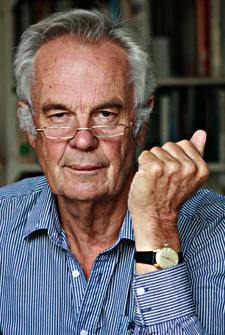
Violence in and by Paris: Any way out?

By Johan Galtung

Atlanta, Georgia, USA

The atrocity in Paris seems to trigger the word “terrorism” with a higher frequency than ever, in the media, from the politicians. Doing so, they sign their intellectual capitulation: trust me, I am not going to try to understand anything. Watching politicians on 56 US TV channels in Georgia there was not a single word analyzing why?; like underlying conflicts and traumas.

Nor conciliation and solution. Only a description of what? – the horrible violence. And what to do: more violence, war. With a question mark though: Will it work?

The whole Western world was living up to the old French saying – Cet animal est très méchant, quand on le bat, il se defend. (That animal is very vicious, when you beat it, it defends itself). Look at centuries of French/Arab-Muslim relations and find one-way beating, killing, conquest, colonialism, exploitation, France using them in wars against Turkey and against Germany promising freedom and breaking their promises, raw post-colonial colonialism, no respect for their wishes to be the masters in their own house, like now in Mali.

Using them for menial jobs in France, if they speak French. At the bottom of society, shocked when the French school system treats them equally and they climb upwards, like African-Americans when they gained access to the US school system. And eventually to US society, after a century of Jim Crow and the civil rights movement.

France is now in that phase. Do not assume that 350 million Arabs – 1,650 million Muslims – will take more beating hands down. Read More »
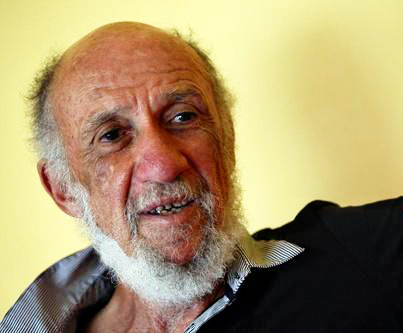
The Failure of U.S. foreign policy in the Middle East

By Richard Falk

Prefatory Note: What follows is a modified version of the Morton-Kenney annual public lecture given at the University of Southern Illinois in Carbondale on November 18, 2015 under the joint sponsorship of the Department of Political Science and the Paul Simon Public Policy Institute.

The Failure of U.S. Foreign Policy in the Middle East

While focusing on the ‘failure’ of American foreign policy in the Middle East it is relevant to acknowledge that given the circumstances of the region failure to some degree was probably unavoidable. The argument put forward here is that the degree and form of failure reflected avoidable choices that could and should have been corrected, or at least mitigated over time, but by and large this has not happened and it is important to understand why.

This analysis concludes with a consideration of three correctible mistakes of policy.

It is also true that the Middle East is a region of great complexity reflecting overlapping contradictory features at all levels of political organization, especially the interplay of ethnic, tribal, and religious tensions internal to states as intensified by regional and geopolitical actors pursuing antagonistic policy agendas. Additionally, of particular importance recently is the emergence of non-state actors and movements that accord priority to the establishment and control of non-territorial political communities, giving primary legitimacy to Islamic affinities while withdrawing legitimacy from the modern state as it took shape in Western Europe. Comprehending this complexity requires attention to historical and cultural background, societal context, and shifting grand strategies of geopolitical actors.

I.

From many points of view American foreign policy in the Middle East has been worse than a disappointment. It has been an outright failure, especially in the period following the 9/11 attacks of 2001. Even such an ardent supporter and collaborator of the U.S. government as Tony Blair, the former Prime Minister of the United Kingdom, has acknowledged as much in a recent set of comments where he basically says that the West has tried everything, and whatever the tactics were relied upon, the outcome was one of frustration and failure. Read More »

School mediation – problems and solutions

By Johan Galtung

The world wave of mediation has reached school systems all over; in some countries less, in others more. Like in Spain, as evidenced by this heavily oversubscribed seminar on school mediation. When asked to express what they want to see happen in schools, the most frequent answer was convivencia, living togetherness. In one word, not as a composite concept. Like in Japanese, the one word is kyosei.

What does it mean, concretely? I would interpret it as positive peace at school. Something behavioral: cooperation for mutual and equal benefit. Equity. Something attitudinal, emotional resonance, I enjoy your joy, I suffer your suffering: Empathy. Harmony.

But the school is a big, holistic place. Not only children, but also adults, teachers and staff. And parents. Positive togetherness within and between all these four groups? A huge order.

Many simplify this to togetherness among children, and not positive, only less negative. Less bullying, to protect victims – parents demand that – and to use teacher time for teaching, not keeping discipline–the staff demands that. However, it all hangs together.

In addition, simplification runs against another big world wave of two values: diversity and equality, against homogeneity-verticality. Read More »

TFF PressInfo # 349 – Burundi’s crisis and the world’s inability to prevent violence

By Jan Oberg

Lund, Sweden, November 9, 2015


The big – not great – powers of the world have embassies everywhere, plenty of intelligence services, special forces on the ground and satellites in space. They can even hit and kill individuals they don’t like.

They can intervene here and there and everywhere – particularly if they have economic or strategic interests or their own nationals are in danger.

These very weeks they can squander incredible sums of taxpayers’ money on new nukes and huge paranoia-based military exercises in a Europe – to which over a million refugees come because these big – not great – powers have contributed to the destruction of their houses, villages, life opportunities, whole countries and cultures.

So it’s amazing what the big ones can do. It would be impressive if it wasn’t so destructive and self-defeating. Again and again.

The only things they don’t seem capable of, however, is to:

a) fulfil their self-appointed mission called Responsibility to Protect and prevent violence where they have no interests and to

b) contribute to making life better for all and create genuine peace, justice and development.

Take Burundi.

There is a colonial history as well as a history of genocide, extreme poverty and corruption, ten years of economic and other mismanagement under the ever more authoritarian rule of Pierre Nkurunziza.*

Since April this year, there have been tons of indicators that something really bad could happen. The trained observer cannot fail to see the pattern, the incremental, systematic increase of repression of the people.

It’s all well summarised in this background article. 

And what do the big powerful do over 6 months with this potential crisis, possibly civil war or genocide – knowing full well about it?

Absolutely nothing!Read More »

The Pope’s challenge to white America.

By Jonathan Power

September 22nd 2015.

The pope will cause waves in America during his visit this week. Invited to speak before Congress by the Speaker of the House of Representatives, John Boehner, he’ll arrive right at the time that the Republican candidates for president are touting ideas that are anathema to Pope Francis.

He detests the cruder aspects of capitalism and the consumer life style so rife in America. The culture of Wall Street and its banks, in particular their performance in precipitating the crash of 2007 and their rush to avoid culpability, he finds distasteful.

Nor has he much time for those who turn their back on the needs of the poor, the unemployed, the discriminated against, those unnecessarily imprisoned or the migrant.

Nor will American political leaders find him giving any support for the kind of wars fought by the US since 9/11. The Republicans will find him way to the left, except on the issue of abortion.

The Pope is unlikely to rattle through the statistics but I’m sure he knows what the facts are.

The US now ranks lowest among affluent nations in how it spreads its wealth. It has the worst poverty, the lowest life expectancy, the highest rate of infant mortality and the shortest (or non-existent) maternity leave among the world’s richest 21 nations.

It is nearly the worst in its mental health provisions, the degree of child poverty and its numbers of obese.Read More »

Making peace arrive in Ukraine – bring in the UN

By Jonathan Power

September 15th 2015.

On the last day of last month right wing demonstrators, mostly from neo-fascist movements, hurled themselves against the police in Kiev’s Maidan square, the same place where in February 2014 a more heterogeneous group of demonstrators effectively ousted President Viktor Yanokovych. A grenade was thrown and three people died and 120 were hospitalized, mostly policemen.

In an address to the nation President Poroshenko blamed the clashes on nationalistic forces, calling their actions “a stab in the back”. Finally the Western powers raised a voice of condemnation, although over the last year they have made little criticism of the rightist militias and parties.

That is perhaps because it would interfere with their narrative – that the demonstrators that overthrew Yanukovych were of a liberal, democratic hue. The overwhelming majority were. But the ignored fact is that the people who led the crowd and fired the bullets when the demonstrations turned ugly were these very same rightists.

Some of the leaders of the neo-Nazi organisations, especially Svoboda, went on to be appointed to senior positions in government and parliament.

The BBC’s Ukraine correspondent, David Stern, reported on September 1st: “The explosion in Maidan comes weeks after another armed incident involving volunteer militia with ties to the extreme right – a shoot out between members of the so-called Right Sector and the local police in south-western Ukraine. Although the militias have been nominally integrated into government structures, many wonder how much control Kiev actually exercises.”

The main gripe of the protestors is that Read More »

Reading Claudia Rankine on race

By Richard Falk

We white people have lots to learn about racism in America no matter how progressive our attitudes toward race. I realized this some years ago when I found Toni Morrison’s Beloved so grimly illuminating in depicting the cruelty experienced after the abolition of slavery by our African American fellow citizens left in a malicious shadow land of unknowing, a reflection of white indifference.

It made me abruptly realize that I had never effectively grasped the intensities of hurt and pain of even close black friends afflicted or threatened with affliction as a result of societal attitudes of hatred and fear that lie just below the surface, behavior socially conditioned to be ‘politically correct.’

White consciousness was preoccupied with the condemnation of hideous events that capture national attention, but remain largely unaware of the everyday racism that is the price African Americans of talent and privilege pay for ‘success’ when penetrating the supremacy structures of society that remain predominantly white.

I recall some years ago being picked up at the airport in Atlanta by a couple of white undergraduates assigned to take me to the University of Georgia where I was to give a lecture. On the way we got onto the subject of race, and they complained about tensions on their campus. I naively pointed out that the stars of their football and basketball teams were black, and since white students were fanatic collegiate sports fans at Southern universities, wouldn’t this solve the problem. I assumed that these black athletes who won games for the college would be idolized as local heroes.

The students taking me to the lecture agreed with my point, but claimed that the black athletes refused to socialize with whites, displaying an alleged ‘reverse racism’ that the white student body resented. In explaining this pattern of multi-culturalism to me, whether accurate or not I have no idea, these young Southerners did not pause to wonder whether this reluctance by campus blacks, including the sports stars, to mingle socially might have something to do with the history of race relations in the South, and not just the history but an of nasty earlier experiences of racism as well, and not just in the South, but throughout whole of the country, and that this was their reason for choosing to be racially aloof!

It is with such thoughts in mind that reading Claudia Rankine’s Citizen: An American Lyric (Greywolf Press, 2014) became for me a revelatory experienceRead More »

TFF PressInfo # 342 – The iron fist inside a velvet glove

By Jonathan Power

“1789 is an historic date but it is not an historic example”. The French Revolution, violent to its fingertips, began with the highest motives, led by the most inspired and determined of people, but descended step by step into its own self-created inferno where the revolution consumed its own children.

Violence begets violence and, as Martin Luther King said, “The means and the ends must cohere. We will never have peace in the world until men everywhere recognize that ends are not cut off from means, because the means represents the ideal in the making, and the end in process. And, ultimately, you can’t reach your good ends through evil means, because the means represents the seed and the end the tree.”

According Erica Chenoweth and Maria Stephan, writing in the August, 2014, edition of Foreign Affairs, “Between 1900 and 2006 campaigns of nonviolent resistance against authoritarian regimes were twice as likely to succeed as violent movements. Nonviolent resistance also increased the chances that the overthrow of a dictatorship would lead to peace and democratic rule. This was true even in highly authoritarian and repressive countries, where one might expect nonviolent resistance to fail.”

Critics of nonviolence are always swift to cite cases when non-violent campaigns were counterproductive – the student protests in Beijing’s Tiananmen Square in 1989 and the failure of the Arab Spring where non-violent protests were hijacked by extremists, as in Syria, or were self-sabotaged by their leaders who had no strategy for the long term, as in Egypt.

More recently in Ukraine the ferment unleashed by those protesting against the rule of President Viktor Yanukovych while achieving its aim of toppling him has been compromised by the infiltration of extreme rightists which, in turn, worked to provoke Russian military intervention in the east.

All such criticisms are right. But Read More »

TFF PressInfo # 335 Greek debt and West-Russia-China-Japan

By Johan Galtung

The game is dirty and has lasted 70 years. It came with the idea of development as imitating, but not catching up, with the West, for all states, including the deluge of states due to decolonization.

The formula for big profit is simple: give credit to a country poor enough not to be able to pay it off quickly, yet not so poor that it cannot go on servicing the loan for years. To be worthwhile the project must be capital-intensive, like (air)ports and highways to the (air)ports for import-export, assembling cars–something for the rich. Investment to lift up people in misery, or ravished nature, makes no sense: the poor need very little capital and can only pay back in labor, whereas nature pays back but is not capitalized.

Ideally, the country asks for more credit to service the first, and a second, third loan is then offered at higher interest. Till the debt is non-sustainable; the debtor country is then squeezed dry.

Then comes the time for debt relief, provided the profit made on investment in debt exceeds the debt forgiven.

From Agence France Presse comes a study: Germany made € 100 billion on the Greek crisis since 2010 – amounting to 3% of the GDP – on the difference between interests paid to German banks and the interest they paid; from German banks to ECB 1%, to German banks from debtors, say, 6%.

Germany’s share of the total bailout package to Greece – with the latest for payment due August 20 – is € 90 billion, meaning a € 10 billion profit if Greece cannot be squeezed further. The money flowing into Greece is to keep banks, not people, afloat. And to benefit USA, France and the Netherlands, but to a lesser extent than Germany.

This is the way the Third World has been treated by the USA-based IMF and the World Bank; what is new is EU treating a fellow EU member like a Third World country (or worse).

Next in line is Ukraine, Read More »

Hiroshima and the Dangers of a New Cold War

By Farhang Jahanpour

On the anniversary of the first use of nuclear weapons on Hiroshima and Nagasaki it is important to look back at the reasons for those barbaric acts and to look forward to what needs to be done.
The First and the Second World Wars were the most devastating wars ever waged in history. Nevertheless, although those wars killed tens of millions of human beings and destroyed many cities, the end of the Second World War witnessed the use of a new category of weapons by the United States that have the potential to end human civilization as we know it.

Grotesquely called ‘Little Boy’, the bomb that flattened Hiroshima on 6 August 1945, was a uranium bomb that killed between 130,000-140,000 civilians instantly, and many thousands later. ‘Fat Man’ that blasted Nagasaki three days later, was a plutonium bomb and killed about 70,000 people instantly.

There has been a great deal of debate about whether the use of those bombs was necessary to force Japan’s surrender and to end the war. While these debates seem archaic and a part of history, nevertheless, it is important to see whether those weapons were necessary from a military point of view, or whether they had other purposes, something that would have relevance for us today.

First of all, it is remarkable that those two bombs were dropped on two non-military targets, and the vast majority of those killed were civilians.

The two bombs were of two different types, one was a uranium and the other a plutonium bomb. They constituted the two most horrendous single instances of mass slaughter in the history of the world, yet they have not received the attention that they deserve and appropriate lessons have not been learned. It is important to point out these facts to American citizens who have been kept mainly in the dark regarding their past history.

The Germans have apologized to the Jews and to the Poles for Nazi atrocities. The Japanese have apologized to the Chinese and the Koreans, and even to the United States for failing to break off diplomatic relations before attacking Pearl Harbor. The Russians have apologized to the Poles for atrocities committed against civilians, and to the Japanese for abuse of prisoners.

The Soviet Communist Party even apologized for foreign policy errors that “heightened tension with the West.” Pope John Paul II apologized for the Catholic Church’s past behavior towards the Jews. Britain has apologized for slavery. The Australian prime minister has apologized for the treatment of the aborigines.

Yet up till now there has not been an American apology for those two horrendous acts of genocide in Japan. Read More »