Syrien – hvad kunne være gjort og hvad kan stadig gøres?

– Eller: Sådan har vi svigtet Syrien

Publiceret 13 september 2013 på Ræson online

Af Jan Øberg, docent

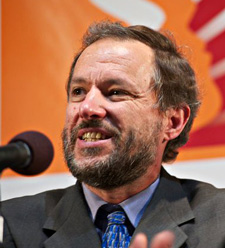
Hvis det er fred, verden vil have, er det et ynkeligt spil vi har set, mener fredsforskeren Jan Øberg, medstifter og direktør for den Transnationale Stiftelse for Freds- og Fremtidsforskning i Lund – www.transnational.org

Gad vide hvor mange mislykkede krige vi endnu skal igennem før især politikere og medier opdager det indlysende faktum at der findes et temmeligt bredt spektrum af handlingsmuligheder mellem at gøre ingenting og at smadre et land når konflikter dukker op?

Det spektrum hedder konflikthåndtering og tilhører et fagområde der undervises i rundt om på verdens universiteter. Det kræver at FNs medlemsstater etablerer ”styrker” af uddannede konfliktanalytikere, facilitatorer, mæglere, områdeeksperter, forhandlere og forsoningsterapeuter, der kan rykke ud endnu hurtigere end de kan sende krydsermissiler og F-16 fly.

For at dette spektrum kan blive inddraget forudsættes endvidere at regeringer ikke direkte ønsker krig under foregivende af at have gode og ofte humanitære motiver hvor de i virkeligheden har rå interesser.

Med andre ord, man kan gøre noget ved den manifeste konfliktanalfabetisme, der først søger militære løsninger og – som en række danske politikere – hurtigt tilsidesætter folkeretten og FNs fornemste normRead More »

TFF nominated for the Nobel Peace Prize

TFF PressInfo, September 12, 2013

Summary

The Transnational Foundation for Peace and Future Research (TFF), founded on September 12, 1985 – today 28 years ago – is nominated for the Nobel Peace Prize 2013 and so are three TFF Associates:

Richard Falk, professor in international law at Santa Barbara and Princeton, the UN S-G’s envoy for the Occupied Territories;
David Krieger, founder (1982) and president of The Nuclear Age Foundation devoted to nuclear abolition;
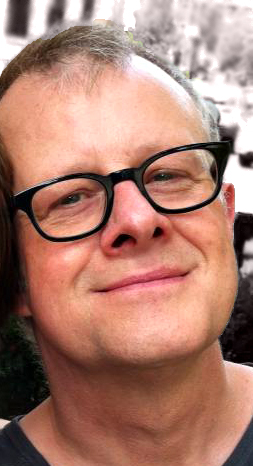
Jan Oberg, co-founder and director of TFF.

Background

World renown expert on the Nobel Peace Prize, Norwegian lawyer Fredrik Heffermehl*, says:

– Nobel dedicated his prize to “the “champions of peace” (not to “peace” in general). Not that many of those we know from open sources are nominated this year are qualified, but a select few are eligible, like the American Professor Richard Falk, Norwegian Ambassador Gunnar Garbo, American David Krieger of the Nuclear Age Peace Foundation, the former Director General of UNESCO Federico Mayor, Spain, Swedish peace scientist and organizer Jan Oberg, as well as American Professor of peace education Betty Reardon.

– These clearly are the kind of “champions of peace” described in Nobel’s will, working for global disarmament based on global law.Read More »

Caucasus leaving the Cold War

By Johan Galtung
Writing from Tbilisi, Georgia

With Georgia (4.5 million) a client of the USA (314 million), fighting its war in Afghanistan; Armenia (3.3 million) leaning towards Russia (143 million); and Azerbaijan (9.2 million) in a bitter conflict over the Armenian enclave Karabagh on much of its territory (less so over the Azeri enclave Nakhichevan on Armenian soil), the stage is set. Add the Russian cultural enclaves in Georgia–Abkhazia and South Ossetia–recognized by few, but some, as states, and visits to Caucasus were a time machine trip back to the Cold War.

But that is not all where Georgia is concerned. There is also the Muslim Adjara enclave bordering on Turkey, and Azeris, Armenians and others, living in the very multinational Georgia, some with strong territorial attachments. People of at least 28 nations live among and around each other in the Caucasus. But modernity demanded clear state borders, also in what became in 1922 the Soviet Union. The state system did not fit the nation system, but states there must be, all over, subjecting dozens of minorities to dominant nations that create illusions by imprinting the three states with their names.

Same as in Europe. Read More »

The US has no credibility dealing with chemical weapons

By Stephen Zunes

This is an updated and expanded version of the article “The US and Chemical Weapons: No Leg to Stand On,” originally posted in Foreign Policy in Focus on May 2, 2013.

Had the United States pursued a policy stemming the proliferation of chemical and other nonconventional weapons through region-wide disarmament, when it was proposed in 2003 by Syria, it is likely there would be no apparent use of such ordnance and no present rush to war on that basis, says Zunes.

The Syrian regime’s alleged use of chemical weapons against civilian areas on August 21 constitutes a breach of the Geneva Protocol of 1925, one of the world’s most important disarmament treaties, which banned the use of chemical weapons.

In 1993, the international community came together to ratify the Chemical Weapons Convention (CWC), a binding international treaty that would also prohibit the development, production, acquisition, stockpiling, retention, and transfer or use of chemical weapons. Syria is one of only eight of the world’s 193 countries not party to the convention.

However, US policy regarding chemical weapons has been so inconsistent and politicized that the United States is in no position to take leadership in any military response to any use of such weaponry by Syria. Continue reading at TruthOut

Why Congress should say “NO” on Syria

By Richard Falk

I am not sure this attempt at clarifying the present stage of the Syria debate adds much to my prior posts, yet I hope that it provides a kind of summary that is helpful in following the unfolding debate; all along I have felt that the Syrian impasse presented the UN and the world with a tragic predicament: trapped between doing something to stop the Assad regime from committing atrocities against its own people so as to retain power and the non-viability and illegality of military intervention, a predicament further complicated by the proxy war within the region along sectarian lines, by the strategic involvement of the U.S. and Russia on opposite sides, and the maneuverings behind the scenes by Israel; also, the overall regional turmoil, and past bad feeling in relation to the UN role in the overthrow of Qadaffi posed additional obstacles.

Efforts to shape the political outcome by military means, because of the proxy war dimensions (including an increasingly evident, although still surprising, tacit alliance between Israel and Saudi Arabia) only escalated the violence on the ground in Syria; Turkey, Russia, and the United States have all along oscillated between principled and pragmatic responses favoring one side or the other, and exhibiting an ambivalent commitment to equi-distant diplomacy.

There are three positions that have considerable support in Washington circles, although rarely acknowledged and not popular with the public, partly because of recent foreign policy failures, and partly too removed from perceptions of genuine security interests:

– undertake an attack to uphold ‘red line’ credibility of the president and the United States Government;

– undertake an attack to avoid an insurgent defeat, but on a scale that will not produce an insurgent victory; goal: keep the civil war going;

– undertake an attack to convince Iran that Obama is ready to use force if diplomatic coercion doesn’t work.Read More »

Obama overholder ikke principperne for “retfærdig krig”

Af Claus Kold

Claus Kold, TFF Associate

Reguleringerne af krigens vold finder man overordnet beskrevet i FN Pagten, Menneskerettighedserklæringerne og mere konkret i den Den Humanitære Folkeret, som består af fire konventioner og tre tillægsprotokoller.

Det er et område, hvor logik, politik og jura flyder sammen om at definere og forstå, hvad der sker på slagmarken. Retssubjektet i krig er ikke mennesker, men stater, der agerer politisk i et vilkårligt horisontalt forhold til andre stater. Stater fortolker omverden og handler på baggrund af forskellige kulturer, religioner, sprog, retstraditioner, økonomier og styreformer. Det kommer der mange misforståelser og konflikter ud af.
Problemet med disse reguleringer er – og det kommer næppe som nogen overraskelse – at de historisk sjældent overholdes. En del af krigens logik er, at hvis en stat er truet på livet, så kæmper den for sin overlevelse med de redskaber og våben, den har. Hvis den og dens ledere nedkæmpes og dør, er der jo alligevel ingen, der kan holde den ansvarlig for begåede grusomheder – ud over Gud, hvis denne da indgår i ligningen.

Der har, så længe krigen har eksisteret, både eksisteret forsøg på at legitimere og at begrænse krigens vold, for spørgsmålene hænger sammen.
Hvad angår legitimeringen af krig blev der især i forbindelse med ridderkorstogene opstillet regler, som skulle opfyldes for at en religiøs (kristen) krig kunne være retfærdig (jus ad bellum).

Just wars bestod af 5 principper, som skulle overholdes, hvis krig skulle være retfærdiggjort. Read More »

Eight arguments against going to war with Syria

By Stephen Zunes

The decision by President Barack Obama to first seek congressional approval of any US military action against Syria is good and important, not only on constitutional grounds but because it gives the American people an opportunity to stop it. It is critically important to convince members of Congress not to grant the president that authority.

Here are some of the top talking points that should be raised before members of Congress as to why authorizing US airstrikes on Syria would be a bad idea.
Continue at TruthOut

Any attack on Syria will be counterproductive and illegal – a result of failed conflict management

TFF PressInfo
September 2, 2013

For the discerning journalists, editors and citizens

Summary
• Any U.S. attack on Syria will be a gross violation of international law, including the UN Charter.
• al-Assad’s admission of UN inspectors obviously was seen by Washington as an obstacle for its war plans.
• An attack will come only as a consequence of deliberately ignored opportunities for professional, impartial mediation and peace-making, the lack of backing of Kofi Annan’s plan of April 2012 in particular.
• An attack can under no circumstances be seen in the light of a responsibility to protect since it will cause even more violence and human suffering throughout Syria.
• Again, we see how the vast majority of people in conflict zones who do not resort to violence are being abandoned.
• Any attack is likely to have grave consequences for the region as a whole.
• For these reasons any attack must be condemned as illegal and counterproductive.
• Governments and citizens everywhere must now use whatever time there is to persuade the U.S. to back down.

1. Immediately after President al-Assad accepted UN inspectors, Washington declared it was ”too little too late”. Read More »

Britain leads the way

By Farhang Jahanpour
September 1, 2013

In his most statesmanlike statement, a short while ago (31 August 2013) President Barack Obama announced that he would seek Congress’s approval before ordering military action against Syria. After all the hype about an imminent strike, this statement was a breath of fresh air, and it has renewed many people’s faith in President Obama. Not only would any other action have been against international law, it would have even been against the US Constitution that gives Congress the right to declare war, except in emergencies.

That right had been usurped by a number of recent presidents who exceeded their executive prerogative. The Congress will be back in session during the second week of September and this delay provides a breather and an opportunity for cooler heads to prevail, and hopefully the chance to find a comprehensive solution to the Syrian crisis.

However, it is important to give credit where it is due, namely to the British Parliament that led the way in imposing the views of the majority of the electorate on the government that was going to get engaged in a rash action.Read More »

Syria – Obama’s surprising (and confusing) latest moves

By Richard Falk
September 1, 2013

President Obama’s August 31st remarks from the White House Rose Garden will long be remembered for their strangeness, but the final interpretation of their significance will have to await months if not years. There are three dimensions, at least, that are worth pondering:

1) seeking Congressional authorization for a punitive military attack against Syria in support of the treaty prohibition on recourse to chemical weapons in an armed conflict;

2) reconciling any endorsement of an attack by Congress with United States obligations under international law and with respect to the United Nations and its Charter;

3) assessing the degree to which American war making prerogatives continue to operate within an unacceptable domain of American exceptionalism.

In framing the issues at stake Obama set forth the fundamental policy choices in a rather incoherent manner:Read More »