Criminalize war!

By Johan Galtung

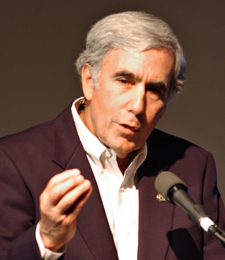
Nobody has brought this simple message to the world like the Perdana Global Peace Foundation in Kuala Lumpur, Malaysia. As the leader, Mahathir Mohammad, Malaysia’s fourth prime minister says:

“Peace for us simply means the absence of war. We must never be deflected from this simple objective”.

So they organize compelling exhibitions and conferences to highlight the atrocities and horrors of war, starting with World War I, often in cooperation with Muhammadiyah Yogyakarta University in Indonesia. A very clear message from the Southeastern part of the world to the Northwestern part: Stop It! All your rules of war add up to its legitimation; wars get ever worse as measured by the percentage of non-combatant, civilian casualties; from about 10 percent in World War I to 90 percent in the Vietnam and other wars at the end of the 20th century. They dare refer to crimes as “unintended consequences”, “collateral damage”.

Take Norway, a “peace nation”, as example; not the USA an Israel with their gods, the idea of being chosen, and exceptionalism. See what Norway does against the spirit of UNSC-United Nations Security Council Resolution 1973 to protect civilians, promote cease-fire and mediate a political solution in Libya. And against the UN Charter Article 2 outlawing war.

According to testimony by pilots on the Norwegian Broadcasting Corporation “Brennpunkt” (In Focus), 25 percent of the bombing was planned with goals selected in advance. Read More »
The US has no credibility dealing with chemical weapons

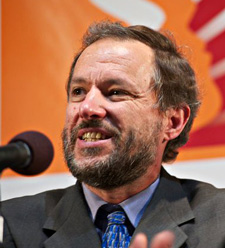
By Stephen Zunes

This is an updated and expanded version of the article “The US and Chemical Weapons: No Leg to Stand On,” originally posted in Foreign Policy in Focus on May 2, 2013.

Had the United States pursued a policy stemming the proliferation of chemical and other nonconventional weapons through region-wide disarmament, when it was proposed in 2003 by Syria, it is likely there would be no apparent use of such ordnance and no present rush to war on that basis, says Zunes.

The Syrian regime’s alleged use of chemical weapons against civilian areas on August 21 constitutes a breach of the Geneva Protocol of 1925, one of the world’s most important disarmament treaties, which banned the use of chemical weapons.

In 1993, the international community came together to ratify the Chemical Weapons Convention (CWC), a binding international treaty that would also prohibit the development, production, acquisition, stockpiling, retention, and transfer or use of chemical weapons. Syria is one of only eight of the world’s 193 countries not party to the convention.

However, US policy regarding chemical weapons has been so inconsistent and politicized that the United States is in no position to take leadership in any military response to any use of such weaponry by Syria. Continue reading at TruthOut

Reinventing Fascism

By Johan Galtung

The atrocious Second World War left behind lasting damage by lowering our standards for what is marginally acceptable. War is bad; but if it is not nuclear, the limit has not yet been reached. Fascism is bad; but if it does not come with dictatorship and the elimination of a category of people, the limit has not yet been reached. Hiroshima, Hitler, Auschwitz are deeply rooted in our minds, distorting them.

Hiroshima makes us disregard the state terrorism against German and Japanese cities, killing citizens of any age and gender. And Hitler and Auschwitz make us disregard fascism as the pursuit of political goals by means of violence and the threats of violence. It takes two to make a war, by whatever means. But it takes only one to make fascism, against one’s own people, and/or against others.

What is the essence of fascism? Read More »

Ending perpetual war? Endorsing drone warfare?

By Richard Falk

That President Obama chose on 23 May to unveil his second term cautionary approach to counter-terrorism at the National Defense University epitomized the ambiguity of the occasion. The choice of venue was itself a virtual guarantee that nothing would be said or done on that occasion that challenges in any fundamental way the global projection of American military power.

Obama’s skillfully phrased speech was about refining technique in foreign policy, achieving greater efficiency in killing, interrogating the post-9/11 war mentality, and all the while extolling the self-mystifying glories of American exceptionalism. That is, only the United States, and perhaps Israel and NATO, possessed an entitlement to use force at times and places of the actor’s choosing without consulting the UN, respecting the constraints of international law, and heeding the admonition in the Declaration of Independence to show “a decent respect for the opinions of mankind.” Read More »

The Chemical Weapons Charade in Syria

By Sharmine Narwani

Let us be clear. The United States can verify absolutely nothing about the use of chemical weapons (CWs) in Syria. Any suggestion to the contrary is entirely false.

Don’t take it from me – here is what US officials have to say about the subject:

A mere 24 hours after Washington heavyweights from the White House, Pentagon, and State Department brushed aside Israeli allegations of chemical weapons use in Syria, US Secretary of Defense Chuck Hagel and the White House changed their minds. They now believe “with varying degrees of confidence” that CWs have been used “on a small scale” inside Syria.

For the uninitiated, “varying degrees of confidence” can mean anything from “no confidence whatsoever” to “the Israelis told us” – which, translated, also means “no confidence whatsoever.”

Too cavalier? I don’t think so. The White House introduced another important caveat in its detailed briefing on Thursday:

“This assessment is based in part on physiological samples. Our standard of evidence must build on these intelligence assessments as we seek to establish credible and corroborated facts. For example the chain of custody is not clear so we cannot confirm how the exposure occurred and under what conditions.”

“The chain of custody is not clear.” That is the single most important phrase in this whole exercise. It is the only phrase that journalists need consider – everything else is conjecture of WMDs-in-Iraq proportions.

I asked a State Department spokesperson the following: “Does it mean you don’t know who has had access to the sample before it reached you? Or that the sample has not been contaminated along the way?”

He responded: “It could mean both.”Read More »

The UN Arms Trade Treaty is not perfect

By Jonathan Power

US presidential candidate Jimmy Carter described arms sales as a “cancer”. But once in office Carter achieved little in controlling them.

In President Bill Clinton’s first term Amnesty International questioned the US government about the use of American military helicopters and armoured vehicles involved in human rights abuses in Turkey. Under pressure from Congress the State Department compiled a report on human rights violations by the Turkish armed forces. It concluded there was “highly credible” evidence that US-supplied arms and jet fighters had been used to subdue Kurdish villages.

Later, in 1996, the US temporarily suspended the sale of advanced attack helicopters. But two years later there were fresh reports that hundreds more armoured vehicles had been sold. The US Defence Secretary visited Turkey and reportedly lobbied on behalf of American companies wishing to co-produce advanced helicopters there. In that same year an American company sold 10,000 electric shock weapons to the Turkish police.
Read More »

Change happens – But How, Why, When and Where?

By Johan Galtung

A century ago humanity, particularly in the West, was at the beginning of a major revolution, from horse culture to car culture. Today there are still (FAO-UN Food and Agriculture Organization, 2008) 59 million horses, but (2010) more than 1 billion cars (in 1986 only half of that). In other parts of the world, like Japan and China, there was a revolution to cars, but from bicycles–Beijing went from 6 million bicycles to 4 million cars over a period of 20 years, only from 1990. Japan had an intermediate scooter stage–like in India, Southeast Asia–less so in China.

Imagine 19th century in the West: horses everywhere. Read More »

Reflections on the Cuban Missile Crisis at fifty

By David Krieger

Fifty years ago this month, the world teetered on the precipice of a nuclear war between the US and Soviet Union during the 13-day Cuban Missile Crisis. We were fortunate to have survived that crisis, thanks largely to the restraint shown by President Kennedy and Premier Khrushchev.

Now, fifty years later, there is no immediate crisis such as that in 1962 over Soviet nuclear-armed missiles being placed in Cuba. There are, however, still some 19,000 nuclear weapons in the arsenals of nine nuclear-armed nations: the US, Russia, UK, France, China, Israel, India, Pakistan and North Korea. Approximately 95 percent of these weapons are in the arsenals of the US and Russia. Some 2,000 of them are kept in a state of high alert, ready to be immediately launched upon an order to do so at any moment of any day or night. Read More »

The dangers of chemical weapons, Syria’s too

By Jonathan Power

The Syrian government say that, unlike Saddam Hussein, it won’t use its sizeable stocks of chemical weapons on its own population, only on would-be attackers. That’s a comfort of sorts since nobody is going to attack it. Chemical weapons are regarded as weapons of mass destruction along with nuclear and biological weapons. Chemical agents like sarin that destroys the nervous system, VX and mustard gas can kill thousands of people in one blow.

If the UN were mandated to send in troops or the US did so unilaterally their forces could be devastated by a chemical attack. The main worry – as such an invasion is highly improbable unless a dying regime or a new regime asks for help – is that the chemical stockpiles could fall into the wrong hands – the hot-headed thorn in Israel’s flesh, Hezbollah in southern Libya or Al Qaeda which the regime says are part of the opposition.Read More »

U.S. military suicides and Palestinian hunger strikes

By Richard Falk

There is some awareness in the United States that suicides among American military personnel are at the highest level since the years of the Vietnam War. It is no wonder.

The sense of guilt and alienation associated with taking part in the Afghanistan War, especially multiple postings to a menacing war zone for a combat mission that is increasingly hard to justify and almost impossible to carry out successfully, seems sufficient to explain such a disturbing phenomenon.

These tragic losses of life, now outnumbering battlefield deaths, about one per day since the start of 2012, are not hidden from the American public but nor do they provoke an appropriate sense of concern, or better, outrage. Read More »