The clouds are dark and getting darker

By Johan Galtung

The process has now gone full circle, from Sykes-Picot Agreement negotiated from 1915 to 16 May 1916, about control of the Ottoman Empire, when beaten, to England now joining France in bombing Syria. “Violence In and By Paris” two weeks ago was wrong about England wanting to stay out: the House of Commons on 02 Dec 2015 voted 397 to 223 for bombing; 56 Labor MPs for, only 7 Conservative MPs against.

Russia played a minor role in Sykes-Picot as now also in bombing maybe mainly the opposition to Assad.

As Robert Savio points out, “They all fight to the last Syrian.”

The likelihood of an atrocious Paris 13 November type violence in London went up many points. And Russia had a civilian plane bombed.

The USA is as addicted to bombing as a hammer to a nail, not only to use allies and train locals. James A. Lucas, “The United States has killed more than 20 million people in 37 nations since WWII”, in 1945 (jlucas511@woh.rr.com) seems not to be enough; they just go on and on. More than a million Muslims killed in West Asia mainly by the USA since 1991. In San Bernardino, somebody may have killed 14 in revenge.

The new name for what they fight, after jihadism, is the Islamic State, calling it sometimes IS, ISIS, ISIL. What is it, this Daesh?

There seem to be heavy elements of Saddam’s army, the Baath secular party (also Assad’s), and the Tikrit clan from the recent past–now adding maybe ten fighters for each killed by the West. Daesh seems toRead More »

Responding to Megaterrorism after Paris

By Richard Falk

Prefatory Note
The article below is based on an opinion piece published by Middle East Eye on December 1, 2015 under the title “A Different Response to ISIS after Paris.” My modified text places its focus on the originality of megaterrorism and its distinctive challenges, suggesting that the choice of response needs to be extended beyond the iron cage of militarism and vengeance. Also, it is essential for analysts and leaders to envision the response to the response as well as being preoccupied with how best to hit back. Increasingly, American politicians treat the challenge as if playing poker whereas the realities of the situation call for a chess players’ natural disposition to think ahead as many moves as possible. Finally, given the religious and civilizational dimensions of current versions of megaterrorism, it is vital to guard against various manifestations of Islamophobia.

What separates megaterrorism from other more customary forms of terrorism is the theme of this post. It is not possible to give a precise definition of megaterrorism by pointing to a threshold of casualties or the magnitude of response. Each megaterrorist event is decisively shaped by its distinctive sociopolitical and psychological context.

The focus here is to take account of this radical new category of threat posed in a variety of settings, critique the ‘war’ reflex and the war/crime binary, briefly consider alternate paths of response, and recommend risk and cost assessments that take into account adversary responses to the prescribed response. The 21st century experience with responding to megaterrorist events does not create confidence in either most conceptualizations of the challenges being posed or the responsive strategies chosen to be implemented.

The horrific Paris attacks of November 13th challenge the West more deeply in some ways than did the 9/11 attacks 14 years ago. Read More »

Om Samförståndsavtal med Nato om värdlandsstöd

Av Ola Friholt
För Fredsrörelsen på Orust

Ordförande och TFF Associate

Till Försvarsdepartementet

103 33 Stockholm

Re: Yttrande om promemorian om Samförståndsavtal med Nato om värdlandsstöd.

DS 2015:39 PM om värdlandsavtal

Fredsrörelsens organisationer har sent omsider fått ta del av denna promemoria. I hast vill nu Fredsrörelsen på Orust avge detta yttrande.

Det förtjänar att påpekas att den samlade fredsrörelsen i Sverige har genom en mer än hundraårig tradition av intresserad efterforskning och fördjupning i frågor om konflikter och konfliktlösning uppnått en fördjupad kunskap, oftast förmedlad av kända fredsforskare som Johan Galtung, Håkan Wiberg, Jan Öberg och av dem som vid svenska universitet inbjudits till talrika seminarier, alltså internationella profiler som nämnde Galtung, Noam Chomsky, Richard Falk, och böcker av Daisaku Ikeda, Howard Zinn och andra.

En överväldigande bevisning finns om att militära medel inte förmår lösa konflikter. Konfliktlösning och bestående fred måste eftersträvas och förverkligas med fredliga medel, avspänning, samarbete m m för att åstadkomma en gemensam säkerhet för alla konfliktande parter. Straff- och vedergällningstänkande är alltid kontraproduktivt. Rustning och allianser skapar hot och spänningar.

I detta ljus bör vi analysera det pågående arbetet med att vinna folkets stöd för ett värdlandsavtal med Nato, världens utan jämförelse starkaste militärallians med cirka 60 % av världens samlade militärutgifter.

Fredsrörelsen på Orust har följande synpunkter på detta PM om värdlandsavtal:

Avsnitt 3, Ärendet

Under de senaste tjugo åren har Sveriges regeringar stegvis och utan folklig debatt och information övergivit etablerad svensk säkerhets- och fredspolitik, bort från målet att främja kärnvapennedrustning, Norden kärnvapenfri zon (i Alva Myrdals efterföljd), arbete för nedrustning och omställning till civil produktion (i Inga Thorssons efterföljd), arbete för fredlig konfliktlösning (i Maj-Britt Theorins efterföljd) och arbetet för gemensam säkerhet (i Olof Palmes efterföljd).

Förkortningar som OSSE, ESK m fl har förlorat sin innebörd. Man hänvisar aldrig till Helsingforsöverenskommelsen eller FN-stadgan, utom när det gäller Rysslands göranden.

Partiskhet är lösenordet för Sveriges utrikes- och säkerhetspolitik.

PMets formulering ”Sverige är ett aktivt partnerland och vårt samarbete med Nato inom PFF har gradvis utvecklats och fördjupats” ter sig i detta ljus som ett öppenhjärtigt konstaterande att Sveriges fredssträvande politik är bytt mot rustad militär maktpolitik.Read More »

Dubbelspelet kring Ukraina

Av Ola Friholt
TFF Associate

Med den uttalade avsikten att underminera Vladimir Putins ställning i Ryssland har Natostaterna och övriga EUstater systematiskt förtigit Kievregimens vägran att följa de avtal den själv skrivit under.

Istället har Ryssland anklagats för dubbelspel och erövrarambitioner. Utvecklingen ser ut så här*:

1. Ukraina förhandlar med EU om ekonomiskt samarbete, vilket skulle innebära att bryta samarbetet med Ryssland. När president Janukovitj av sina ekonomer fick veta vad detta skulle kosta landet, avstod han från att underteckna det framförhandlade EU-avtalet.

2. Detta utlöste Maidanprotesterna, från grupper i västra Ukraina, vilka länge velat ansluta landet västerut. Dessutom deltog Janukovitjanhängare. Skottlossning utbröt från hus omkring torget, med okända skyttar. Detta tolkades som Janukovitjs ansvar.

3. Janukovic och Maidanledarna framförhandlade 21 feb 2014, tillsammans med Frankrikes, Tysklands och Polens utrikesministrar och en representant för Ryssland ett avtal, som gick ut på följande: a. Ömsesidig demobilisering av väpnade grupper.
b. Omedelbart arbete med författningsändringar, först för att begränsa presidentens befogenheter (som tidigare hänt efter den orangea revolutionen 2004).
c. Förhandling av ny författning att antas senast i december 2014.
d. Presidentval ska hållas i december genast efter att författningen antagits.
e. En nationell enhetsregering från båda sidor ska verka fram till valet i december 2014.

4. Underskrifterna på detta avtal ratificerades av Majdanrådet men avvisades av de hårdföra högeraktivisterna, som krävde omedelbar (lagstridig) avsättning av presidenten och förbud mot de två politiska partierna i östra Ukraina, d v s eliminering av den östliga politiska eliten.

5. Den 22 februari grep högerextremisterna makten och avsatte Janukovic som flydde till Ryssland.Read More »

TFF PressInfo # 351: The Nobel Foundation taken to court on the Peace Prize

Lund, December 10, 2015

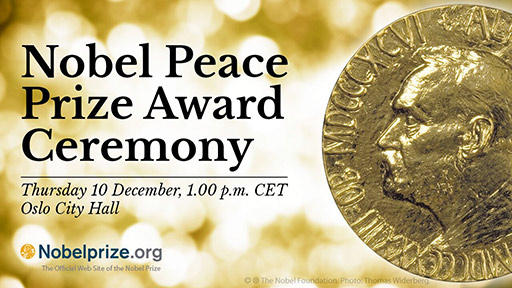
On the day of the Nobel Peace Prize Award Ceremony at Oslo City Hall

To whom it may concern, including the media

We know – and Alfred Nobel knew – how devastating war and arms races are, and how little security we get for all the money we spend on military forces.

The campaign to reclaim the Nobel Peace Prize is first and foremost a campaign to revive the idea that global peace requires global cooperation on disarmament and replacing the law of force with the force of law. Every day more and more of us see, from the Middle East warfare, from the refugee crisis, and many other chilling reminders, the mandatory urgency of a change in world politics.

Alfred Nobel decided to give one fifth of his fortune for a prize to promote disarmament and resolution of all conflicts through negotiations and legal means, never through violence.

Can such a prize, with a so clearly stated goal, be turned to serve the opposite idea and be given again and again to recipients who promote arms races and believe in militarism and war?

This question will soon be answered, after Mairead Maguire, Jan Oberg, Davis Swanson, and Lay Down Your Arms took the case to the Stockholm District Court on Friday 4th of December 2015. Here is the full text of the summons.
and all other relevant information is available at the Nobel Peace Prize Watch.

Test case: the award to the European Union in 2012

The court case will test one of the most obvious violations of the Nobel idea Read More »

The Nobel Foundation Summons, Dec 4, 2015

Mairead Maguire, Jan Oberg, Davis Swanson, and Lay Down Your Arms took the case against the Nobel Foundation and thereby indirectly the Nobel Committee in Oslo to the Stockholm District Court on Friday 4th of December 2015.

Full text of the summons

Stockholm, December 4, 2015

Stockholm City Court
Box 8307
104 20 Stockholm

Our ref
8112/L

PETITION FOR A SUMMONS
[BRIEF TO OPEN CASE]

Plaintiffs
1. Mairead Maguire
2. Jan Öberg
3. David Swanson
4. Lay Down Your Arms/Nobel Peace Prize Watch

Counsel
Advokat Kenneth Lewis
Lewis & Partners Advokatbyrå AB
Box 2104
103 13 STOCKHOLM

Respondents
1. Marcus Storch
Grevgatan 65, lgh 1401
11459 STOCKHOLM

2. Göran K Hansson
Sankt Eriksgatan 14, lgh 1304,

112 39 STOCKHOLM

3. Lars Heikensten

Odengatan 75

11322 STOCKHOLM

4. Peter Englund
Dragarbrunnsgatan 63 C
753 20 Uppsala

5. Tomas Nicolin
Karlavägen 11, lgh 1603
114 24 Stockholm

6. Kaci Kullman Five
Lille Toppenhaug 4
1353 Baerums Verk
Norge

7. Staffan Normark
Långängsvägen 27
182 75 Stocksund

Case
Board members´ liability to compensate the Nobel Foundation according to the Foundations Act (1994:1220)

Forum
Ch. 10 Art. 14 Rättegångsbalken (Civil Procedure Act)

As the retained counsel of Mairead Maguire, Jan Öberg, David Swanson and Lay Down Your Arms (Below plaintiffs) I hereby apply for summons of Marcus Storch, Göran K Hansson, Lars Heikensten, Peter Englund, Tomas Nicolin, Kaci Kullman Five, and Staffan Normark and will present these

CLAIMSRead More »

The Failure of U.S. foreign policy in the Middle East

By Richard Falk

Prefatory Note: What follows is a modified version of the Morton-Kenney annual public lecture given at the University of Southern Illinois in Carbondale on November 18, 2015 under the joint sponsorship of the Department of Political Science and the Paul Simon Public Policy Institute.

The Failure of U.S. Foreign Policy in the Middle East

While focusing on the ‘failure’ of American foreign policy in the Middle East it is relevant to acknowledge that given the circumstances of the region failure to some degree was probably unavoidable. The argument put forward here is that the degree and form of failure reflected avoidable choices that could and should have been corrected, or at least mitigated over time, but by and large this has not happened and it is important to understand why.

This analysis concludes with a consideration of three correctible mistakes of policy.

It is also true that the Middle East is a region of great complexity reflecting overlapping contradictory features at all levels of political organization, especially the interplay of ethnic, tribal, and religious tensions internal to states as intensified by regional and geopolitical actors pursuing antagonistic policy agendas. Additionally, of particular importance recently is the emergence of non-state actors and movements that accord priority to the establishment and control of non-territorial political communities, giving primary legitimacy to Islamic affinities while withdrawing legitimacy from the modern state as it took shape in Western Europe. Comprehending this complexity requires attention to historical and cultural background, societal context, and shifting grand strategies of geopolitical actors.

I.

From many points of view American foreign policy in the Middle East has been worse than a disappointment. It has been an outright failure, especially in the period following the 9/11 attacks of 2001. Even such an ardent supporter and collaborator of the U.S. government as Tony Blair, the former Prime Minister of the United Kingdom, has acknowledged as much in a recent set of comments where he basically says that the West has tried everything, and whatever the tactics were relied upon, the outcome was one of frustration and failure. Read More »

TFF PressInfo # 349 – Burundi’s crisis and the world’s inability to prevent violence

By Jan Oberg

Lund, Sweden, November 9, 2015


The big – not great – powers of the world have embassies everywhere, plenty of intelligence services, special forces on the ground and satellites in space. They can even hit and kill individuals they don’t like.

They can intervene here and there and everywhere – particularly if they have economic or strategic interests or their own nationals are in danger.

These very weeks they can squander incredible sums of taxpayers’ money on new nukes and huge paranoia-based military exercises in a Europe – to which over a million refugees come because these big – not great – powers have contributed to the destruction of their houses, villages, life opportunities, whole countries and cultures.

So it’s amazing what the big ones can do. It would be impressive if it wasn’t so destructive and self-defeating. Again and again.

The only things they don’t seem capable of, however, is to:

a) fulfil their self-appointed mission called Responsibility to Protect and prevent violence where they have no interests and to

b) contribute to making life better for all and create genuine peace, justice and development.

Take Burundi.

There is a colonial history as well as a history of genocide, extreme poverty and corruption, ten years of economic and other mismanagement under the ever more authoritarian rule of Pierre Nkurunziza.*

Since April this year, there have been tons of indicators that something really bad could happen. The trained observer cannot fail to see the pattern, the incremental, systematic increase of repression of the people.

It’s all well summarised in this background article. 

And what do the big powerful do over 6 months with this potential crisis, possibly civil war or genocide – knowing full well about it?

Absolutely nothing!Read More »

TFF PressInfo # 348 – After 70 years: The UN falls short, and yet…

By Richard Falk

The United Nations turns 70 today. It isn’t “we, the peoples” – it is “we, the governments”. It’s in need of reform but we must also remember that its first Secretary-General Trygve Lie said in 1948 – that it will never be stronger or better than the member states want to make it.

Whatever you think of it, we certainly can’t do without it, nor without its Charter that is still the most Gandhian document, all governments have ever signed.

If its member governments were not so navel-gazing, it would be the best vehicle for global governance – for globalising democracy in a world where the economy and the military as well as communication and culture are all globalizing while politics is still anchored in parliaments in increasingly irrelevant nation-states.

And why not set up a People’s Assembly? Establish UN Embassies in each member state and let people vote for who shall represent their country in the UN?

All doable with a little creativity and good will – for the common good, the common future.

Below, please find the thoughts at the UN’s 70th Anniversary of one of the finest international law and peace experts we have who has also worked with the UN for many years.

– Jan Oberg

Prefatory note

A shorter somewhat modified version of this post was published in Al Jazeera Turka, but only in Turkish translation. The thesis set forth is that the UN has disappointed the expectations of those who took seriously its original promise of war prevention, but that it has over its lifetime done many things that need doing in the world.

It also provided a meeting place for all governments, and has developed the best networking sites for all those concerned with the state of the world and what can be done by way of improvement. The UN System faces an important test in the upcoming Climate Change Conference to be held in Paris at the end of November. The event is billed as the make or break session for the governments of the world to agree finally on a strong enough framework of constraint governing the release of greenhouse gasses to satisfy the scientific consensus.

If Paris is generally regarded as successful, the UN stock will rise steeply, but if it should fail, then its stature and role of the Organization could become even more marginalized. Either way, the UN as of 2015 is a very different kind of political actor than when it was founded in 1945, disappointing to those that hoped for permanent peace and some justice, while pleasing to those that sought from the outset a wider global agenda for the Organization and felt that its best contributions would likely be in a wide range of practical concerns where the interests of major political actors more or less overlap.

After 70 Years: The UN Falls Short, and Yet..

When the UN was established in the aftermath of the Second World War hopes were high that this new world organization would be a major force in world politics, and fulfill its Preamble pledge to prevent future wars. Seventy years later the UN disappoints many, and bores even more, appearing to be nothing more that a gathering place for the politically powerful.

I think such a negative image has taken hold because the UN these days seems more than ever like a spectator than a political actor in the several crises that dominate the current agenda of global politics. This impression of paralysis and impotence has risen to new heights in recent years.

When we consider the waves of migrants fleeing war-torn countries in the Middle East and Africa or four years of devastating civil war in Syria or 68 years of failure to find a solution for the Israel/Palestine conflict or the inability to shape a treaty to rid the world of nuclear weapons, and on and on, it becomes clear that the UN is not Read More »

PressInfo # 347 – The world beyond global disorder

By Johan Galtung

Johan Galtung turns 85 on UN Day 2015

The global nation-state based system is in deep crisis. The West’s relative decline is obvious, except to the West itself. This multi-dimensional crisis will, of course, give way to something new – but what?

Lack of vision – sometimes even of knowledge and empathy – among those in power seems a defining characteristics of our times.

Individually as well as nationally, we are living in iTimes, not weTimes. Add to that blowbacks from history and Western knee-jerk militarist responses – and the next few years will be tough.

The creativity and innovation we find in commercial and social entrepreneurship and in the arts, seem frighteningly absent in the world of politics.

Who would get elected anywhere on having an exciting vision for the the world the next 25 or 40 years? No, you must know about national affairs and economy – while, by the way, national economy doesn’t exist anymore.

Few young people, including students or young scholars, find it attractive to join party politics.

But can humanity survive with only criticism, negative energy, bad news and no vision?

Will we work for a better world if we can’t see it?

Dr. Johan Galtung has devoted his life to the vision of a less violent, more peaceful world – from the local to the civilisational level – implementing the norm of the Charter of the UN – turning 70 on October 24, 2015 – that peace shall be established by peaceful means.

Galtung – one of a handful of peace visionaries with a macro perspective – himself turns 85 on UN Day. He has mediated in more than 100 conflicts since 1957 and published 164 books. And he still travels the world speaking and writing. More about him here by Antonio. C. S. Rosa.

He is one of the youngest and most innovative minds in world affairs, always asking the essential, healing question: What can be done?

That’s what the good doctor does – helps conflicting parties address their problems, reduce their violence and develop a vision of a better future – together or side-by-side with respect.

Making the seemingly incompatible more compatible through creativity, dialogue, vision.

Here is his latest column – which TFF publishes every week. It synthesizes where we stand and ought to go.

As humanity.

And with humanity.

– Jan Oberg

And now Galtung himself…

Keynote, 13th Session World Public Forum “Dialogue of Civilizations” – Rhodes, Greece, 9 Oct 2015

The strength of this forum is its civilization focus; let us use it for analysis and remedies. Major forms of disorder use violence; war is state organized violence. The most belligerent states are the United States of America and Israel, both with civilization roots.

National Evangelism, the US Protestant Christian civilization – more national than evangelical – justifies US warfare as exceptionalism of a people chosen by God, with a manifest destiny to run the world. Orthodox Judaism justifies Israeli warfare to conquer and expand from Nile to Euphrates as a religious right and duty to the Eternal One.

The third most belligerent country, the UK, no longer believes it is God-chosen but chosen by the USA; not quite the same but something.

The root causes – and soften the ideas

But the root cause of global disorder lies in the Occident – with Islam – seeing itself as the single, universal civilization valid for all at all times, all others being mistakes. Missionary activity, slavery, colonialism, exploitative trade, robbery capitalism, follow.

The USA got from Judaism the idea of Chosen People-Promised Land. Yet Israel is Read More »