
TFF director Jan Oberg commenting two days before a deal should be concluded
Category: General issues
A deal with Iran this week?
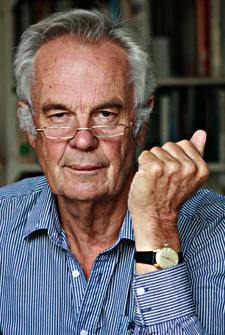
By Jonathan Power
June 30th 2015.
According to the New York Times, “Ayatollah Ali Khamenei, who has the final word on all public matters in Iran, last week demanded that most sanctions be lifted before Tehran has dismantled part of its nuclear infrastructure and before international inspectors verify that the country is beginning to meet its commitments.”
“US Secretary of State John Kerry says the United States was prepared to ease sanctions before it fully resolves what, exactly, Iran’s nuclear scientists have been working on in secret for more than a decade.
‘We’re not fixated on Iran specifically accounting for what they did at one point in time or another,” Mr. Kerry said. “It’s critical to us to know that going forward, those activities have been stopped, and that we can account for that in a legitimate way.’”
So in the final days of negotiations on Iran’s nuclear program – meant to have been concluded on Tuesday but Read More »
TFF PressInfo # 328 – With another approach, we would have a deal with Iran today

By Jan Oberg
There could have been a deal with Iran today – to the benefit of everybody – if the nuclear issue had been approached in a fair, principled and visionary manner from Day One.
If there will be no deal later, one of the most important possible agreements in contemporary international history will have been lost, the risk of war will increase and the Iranians will suffer. And the United States and the EU (here France and Germany) will move further down in terms of relative global power and up in terms of self-isolation.
On the day of no deal, perhaps the Five Ps + Germany should spend a moment on self-reflection: What could we have done differently?
To the trained conflict- and peace-making eye, 99% of the Western commentators have failed to point out the benefits of a deal and, instead, devoted their creativity to find all kinds of possible negative aspects, details and – of course – on how the West should demand even more. They’ve suggested “red lines” at absurdum.
The fundamental a-symmetry of this whole conflict eludes them – or is conveniently left unmentioned.
At the table sit the five largest nuclear weapons powers which have, de facto and de jure, for decades completely and systematically ignored the provisions of the Non-Proliferation Treaty, NPT, and have repeatedly broken international law and conducted wars. They would never allow the type of inspections on their own territory that they demand of Iran. The U.S. issues threats – and plan a war – Iran has never threatened the U.S. And so on and so forth.
Absent from every nuclear discussion is Israel and other nuclear-armed countries which, in contrast to Iran, are not members of the NPT and have a record of warfare and occupation.
Imagine a world in which we had seen negotiations, for real, about reducing the possession of nuclear weapons as a quid pro quo of proliferation – exactly as stated in the NPT.
Imagine that we had required Iran to abstain from getting nuclear weapons as a quid pro quo of a promise by the nuclear “haves” that they would reduce their arsenals. Indeed, imagine that the United States which is Second to None in putting up demands on everybody “or else … and all options remain on the table” had promised the world that it would do something too to further the accepted and UN-based goal of general and complete nuclear disarmament. Imagine the recent NPT Review conference had resulted in something decent in a world order perspective. Indeed, imagine some kind of mutuality, fairness, and equivalence in the whole approach.
The approach was wrong from Day One. It was built on military and structural power, not on intellectual power.
What stands between the parties is Read More »
Demands in US-Iran nuclear talks as political Kabuki theatre

By Gareth Porter
In the final phase of the negotiations with Iran, the US-led international coalition is still seeking Iran’s agreement to allow the International Atomic Energy Agency (IAEA) to visit any military facilities it deems suspicious and to interview a selected list of Iranian nuclear scientists.
Such measures are not necessary to ensure that Iran is adhering to its commitments under the agreement, but they are necessary to manage the political threat from the pro-Israel extremists in the Senate to sabotage the whole agreement.
To fend off that threat, the Obama administration made the spurious claim that it had succeeded in getting Iran to agree to the demand for IAEA inspection of any site it found suspicious. In fact, Iran had agreed only that IAEA would have “enhanced access through agreed procedures” – as reflected in the wording of the joint statement of the P5+1 and Iran on 2 April.
Iran’s supreme leader Ali Khamenei and senior military officials have vehemently ruled out both IAEA inspection of military sites on demand and interviews with Iranian scientists.
IAEA Director General Yukiya Amano claimed on 12 May that Iran’s acceptance of the Additional Protocol as part of a comprehensive nuclear deal meant that Iran had accepted inspections of its military sites on demand. “In many other countries from time to time we request access to military sites when we have the reason to, so why not Iran?” Amano said. “If we have a reason to request access, we will do so, and in principle Iran has to accept it.”
But that was a brazen misrepresentation of the Additional Protocol. That agreement allows unrestricted IAEA access to sites that have already been designated previously by state as related to the nuclear fuel cycle. For all other sites, IAEA access under the Additional Protocol clearly depends on the approval of the state in question. Article 5 (c) of the agreement, provides that, if the signatory state is “unable to provide such access,” it “shall make every effort to satisfy Agency requests without delay through other means”.
Now the New York Times has further muddied the waters by reporting on 31 May that the Iranian rejection of those demands had “prompted concern that Iran might be backtracking from understandings sketched out in earlier talks”.
The Times tries to support the US demand by asserting that “experts” say “wide-ranging inspections are needed to guard against cheating”. That is a reference to the argument that opponents of a nuclear deal with Iran have been making for years that Iran is likely to try a “sneakout” route to nuclear weapons, using covert supplies of enriched uranium or plutonium and a covert enrichment facility.
The main figure to make that argument isRead More »
TFF PressInfo # 325 – Breaking the promise to Russia
By Jonathan Power
The Russian European dreamers have included Pushkin, Lenin, Gorbachev and, until relatively recently, President Vladimir Putin. They have all seen their country’s future as part of the “European house”. But history and events have not been kind to Russia. Napoleon’s invasion, revolution, two world wars, Stalin’s communism and, most recently, the expansion of NATO, have shattered the dream again and again.
At the end of the Cold War and with agreement on the NATO-Russia Founding Act it seemed that big steps towards that goal were being taken. First, Russia would have a seat at NATO’s table. Later it would join NATO. Later still, the European Union. Some said this would happen over ten years, others 20.
Then, smash, the dream came to an end as President Bill Clinton, bucking America’s academic foreign policy elite, decided to expand NATO’s membership to former members of the Soviet Union’s Warsaw Pact. George Kennan, America’s elder statesman on Russian issues, commented, “It shows so little understanding of Russian and Soviet history. Of course there is going to be a bad reaction from Russia, and then the NATO expanders will say that we always told you that is how the Russians are – but this is just wrong.” He characterized it as the most dangerous foreign policy decision that the US had made since the end of the Second World War.
Defending Clinton and, later, George W. Bush and Barack Obama who continued the NATO expansion policy, their supporters have said that in expanding NATO eastward the West did not break its promise to Moscow not to.
But it did.Read More »
TFF PressInfo # 324 – The Friends of Nukes are losing

By Gunnar Westberg
The 2015 Review conference of the Non-Proliferation Treaty (NPT) ended Friday May 22 in New York without a final document being accepted.
Up till the very end it seemed that the conference would produce a non-committal final document.
The outcome which a majority of the states desired, a plan for a total ban on nuclear weapons, as there is for chemical and bacteriological weapons, was unacceptable to the nuclear weapon states.
Consensus means in the NPT that the nuclear weapon states decide. They wish to keep their capacity to exterminate mankind for generations ahead.
The American government had told its allies, the NATO states, Japan and others, not to support a ban on nukes, and the allies obeyed.
However, the Friends of Nukes did not have to take the blame for blocking a final document. Instead the blame fell on Israel, a country which is not even a member of the NPT.
The proud United States of America choose once again to heed the instruction from Mr Netanyahu: No agreement on a nuclear weapons free Middle East!
Perhaps it was easier for the USA to take the blame for blocking a hopeful outcome of the NPT if it was for the sake of the pro-Israel lobby than for love of nukes?
In doing so, the USA relieved the other nuclear weapon addicted states from the responsibility of this defeat for the NPT.
Even France, the most hypocritical of the Friends of Nuclear Weapons, could pretend to be a Friend of Disarmament.
“The atom bomb mentality is immoral, unethical, addictive and only evil can come from it.”
– Mahatma Gandhi
This would all seem like a great disappointment. But the important outcome of the conference was just the opposite: There is more hope today for a ban on nuclear weapons than we have seen for twenty years.
No less than 159 states agreed that the humanitarian consequences of any use of nuclear weapons would be so catastrophic that they must be abolished.
Even more important, 107 countries asked for legal measures for a prohibition of nuclear weapons – use, threat, production, storage.
Read the speeches by South Africa, or Costa Rica, in Xanthe Hall’s exellent account, referring to the three humanitarian conferences held in the last two years, which offer hope where NPT fails:
“The humanitarian conferences demonstrate that democracy has come to nuclear disarmament, even if democracy is yet to come to the NPT…
Despite what has happened at this Review Conference, there is no force that can stop the steady march of those who believe in human security, democracy and international law.
History honors only the brave, those who have the courage to think differently and dream of a better future for all.
This is not the time to lament what has happened here, as lamentable as it may be. Now is the time to work for what is to come, the world we want and deserve. Let us all, boldly and finally, give peace a chance.”
Resources
IPPNW – International Physicians for the Prevention of Nuclear War
ICAN – International Campaign to Abolish Nuclear Weapons
The International Committee of the Red Cross on Nuclear weapons
Bulletin of Atomic Scientist’s Interactive Nuclear Notebook
The United Nations – The NPT Review Conference 2015
Nuclear Threat Inititaive – Building a Safer world
Why Iran must remain a US enemy
By Gareth Porter
The most important factor in shaping US policy towards Iran is domestic politics – not Obama’s own geopolitical vision.
Since the start of the US nuclear negotiations with Iran, both Israeli and Saudi officials have indulged in highly publicised handwringing over their belief that such a nuclear deal would represent a fundamental strategic shift in US policy towards the region at the expense of its traditional alliances with Israel and Saudi Arabia.
But the Obama administration is no more likely to lurch into a new relationship with Iran than were previous US administrations. The reason is very simple: The US national security state, which has the power to block any such initiative, has fundamental long-term interests in the continuation of the policy of treating Iran as an enemy. Continued here!
Bombs and more bombs
By Jonathan Power
Just for five minutes while you read this column forget the supposed intention of Iran to build a nuclear bomb. Dwell on the less reported fact that there are already 16,000 nuclear weapons in the world of which 90% are held by the US and Russia.
During the Cold War barely a week went by without some reportage or debate on nuclear weapons. Not today. Yet most of the nuclear weapons around then are still around.
It would be alright if they were left to quietly rust in their silos. But they are not. When in 2010 President Barack Obama made a deal with Russian President Dimitri Medvedev to cut their respective arsenals of strategic missiles by one third the US Congress, as the price for its ratification of the deal, decreed that Obama and future presidents be held to spending 355 billion dollars on updating and modernizing America’s massive arsenal.
There is an organization called Global Zero that boasts among its supporters former US secretaries of state and a deputy chairman of the Joint Chiefs of Staff, with – off in the wings – support from Henry Kissinger. It has pushed to fast cut the level of nuclear weapons down to zero. But the rock won’t budge.
As soon as a deal is made over Iran’s nuclear industry, which could happen quite soon, let us return to putting things into perspective. Forget Iran’s supposed effort to build one bomb and focus on the other 16,000.
Recently, we have had wild talk Read More »
The “Possible Military Dimensions” Bomb That Could Blow Up the Iran Deal
By Gareth Porter
The United States and Iran may have agreed on a vague framework for resolving remaining issues between them, including the lifting of sanctions, but the final stage of the negotiations will bring a diplomatic confrontation over the sequence and timing of lifting sanctions.
And the most difficult issue in the coming talks will be how the “Possible Military Dimensions” or “PMD” – the allegations of Iranian nuclear weapons work that have been at the center of the entire Iran nuclear crisis for several years – is to be linked to lifting certain UN Security Council sanctions.
On that linkage Iran will insist that its cooperation in providing access to the International Atomic Energy Agency must be reciprocated with the lifting of certain sanctions on an agreed-upon timetable, regardless of how long the International Atomic Energy Agency (IAEA) takes to make up its mind and what judgment it renders, according to a source in close contact with the Iranian negotiating team.
The US “fact sheet” on the “parameters” of an agreement says, “All past United Nations Security Council resolutions on the Iran nuclear issue will be lifted simultaneously with the completion by Iran of nuclear related activities addressing all key concerns,” and the list that follows includes “PMD.”
However, nothing was officially agreed on in Lausanne on how Iranian cooperation with the International Atomic Energy Agency (IAEA) on the PMD issue would be linked to sanctions relief, according to the source close to the Iranian negotiators. But the source said that Read More »
Comment to Iranian President Rouhani’s statement on the nuclear deal
By Jan Oberg
 TFF Associates Blog 2011-2017