TFF PressInfo # 317 – Will Iran kill the nuclear bomb deal?

By Jonathan Power

Iran will find it easier to kill the nuclear bomb deal than will the Republicans in Congress. Why? Because the Republicans need some Democratic senators on their side to override a veto by President Barack Obama of a vote to bury the accord, whereas in Iran all that is needed is the decision of one man, the Supreme Leader, Ayatollah Ali Khamenei.

Iran is not a dictatorship – voters, parliament and president carry enormous weight but when it comes to the very big decisions it is Khamenei who decides. He has already said there is “no guarantee” of a final deal with the world powers, the US, the EU, Russia and China, who agreed the deal. President Hassan Rouhani, a liberally minded man, has also said that Iran would not sign up unless sanctions were lifted “on the first day” of implementation.

There is enough evidence around to suggest that Khamenei is unhappy with the Americans. Soon after the accord was publicized after the marathon negotiations in Lausanne, he tweeted, “Hours after the talks the Americans offered a fact sheet (of explanation of the terms of the agreement) – most of it was contrary to what was agreed. They always deceive and breach promises.”

To understand where Khamenei is coming from we have to separate the question Read More »

Iran won upfront sanctions relief, but with potential snags

Gareth Porter

By Gareth Porter, TFF Associate*

The framework agreement reached on Thursday night clearly gives the P5+1 a combination of constraints on Iran’s nuclear programme that should reassure all but the most bellicose opponents of diplomacy. It also provides the basis for at least a minimum of sanctions relief in the early phase of its implementation that Iran required, but some of the conditions on that relief are likely create new issue between Iran and the Western powers over the process.

The agreement’s dependence on decisions by the International Atomic Energy Agency (IAEA) and the penchant of Israeli intelligence for discovering new evidence of illicit Iranian activities will encourage moves to delay or obstruct relief of sanctions.

US and European officials had been telling reporters that they would phase out their sanctions on oil and banking in return for Iranian actions to modify its programme only gradually over several years, and made it clear that the purpose of this strategy was to maintain “leverage” on Iran.

Iran, however, was demanding that those sanctions be lifted immediately upon delivering on their commitments under agreement. Read More »

Iran’s nuclear program: Diplomacy, war, and (in)security in the Nuclear Age

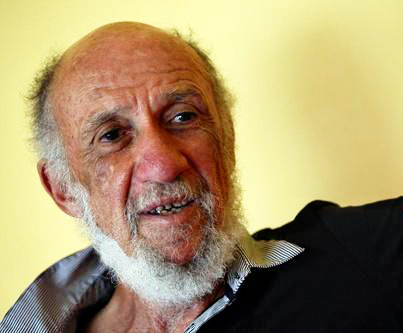
Richard Falk

By Richard Falk
March 18, 2015

Perhaps, Netanyahu deserves some words of appreciation, at least from the Israeli hard right, for the temporary erasure of the Palestinian ordeal from national, regional, and global policy agendas. Many are distracted by the Republican recriminations directed at Obama’s diplomatic initiative to close a deal that exchanges a loosening of sanctions imposed on Iran for an agreement by Tehran to accept intrusive inspections of their nuclear program and strict limits on the amount of enriched uranium of weapons grade that can be produced or retained.

We can only wonder about the stability and future prospects of the United States if 47 Republican senators can irresponsibly further jeopardize the peace of the Middle East and the world by writing an outrageous Open Letter to the leadership of Iran.

In this reckless political maneuver the government of Iran is provocatively reminded that whatever agreement may be reached by the two governments will in all likelihood be disowned if a Republican is elected president in 2016, or short of that, by nullifying actions taken by a Republican-controlled Congress.

Mr. Netanyahu must be smiling whenever he looks at a mirror, astonished by his own ability to get the better of reason and self-interest in America, by his pyrotechnic display of ill-informed belligerence in his March 2nd address to Congress. Surely, political theater of sorts, but unlike a performance artist, Netanyahu is a political player whose past antics have brought death and destruction and now mindlessly and bombastically risk far worse in the future.

What interests and disturbs me even more than the fallout from Netanyahu’s partisan speech, are several unexamined presuppositions that falsely and misleadingly frame the wider debate Read More »

The Iranian “bomb” and its questions

By Jonathan Power

Where do Iran’s grand ideas about itself come from? From the history of its once great empire but also from the fact that the US encouraged Iran at the time of the Shah to both build up a nuclear industry and to become the regional power in the Gulf.

Where does all the misleading information about Iran’s apparent desire to build a nuclear weapon come from? Mainly from the politicians of Israel. (But not always from Israeli intelligence. Two of its former bosses have cast doubt on the views of the politicians.)

Where does the conviction of most of the US Congress that Iran is well on the way to building a bomb come from? US intelligence concluded in 2007 and has reaffirmed twice since that Iran abandoned its weapons program twelve years ago.

(Iran is, of course, enriching uranium, for use, it says, in its civilian power plans to enable it to use nuclear power when its oil reserves start to fall. It has also invested large amounts of money in wind and solar power.)

Why have negotiations never got off the ground until now? Initially, because President Bill Clinton was up to his eyes in negotiations with Israel and Palestine and also North Korea.

Why did his successor, George W. Bush, rule out cooperation with a country he regarded as part of “the axis of evil”, even refusing to respond to a conciliatory hand of friendship offered by Iran? Because at the back of his mind he thought if it became clear that Iran was set on building nuclear weapons the US could bomb to bits its nuclear research and development plants.Read More »

TFF PressInfo # 312: Netanyahu’s Insulting, Dangerous and Divisive Speech: Wrong in Detail and Wrong in Substance

By Farhang Jahanpour

After all the huffing and puffing and all the aroused expectations about the speech by the Israeli Prime Minister Benjamin Netanyahu to the joint session of US Congress, the speech proved a great disappointment and even an embarrassment. A great deal has already been written about it, and there is no need to repeat all that here. Here I only wish to draw attention to some of the glaring distortions in the speech and the harm that it can do to the cause of Iranian and Israeli rapprochement and, more importantly, to the cause of peace in the Middle East.

The speech was a cynical use of the US Congress for domestic electoral ambitions.

Recently, Netanyahu had been trailing the Zionist Camp leader Isaac Herzog in the number of projected seats in the forthcoming Israeli election. He certainly hoped that as the result of the publicity that his speech would generate he could reverse the trend. In the process, his intrusion into America’s domestic politics has deepened the divide between the Democrats and the Republicans and has introduced a strong element of partisanship to US relations with Israel. In other words, the speech was more about himself than the fate of the State of Israel or US-Israeli relations or international peace.

When Senator Lindsey Graham, a senior Republican senator, visited Jerusalem last December, he told the Israeli leader: “I’m here to tell you, Mr. Prime Minister, that the Congress will follow your lead… [on Iran].” (1) Therefore, it was no surprise when the Republican Majority leader asked Netanyahu to address a join session of Congress, for the third time, to issue his marching orders.

After President Obama’s State of the Union address, in which he indicated that he was working hard to resolve Iran’s nuclear dispute by peaceful means, House Speaker John A. Boehner decided to invite the head of a foreign state to address the Congress without informing the White House or even Minority Democratic leaders.

This was an act of gross discourtesy to the president, a violation of diplomatic protocol, and a clear departure from the US Constitution that puts the executive branch in charge of foreign policy and relations with foreign political leaders.Read More »

On Netanyahu’s visit to the United States

By Richard Falk

Richard Falk

It is far too simple to be merely outraged by the arrogant presumptuousness of today’s speech by the Israeli Prime Minister to a joint session of Congress two weeks prior to national elections in Israel. The Netanyahu visit has encouraged various forms of wishful thinking.

Perhaps, the most common one is to suppose that bump in the road of U.S./Israeli relations will lead to a foreign policy reset that is more in accord with American national interests (in the spirit of the Mearsheimer/Walt critique of the baneful influence of the Israeli lobby) or that it signifies the death knell of AIPAC or the permanent alienation of the Democratic Party from its knee jerk support for Israel.

In my view, none of these developments will happen in the wake of Netanyahu visit, no matter how obnoxious or divisive or inappropriate as his presence appears to be.

First of all, it is important to separate three main dimensions of the Netanyahu speech to Congress: Read More »

TFF PressInfo # 310: Terrorism – small dot in a larger picture

By Jan Oberg

Jan Oberg

What is terrorism? Why do we talk much more about that than other types of deaths? Why is the word misused? What has nuclear weapons – that politicians and media hardly ever talk about – got to do with terror? Why should we all be careful not to exaggerate the phenomenon of terror?

10 x more terrorism than before 9/11

Tell you what: I’ve been critical of the ”war on terror” since September 12, 2001 and particularly since 10/7 when the war on Afghanistan started. If the War on Terror was the answer to 9/11, the U.S. and its friends asked the wrong questions.

Because, what has been the result?

According to U.S. statistics at the time, in the years up to the horrific crime in New York, about 1,000-1,500 people were hit by terror per year worldwide; 1/3 of whom died, the rest were wounded. Most of it happened in South America, some in Europe; small groups such as Baader-Meinhof.

Almost 3,000 were killed on 9/11, many nationalities, far from only American citizens. (About 30,000 die annually from shooting each other).

Today? About 18,000 were killed in terror in 2013.
Although data may not be directly comparable or definitions be the same, the difference between 1,500 and 18,000 cannot be explained by methodological and other variations.Read More »

The Nuclear Zero lawsuits: A conversion of hearts

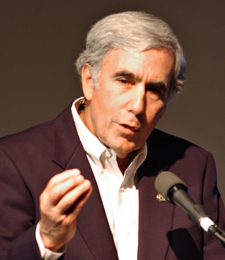
By David Krieger

The Nuclear Zero lawsuits, initiated by the Marshall Islands, are about the law, but they are about much more than the law. They are also about saving humanity from its most destructive capabilities. They are about saving humanity from itself and about preserving civilization for future generations. They are incredibly important, and I will try to place them in a broader context.

I will begin by sharing two quotations with you. The first is by Jayantha Dhanapala, a Sri Lankan diplomat, former United Nations Under-Secretary General, and long-time and committed leader in the area of nuclear disarmament. He states: “The spectre of the use of a nuclear weapon through political intent, cyber-attack or by accident, by a nation state or by a non-state actor, is more real than we, in our cocoons of complacency, choose to acknowledge.”

The spectre of nuclear use, even nuclear war, is real and most of the world lives in “cocoons of complacency.” It is clear that we must break free from those cocoons, which are as dangerous to the human future as are the nuclear weapons that now imperil us. The Nuclear Zero lawsuits seek to accomplish that.

The second quote is by His Holiness Pope Francis, the leader of the Catholic Church, who has brought new light and compassion to his office. He states: “As long as so great a quantity of arms are in circulation as at present, new pretexts can always be found for initiating hostilities. For this reason, I make my own the appeal of my predecessors for the non-proliferation of arms and for disarmament of all parties, beginning with nuclear and chemical weapons disarmament.” The Pope talks about disarmament in general, but he puts nuclear disarmament, along with chemical weapons disarmament, at the top of his list.

Pope Francis continues: “We cannot however fail to observe that international agreements and national laws — while necessary and greatly to be desired — are not of themselves sufficient to protect humanity from the risk of armed conflict. A conversion of hearts is needed which would permit everyone to recognize in the other a brother or sister to care for, and to work together with, in building a fulfilling life for all.”

“A conversion of hearts.” Can there be any doubt that such conversion is necessary? Can there be any doubt that traditional diplomacy is not getting the job done?Read More »

A visit to NATO’s HQ in Brussels: Nuclear weapons, fear and blame

By Gunnar Westberg

A memory: Russia as a candidate for NATO membership

Members of International Physicians for the Prevention of Nuclear War, IPPNW, have for many years regularly visited the NATO Headquarters in Brussels. We also had good contacts with Russian military officers and Foreign Office politicians. In the middle of the nineties members of NATO’s commission on Nuclear Weapons asked if we could arrange a meeting in Moscow, “because we meet the Russians only under very formal circumstances”. Some open discussions over the vodka were hoped for.

We arranged the meeting and got a group of leading Russian military brass and politicians on the participant list. But NATO hesitated. We were told they could not afford the trip… Finally only one officer, a Canadian, came from Brussels. So there we were with a group of disappointed Russian officers. The NATO representative in Moscow showed up for a couple of hours. She assured the meeting that the relationship between NATO and the Russian military leaders was excellent. Actually, she was looking forward to the time, not too far away, when Russia would be a member of NATO.

That was the dream. But more and more countries from the dissolved Warsaw pact became NATO members. And the connections deteriorated step by step.Read More »