Can cyber warfare prevent wars?

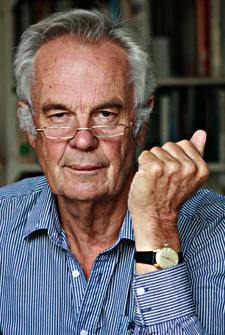
By Gunnar Westberg

Can cyber warfare prevent wars?

This is a call for information. An appeal to people who know more abou cyber warfare!

As long as there are armies the threat of war remains.

As long as there are nuclear weapons the threat of extermination of mankind from nuclear war remains.

It is sometimes said that nuclear weapons will be with us until we find something more effective.

Could cyber warfare be an alternative?

The U.S. together with Israel delayed the development of the uranium enrichment facilities in Iran through the use of a virus introduced into the centrifuges. Iran may have been behind a cyber attack on computers in Saudi Arabia that interfered with oil refineries and oil transport.

Can cyber warfare prevent a military attack? Here an attempt to illustrate the idea:Read More »

TFF PressInfo # 351: The Nobel Foundation taken to court on the Peace Prize

Lund, December 10, 2015

On the day of the Nobel Peace Prize Award Ceremony at Oslo City Hall

To whom it may concern, including the media

We know – and Alfred Nobel knew – how devastating war and arms races are, and how little security we get for all the money we spend on military forces.

The campaign to reclaim the Nobel Peace Prize is first and foremost a campaign to revive the idea that global peace requires global cooperation on disarmament and replacing the law of force with the force of law. Every day more and more of us see, from the Middle East warfare, from the refugee crisis, and many other chilling reminders, the mandatory urgency of a change in world politics.

Alfred Nobel decided to give one fifth of his fortune for a prize to promote disarmament and resolution of all conflicts through negotiations and legal means, never through violence.

Can such a prize, with a so clearly stated goal, be turned to serve the opposite idea and be given again and again to recipients who promote arms races and believe in militarism and war?

This question will soon be answered, after Mairead Maguire, Jan Oberg, Davis Swanson, and Lay Down Your Arms took the case to the Stockholm District Court on Friday 4th of December 2015. Here is the full text of the summons.
and all other relevant information is available at the Nobel Peace Prize Watch.

Test case: the award to the European Union in 2012

The court case will test one of the most obvious violations of the Nobel idea Read More »

TFF PressInfo # 350 – The West will lose to ISIS – too

By Jan Oberg

Lund, Sweden, November 30, 2015

French president Hollande has declared war – war on terror, George W. Bush style. Like September 11, 2001 wasn’t a war, Paris November 13 wasn’t a war. It was a criminal act.

The war on terror has been an exceptionally stupid war.

In the years before 9/11 about 400 people died worldwide by terrorist attack. The Global Terror Index informs us that 32.600 died in 2014 – 80 times more!

And, still, the only answer everywhere is: More war on terror.

The only – intelligent – exception is Italy whose PM has announced that Italy is going to counter terrorism by investing billions of Euros in culture, art and creativity – showing the world what civilisation is.

Politicians and the mainstream media seemingly try to make us believe – as if we were uneducated – that we in the West are the main victims and innocent victims at that. We are neither.Read More »

The Failure of U.S. foreign policy in the Middle East

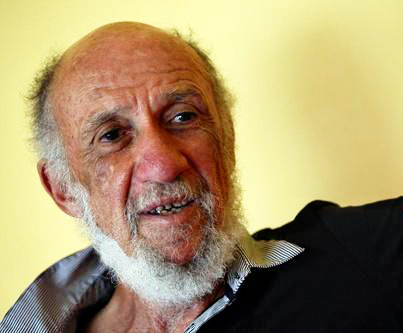
By Richard Falk

Prefatory Note: What follows is a modified version of the Morton-Kenney annual public lecture given at the University of Southern Illinois in Carbondale on November 18, 2015 under the joint sponsorship of the Department of Political Science and the Paul Simon Public Policy Institute.

The Failure of U.S. Foreign Policy in the Middle East

While focusing on the ‘failure’ of American foreign policy in the Middle East it is relevant to acknowledge that given the circumstances of the region failure to some degree was probably unavoidable. The argument put forward here is that the degree and form of failure reflected avoidable choices that could and should have been corrected, or at least mitigated over time, but by and large this has not happened and it is important to understand why.

This analysis concludes with a consideration of three correctible mistakes of policy.

It is also true that the Middle East is a region of great complexity reflecting overlapping contradictory features at all levels of political organization, especially the interplay of ethnic, tribal, and religious tensions internal to states as intensified by regional and geopolitical actors pursuing antagonistic policy agendas. Additionally, of particular importance recently is the emergence of non-state actors and movements that accord priority to the establishment and control of non-territorial political communities, giving primary legitimacy to Islamic affinities while withdrawing legitimacy from the modern state as it took shape in Western Europe. Comprehending this complexity requires attention to historical and cultural background, societal context, and shifting grand strategies of geopolitical actors.

I.

From many points of view American foreign policy in the Middle East has been worse than a disappointment. It has been an outright failure, especially in the period following the 9/11 attacks of 2001. Even such an ardent supporter and collaborator of the U.S. government as Tony Blair, the former Prime Minister of the United Kingdom, has acknowledged as much in a recent set of comments where he basically says that the West has tried everything, and whatever the tactics were relied upon, the outcome was one of frustration and failure. Read More »

Cultures of war, cultures of peace

By Johan Galtung

We have war and peace, theory and practice. And deeper down cultures of war and peace, notions of what the world is or could be. The latter is not necessarily peace, could also mean removing obstacles to war.

Timothy Snyder, “Hitler’s World” (NY Review of Books, 24 Sep 2015) and Greg Grandin, “The Kissinger Effect: The relentless militarism of the national-security state and its perverse justification begin with Henry Kissinger” (The Nation, 28 Sep 2015) are both on that line.

Hitler’s World derives from Darwinist struggle for niches, with survival of the fittest. His niche is not the whole world but what is needed to feed the German people, and here Ukraine plays a major role. The food chain is key to the image, with humans on top, eating animals and plants, but not eaten by them. So also for the human species, divided in races with the Aryan race on top, “fittest” as evidenced by domination all over; never slaves. On top of them are the Germans; their state not an end but the military arm obliged to be strongest.

To Hitler that world is natural, and inherently stable. Values, equality, human rights, equal right to life, Christianity, capitalism, communism, are anti-natural. For Hitler such ideas…

Continue here

TFF PressInfo # 348 – After 70 years: The UN falls short, and yet…

By Richard Falk

The United Nations turns 70 today. It isn’t “we, the peoples” – it is “we, the governments”. It’s in need of reform but we must also remember that its first Secretary-General Trygve Lie said in 1948 – that it will never be stronger or better than the member states want to make it.

Whatever you think of it, we certainly can’t do without it, nor without its Charter that is still the most Gandhian document, all governments have ever signed.

If its member governments were not so navel-gazing, it would be the best vehicle for global governance – for globalising democracy in a world where the economy and the military as well as communication and culture are all globalizing while politics is still anchored in parliaments in increasingly irrelevant nation-states.

And why not set up a People’s Assembly? Establish UN Embassies in each member state and let people vote for who shall represent their country in the UN?

All doable with a little creativity and good will – for the common good, the common future.

Below, please find the thoughts at the UN’s 70th Anniversary of one of the finest international law and peace experts we have who has also worked with the UN for many years.

– Jan Oberg

Prefatory note

A shorter somewhat modified version of this post was published in Al Jazeera Turka, but only in Turkish translation. The thesis set forth is that the UN has disappointed the expectations of those who took seriously its original promise of war prevention, but that it has over its lifetime done many things that need doing in the world.

It also provided a meeting place for all governments, and has developed the best networking sites for all those concerned with the state of the world and what can be done by way of improvement. The UN System faces an important test in the upcoming Climate Change Conference to be held in Paris at the end of November. The event is billed as the make or break session for the governments of the world to agree finally on a strong enough framework of constraint governing the release of greenhouse gasses to satisfy the scientific consensus.

If Paris is generally regarded as successful, the UN stock will rise steeply, but if it should fail, then its stature and role of the Organization could become even more marginalized. Either way, the UN as of 2015 is a very different kind of political actor than when it was founded in 1945, disappointing to those that hoped for permanent peace and some justice, while pleasing to those that sought from the outset a wider global agenda for the Organization and felt that its best contributions would likely be in a wide range of practical concerns where the interests of major political actors more or less overlap.

After 70 Years: The UN Falls Short, and Yet..

When the UN was established in the aftermath of the Second World War hopes were high that this new world organization would be a major force in world politics, and fulfill its Preamble pledge to prevent future wars. Seventy years later the UN disappoints many, and bores even more, appearing to be nothing more that a gathering place for the politically powerful.

I think such a negative image has taken hold because the UN these days seems more than ever like a spectator than a political actor in the several crises that dominate the current agenda of global politics. This impression of paralysis and impotence has risen to new heights in recent years.

When we consider the waves of migrants fleeing war-torn countries in the Middle East and Africa or four years of devastating civil war in Syria or 68 years of failure to find a solution for the Israel/Palestine conflict or the inability to shape a treaty to rid the world of nuclear weapons, and on and on, it becomes clear that the UN is not Read More »

TFF PressInfo # 346 – Ten articles on the nuclear treaty with Iran

By Farhang Jahanpour

Lund, Sweden, October 21, 2015

It is with pleasure we send you ten recent articles about Iran, the West and the background to the treaty concluded about Iran’s nuclear technology. They are written by Dr. Farhang Jahanpour, Oxford University, who is also a member of TFF’s board.

Given the generally insufficient and/or biased knowledge in media and politics about Iran and this cluster of issues, TFF is proud to have a world renowned expert with Iranian roots sharing his knowledge.

1. Iran and the Non-Proliferation Treaty

2. Nuclear states do not comply with the Non-Proliferation Treaty

3. The early history of Iran’s nuclear programme

4. The recent stages of Iran’s nuclear programme

5. Iran and nuclear weapons, a dangerous delusion

6. The Rubicons that have been crossed

7. Iran’s commitments under the Nuclear Treaty are just short of surrender

8. Israel’s opposition to the Nuclear Treaty with Iran

9. Iran’s nuclear deal and the regional countries

10. The nuclear deal’s impact on Iranian domestic and foreign policy

Pluses and minuses of Obama’s foreign policy

By Jonathan Power

So Putin on Monday met Obama. They are going to cooperate against ISIS, the world’s worst problem. President Vladimir Putin says we should not be surprised to see Russian jets working cooperatively – even coordinating – with the US on missile attacks.

Even with both powers working in tandem it will be uphill work. ISIS has attracted over 30,000 foreign fighters, according to a UN Security Council report. At least 2,000 from Russia and ex-Soviet territories are in their number. (In contrast to Russia the US is more threatened by domestic, non-Muslim, terrorists than Muslim extremists.)

Will rapprochement over Syria and ISIS wind the clock back to the benign US-Russia relationship that was begun with President Barack Obama’s early “re-set” which led to, among other things, a significant agreement on reducing nuclear arms?Read More »

TFF 30th Anniversary Benefit Event

Lund, Sweden, September 5, 2015
Updated September 5 and our apologies if you’ve received this before.
We want to catch all and miss no one over all these years.

Dear friend!

We are happy to invite you to the TFF 30th Anniversary Benefit Event !
September 11-12, 2015

Live Lectures by videostream
Exciting lectures on world affairs and peace over two days – See program below.

This is not an invitation to visit the foundation in person.
It is an online, live video streamed event that you will be able to follow from anywhere in the world
Here is the link and it’ll also be shown via Facebook, Twitter and on our website.
And all the lectures will be available later as videos on our own video channels.

Open House at the foundation
Saturday September 12 at 14:00-17:00
It’s at Vegagatan 25 in Lund, Sweden – deadline for your registration September 7.
1. Lectures on-site with live streaming

We’ll shortly tell you the links where you may see it all and where videos will later be available.

Lecture program

Friday September 11

Live, video streamed:

16:00
September 11: Alternatives to the devastating War On Terror – Jan Oberg

17:00
TFF 30 Perspectives – TFF Associates and Board on the better world we dream of – And cheers!

Saturday September 12

Live, video-streamed 10:00-18:00

10:00
Iran And the Nuclear Issues – Gunnar Westberg

11:00
Integration – Why and how? Example: Afghan Youth In Sweden – Christina Spännar, Sweden

12:00
Nuclear abolition is necessary and possible – Gunnar Westberg, Sweden

13:00
West and East: Ukraine and New Cold War? – Jan Oberg

14:00
Human Rights And War Crimes – Jonathan Power, UK/Sweden

15:00
Women, Self-Esteem and Violence – Annette Schiffmann, Germany

16:00
Yugoslavia – What Should Have Been Done? – Jan Oberg (in Memoriam Håkan Wiberg), DK/Sweden

17:00
Media and Peace – Sören Sommelius, Sweden

18:00
Burundi’s Crisis And Possible Ways Out – Burundi expert

2. Open House hours 14-17
Buffet, drinks, coffee and tea, cakes and other sweets.
You must register your visit by September 7 at the latest at TFF30@transnational.org or call 0046 738 525200.

3. Peace with peaceful means
The day is devoted to the – ongoing – struggle for ”peace by peaceful means“ as the UN Charter puts it. Gandhi said that the “means are goals in-the-making”. To realize that noble goal remains the mission of TFF. Today we show you how and promote all related activites with the help of social media and new video technologies.

4. This is a Benefit Event – Your support to TFF please!

TFF is unique in being totally independent of government and corporate funds. It’s people-financed. No one related to TFF has a salary; we’re all-volunteer.
This provides for truly free research and permit us to be critical and constructive and practise our freedom of expression. Not everyone can boast that today!
Wars, nuclear and conventional arms, bombing raids and occupations etc. are financed by your tax money. Sadly and unfairly, no tax funds go to realise the UN norm above.

We think that people who believe that peace is better than violence should also pay something to the research, education and activism in favour of that UN norm.
If you can come to Lund on our big day or sit somewhere following our rich lecture program, we urge you strongly to make a donation. Every day over 30 years, TFF has given the world something useful.

You can do it right in the middle of our homepage – click the “Give” button or under the headline “Support” in the right-hand column where many options exist, including PayPal. It easy, fast and secure!
Cash – but no cheques – can also be donated at the event.* *

Thank you so much!

5. Videos
We’re proud to present the first two short videos – 3 more to come – in which the founders talk about various aspects of 30 years in the service of peace on the basis of questions asked by board member Annette Schiffmann. Watch, comment and subscribe!

The First

The Second

6. Brand new Online Magazine
The announced online magazine launched to mark our Anniversary is now here!

“Transnational Affairs – TFF Magazine for conflict-resolution, non-violence and peace-building”

Excited as we are, we’ll be back to you soon with more details!

Yours truly

Christina & Jan
Founders

* If you are able to come in person, you must register to TFF30@transnational.org or call 0046 738 525200 by Tuesday September 8 at the latest.

* * This does not apply to you if you have already made a donation in 2015.