TFF PressInfo # 310: Terrorism – small dot in a larger picture

By Jan Oberg

Jan Oberg

What is terrorism? Why do we talk much more about that than other types of deaths? Why is the word misused? What has nuclear weapons – that politicians and media hardly ever talk about – got to do with terror? Why should we all be careful not to exaggerate the phenomenon of terror?

10 x more terrorism than before 9/11

Tell you what: I’ve been critical of the ”war on terror” since September 12, 2001 and particularly since 10/7 when the war on Afghanistan started. If the War on Terror was the answer to 9/11, the U.S. and its friends asked the wrong questions.

Because, what has been the result?

According to U.S. statistics at the time, in the years up to the horrific crime in New York, about 1,000-1,500 people were hit by terror per year worldwide; 1/3 of whom died, the rest were wounded. Most of it happened in South America, some in Europe; small groups such as Baader-Meinhof.

Almost 3,000 were killed on 9/11, many nationalities, far from only American citizens. (About 30,000 die annually from shooting each other).

Today? About 18,000 were killed in terror in 2013.
Although data may not be directly comparable or definitions be the same, the difference between 1,500 and 18,000 cannot be explained by methodological and other variations.Read More »
On the North Carolina killings

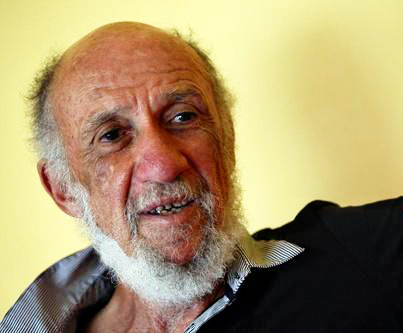
Interview with Richard Falk

Richard Falk

Prefatory Note
A short interview on how to interpret the ghastly murder of three young Muslims living in the North Carolina university town of Chapel Hill. Should such a grisly event be viewed as a tragic response of a deranged neighbor whose emotions took a violent turn after a dispute over parking in their common residential community or is it better understood as one more indication of the toxic realities associated with the interplay of gun culture and Islamophobia?

My responses seek to give reasons for adopting this wider understanding of why such incidents, although horrible on their own, are also bringing death to canaries in the mines of American society. As such the embrace of the movie American Sniper can be seen as another dimension of how ‘the long war’ unleashed after 9/11 to satisfy a range of global ambitions is increasingly casting its dark shadow across the domestic life of the country.

We are, indeed, living in a globalizing world where the wrongs done without will be in due course superseded by the wrongs done within. I thank Dan Falcone for his questions that gave me the opportunity to offer these responses.

Dan Falcone
In light of the recent shooting of Muslims in North Carolina, Russian Television was pondering if the killings would have received a quicker, more widespread and more responsive media reaction had the perpetrator been a Muslim, instead of victims, as seen in this case. My thought is that this question is beyond the hypothetical. What are your thoughts?

Response
I think there is every reason to believeRead More »

The Nuclear Zero lawsuits: A conversion of hearts

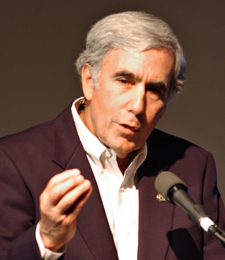
By David Krieger

The Nuclear Zero lawsuits, initiated by the Marshall Islands, are about the law, but they are about much more than the law. They are also about saving humanity from its most destructive capabilities. They are about saving humanity from itself and about preserving civilization for future generations. They are incredibly important, and I will try to place them in a broader context.

I will begin by sharing two quotations with you. The first is by Jayantha Dhanapala, a Sri Lankan diplomat, former United Nations Under-Secretary General, and long-time and committed leader in the area of nuclear disarmament. He states: “The spectre of the use of a nuclear weapon through political intent, cyber-attack or by accident, by a nation state or by a non-state actor, is more real than we, in our cocoons of complacency, choose to acknowledge.”

The spectre of nuclear use, even nuclear war, is real and most of the world lives in “cocoons of complacency.” It is clear that we must break free from those cocoons, which are as dangerous to the human future as are the nuclear weapons that now imperil us. The Nuclear Zero lawsuits seek to accomplish that.

The second quote is by His Holiness Pope Francis, the leader of the Catholic Church, who has brought new light and compassion to his office. He states: “As long as so great a quantity of arms are in circulation as at present, new pretexts can always be found for initiating hostilities. For this reason, I make my own the appeal of my predecessors for the non-proliferation of arms and for disarmament of all parties, beginning with nuclear and chemical weapons disarmament.” The Pope talks about disarmament in general, but he puts nuclear disarmament, along with chemical weapons disarmament, at the top of his list.

Pope Francis continues: “We cannot however fail to observe that international agreements and national laws — while necessary and greatly to be desired — are not of themselves sufficient to protect humanity from the risk of armed conflict. A conversion of hearts is needed which would permit everyone to recognize in the other a brother or sister to care for, and to work together with, in building a fulfilling life for all.”

“A conversion of hearts.” Can there be any doubt that such conversion is necessary? Can there be any doubt that traditional diplomacy is not getting the job done?Read More »

A visit to NATO’s HQ in Brussels: Nuclear weapons, fear and blame

By Gunnar Westberg

A memory: Russia as a candidate for NATO membership

Members of International Physicians for the Prevention of Nuclear War, IPPNW, have for many years regularly visited the NATO Headquarters in Brussels. We also had good contacts with Russian military officers and Foreign Office politicians. In the middle of the nineties members of NATO’s commission on Nuclear Weapons asked if we could arrange a meeting in Moscow, “because we meet the Russians only under very formal circumstances”. Some open discussions over the vodka were hoped for.

We arranged the meeting and got a group of leading Russian military brass and politicians on the participant list. But NATO hesitated. We were told they could not afford the trip… Finally only one officer, a Canadian, came from Brussels. So there we were with a group of disappointed Russian officers. The NATO representative in Moscow showed up for a couple of hours. She assured the meeting that the relationship between NATO and the Russian military leaders was excellent. Actually, she was looking forward to the time, not too far away, when Russia would be a member of NATO.

That was the dream. But more and more countries from the dissolved Warsaw pact became NATO members. And the connections deteriorated step by step.Read More »

When a terrorist not a terrorist

By Richard Falk

Richard Falk

February 20, 2015

What the Chapel Hill police in North Carolina initially pitched to the world as ‘a parking dispute’ was the deliberate killing of three young and devout Muslim American students by an ideologically driven ‘new atheist’ killer named Craig Stephen Hicks.

What the The Economist unhesitatingly calls ‘terrorism in Copenhagen’ involved the attempted shooting of a Danish cartoonist who repeatedly mocks the Prophet and Islamic beliefs as well as the lethal shooting of a Jewish security guard outside a synagogue.

A friend understandably poses a serious question on Twitter that might have been dismissed as rhetorical overkill just a few years ago: “Are only Muslims capable of terrorism?”

I find it deeply disturbing that while the Chapel Hill tragedy is given marginal media attention except among groups previously worried about Islamophobia and racism, The Economist considers that important principles of Western liberal democracy are at stake apparently only in the European context.

In the words of Zanny Minton Beddoes, the new editor of the magazine: “Jacob Mchangama, a lawyer and founder of a human-rights think-tank called Justitia, told me it would be a disaster if his country were to grow faint-hearted in its defense of free speech. ‘There can be no truce in the struggle between secular democracy and extremism,’ he says. Above all, politicians should avoid the trap of saying or implying that violence was really the fault of provocateurs, or that religious insult was to be equated with physical injury. Giving in to that sort of relativism would be letting down those followers of Islam who were brave enough to stand up for free speech, and indulging in a sort of “bigotry of low expectations”, said Mr Mchangama, whose paternal forebears were Muslims from the Comoros Islands. A good point.”

I am quite sure that this is not a good point, at least as phrased by Mr. Mchangama.

Of course, governments should take action to protect all who are violently threatened, but to refuse to regard Islamophobic messaging as a species of hate speech while so regarding anti-Semitic slurs or Holocaust denial is to combine two things that are both unacceptable: ignoring the root causes of political extremism and pathological violence; and prohibiting and punishing anti-Semitic utterances as hate speech while treating anti-Islamic or Islamophobic speech as requiring protection from the perspective of ‘freedom of expression.’ Read More »

North Korea’s nuclear bomb once again

By Jonathan Power

17th February 2015

If there is such a thing as a “frozen conflict” the best place to look is not in Eastern Europe but in Korea where after years of merciless war that ended in 1953 there was an armistice, a line was drawn across the Korean peninsular and its two halves went their separate ways- one, the south, to fast capitalist development and the other, the north, to stultifying dictatorship that seemed to do only one thing competently – build nuclear bombs. Today there is no war on the Korean peninsular but there is no peace.

Presidents Bill Clinton, George W. Bush and Barack Obama have all tried to negotiate an end to North Korea’s nuclear bomb program and to bring to a close the military stand-off between north and south. All their attempts have come to naught, not just because of North Korean stubbornness but also because of Republican majorities in Congress which have constantly undermined what seemed to be breakthroughs in negotiations.

Now Obama has summoned up the strength to return to the ring. The two countries’ nuclear envoys have been discussing the idea of “talks about talks”. A majority of long time observers are doubtful that after two decades of on/off negotiations that real progress can be made.

But they forget the major progress made by Clinton Read More »

TFF PressInfo # 307: This is no time to ship lethal arms to Ukraine

By Jonathan Power

February 10th, 2015

Please put your hand up if you support giving lethal arms to the Ukrainian army and also supported the US going to war with Iraq in 2003 and with Libya in 2011, the former which unbalanced much of the Middle East and the latter which has left a country almost destroyed, semi-ruled by malicious militias.

Also raise your hand if you supported in 1998 the West going to war against Serbia in order to wrest away its province of Kosovo and give it independence- a move which ironically Russia (and Spain, worried about its Basques) opposed, arguing that this would set a precedent for territorial separation by force of arms.

If you supported all these three interventions don’t take offence if I question your judgment on the issue of arms for Ukraine.

I am trying to work out where President Barack Obama stands on all this. His vice-president, Joe Biden, seems to be running with the foxes while he himself is running with the hares. Take the president’s interview on CNN the weekend before last. Until then the official White House line had been that the crisis was instigated by President Vladimir Putin to block Ukraine from creating a democratic government.

But in that broadcast, as my esteemed fellow columnist, William Pfaff, has observed, “Obama conceded to an American TV audience that the official US narrative concerning the war in Ukraine isn’t true”.Read More »

Viewing “American Sniper”

By Richard Falk

Richard Falk

American Sniper was released on Christmas Day, 2014. It is a movie version of Chris Kyle’s memoir, American Sniper: The Autobiography of the Most Lethal Sniper in U.S. Military History, with 255 kills, 160 officially confirmed by the Department of Defense. The movie set in Iraq is directed by Clint Eastwood, Bradley Cooper plays the part of Chris Kyle, and Sienna Miller is brilliantly cast in the role of his wife, Taya.

American Sniper is a fictionalized movie version of the war stories associated with Chris Kyle’s experience as a Navy SEAL in the Iraq War as recounted in his best-selling memoir. The film can be viewed from a variety of angles, including even as one more indictment of war as hell.

A second line of interpretation focuses on the intense psychological tensions experienced by this single American soldier and his comrades caught up in the horrors of urban warfare in Iraq. A connected theme are the adverse impacts of Kyle’s war service on his family that is made to cope with the complex and contradictory traumas of his absence (confronting his potential death on a distant battlefield) and his alienated presence whenever he returns, a scarred individual who longs to go back to Iraq to resume his assigned role as ‘legendary sniper.’

Multiple scenes in the movie portray Kyle as haunted by his service. In his book, Kyle consistently treats his victims as “savage, despicable.” At one pointRead More »

TFF PressInfo # 305: A theory of China

By Johan Galtung

Johan Galtung

2 February 2015 at the Penang Institute, Penang

A theory serves comprehension, prediction and identification of conditions for change. Seven such historical-cultural pointers will be indicated for China; using the West in general, and the USA in particular, for comparisons. The presentation draws on countless dialogues in China over 40 years, since 1973.

* China: in time, as dynasties; West: in space as empires.

Look at a histomap combining world history and geography, time and space: China shows up through 4,000 years as relatively coherent dynasties with complex transitions – and the West as empires–birth-growth-peaking-decline-fall, like the Roman, UK and now US empires – duration vs bubbles that burst; as China-centric vs hegemonic.Read More »

Bringing peace in Pakistan

By Jonathan Power


January 27th 2015

It looks like the recent slaying of 130 school children by rabid Islamic extremists finally has brought a halt to the long time policy of Pakistan facing both ways. Pakistan, because of policies developed over decades by its all-powerful army and its intelligence service, the ISI, has long played both ends against the middle.

On one end is the West, especially the US, trying to tug Pakistan into its orbit, so that it becomes a strategic partner in defeating the Afghan Taliban and its associates, and bringing peaceful democracy to Afghanistan. At the other end is what has been seen as the need to encourage and support the Islamic warriors in their effort to wrest a good slice of Kashmir away from India and, besides that, to make sure that Afghanistan under American tutelage doesn’t fall into the reach of Indian influence and thus threaten Pakistan’s deepest interests.

This clash of policies hitherto has been settled, say many, in favour of the militants, with the ISI for decades giving them arms, training and direction.Read More »
