TFF PressInfo # 388: The War On Terror – A predictable fiasco

By Jan Oberg

This coming Sunday marks the 15th anniversary of what could be called the most counter-productive, if not stupid, war in modern history: The War On Terror. Today that war is much much more dangerous to the world’s future than the terrorists it is allegedly supposed to hunt down. And it has caused thousands of times more suffering, death and destruction – at least a million innocent people killed.

It’s not a war on terrorism but on terrorists and that is as smart as trying to fight all diseases by killing patients. It’s a war fought without any consideration of the one big question: Why did they do it and why do they do it? Media and politics only asking: Who did it? How was it done? Where? How to respond?

Without an intelligent, comprehensive diagnosis of 9/11 it could only go wrong. And it has.

The next problem was that ‘terrorism’ was suddenly defined by states as anything non-state that threatens society and states. Governments and the UN (which consists of them) conveniently omitted terrorism as a term for what states do and have done on a regular basis and on a much larger scale. Such as the nuclear balance of terror.

About 400 people were killed annually and worldwide before 9/11 according to US State Department statistics – reporting of that stopped in 2004 when figures soared after the War On Terror gained momentum. However, according to the 2015 Global Terror Index – the number is now 32,000 – and the far majority killed outside the West. So, the problem has increased exactly 80 times(!)

And the Western leaders who continue this war has no idea about how to stop it or do something more productive and intelligent to the world. Primitive tit-for-tat and disproportional responses has substituted what was once called statesmanship.

And it was predictable that it would be a fiasco!

Many both inside and outside the U.S. came up with Read More »

Vem kan tro på historien om Nine Eleven?

Av Ola Friholt

Det är nu 15 år sedan den ödesdigra dagen 11 september 2001. Sedan dess har kriget mot terrorismen utvecklats och krävt minst två miljoner liv och lika många psykiskt och fysiskt skadade, allt enligt en utredning från USAs läkarsällskap, ”Physicians for Social Responsibility” (med 50 000 medlemmar och medlem av Läkare mot kärnvapen).

Resultatet av kriget mot terrorismen är dessutom negativt även för väst. Idag har attentaten och offren i väst mångdubblats.

Lika anmärkningsvärt är att medborgarnas fri- och rättigheter i väst dramatiskt har urholkats. Kontrollen uppifrån är närmast total med avlyssning utan praktisk begränsning.

Hemliga fångläger med tortyr av godtyckligt fängslade har avslöjats i Polen, Tjeckien, Kosovo och Egypten, utöver de öppet erkända på Guantanamo, i Afghanistan och Pakistan. Ett sextiotal personer har suttit på Guantanamo i fjorton år utan rannsakan och dom från USA, som förr kallats ”Världens största demokrati”.

Den 11 september kan alltså kopplas till urholkning av demokratiska fri- och rättigheter, utomrättsligt dödande i stor skala, godtyckligt fängslande, officiellt påbjuden tortyr m m. Till detta kan läggas intensifierade rustningar och nya krig på bekostnad av fredlig dialog och konfliktlösning. Sveriges regeringar har följsamt godtagit både den officiella bilden av händelserna den 11 september 2001 och dess såväl militära som civila konsekvenser.

Det är ingen tillfällighet att avlyssningsstationerna på Lovön och Lerkil hör till världens största och att rymdforskningsstationen Esrange i Kiruna förmedlar satellitdata till USA/Nato för deras krigföring.

Och Sverige deltog i förmenta antiterrorkrig i Afghanistan och Libyen.

Det finns anledning att omvärdera hela utvecklingen under femton år och ifrågasätta själva den åberopade grunden för denna utveckling: raserandet av World Trade Centre.

Ifrågasättandet av den officiella beskrivningen av den händelsen började nästan omedelbart. Idag finns en hel litteratur som smular sönder den bild som är officiellt accepterad i väst. Vad var det som egentligen skedde, och vem låg bakom?

Betydande analyser gjordes av Andreas von Bülow, tidigare minister för teknologi och forskning i Helmut Schmidts regering i Tyskland, med boken ”CIA och 11 september” (2003) på Alhambra förlag. Professor David Ray Griffin har publicerat flera böcker, på svenska ”Motsägelser om 11 september”, Alhambra 2008, och ”WTC 7 och dess mystiska kollaps”, Alhambra 2010. Dessutom omfattande analyser på Internet, t ex Wood & Reynolds: ”The Star Wars Beam Weapons and Star Wars Directed Energy Weapons” (2006) och D A Khalezov: ”911thology: The Third Truth about 9-11” (2013), 1092 sidor.

För en sunt tänkande människa ter det sig orimligt att makthavare skulle kunna bedriva en politik som drabbar det egna folket. Ändå är detta vardagsmat sedan århundraden, med nittonhundratalet som eländets höjdpunkt. Då offrades långt över 100 miljoner liv även av ledare som kallade sig demokratiska. Det ansågs självklart att utkämpa världskrigen så som de utkämpades.

Likaså krigen för och emot kolonial befrielse och krigen för kontroll över råvarutillgångar och marknader. Och sedan årtionden dör cirka hundratusen människor varje dag i sviterna av världens orättvisor utan att särskilda insatser görs för att förhindra det.

De senaste åren har destabilisering och förstöring av stater stått på stormaktsprogrammet under uppenbart falska förevändningar men utan att väcka förvåning. Ansvariga är främst USA och England under medverkan av övriga Nato. Detta hindrar inte att majoriteten av Sveriges politiska partier och riksdagen liksom regeringen alltmer närmar sig Natomedlemskap, utan att gå in i den debatt som borde vara självklar i en demokrati.

Att ledare är beredda att offra tusentals av sitt eget och andra folk för tvivelaktiga mål är således väl belagt.

Det finns all anledning att tvivla på de förklaringar en stormakts ledare ger.

Den 11. 9. 2001 sägs alltså 19 muslimska flygkapare ha flugit in i World Trade Centres två högsta skyskrapor och därigenom fått dem att rasa till grunden. Read More »

Islam Right Now

By Johan Galtung

Editorial, 5 September 2016

Nº 445 – TRANSCEND Media Service

Watching Christianity nearly a century–fundamentalist Christians fighting ritualistic Christians fighting secularism, generally moving fundamentalism–>ritualism–>secularism–maybe the same for Islam? Their similarities make “Islam right now” a repetition of Christianity; their differences shout, Watch Out! Let us see where this leads us.

Violence-prone fundamentalist evangelical Christians are still on top of the USA and some Nordic countries; but much less in ritualistic Catholic-Orthodox Christianity, meaning by far most of Europe. Beauty of worship, the psychology of confession, less verbalism; all help.

Secularism makes faith so metaphorical for many that Christianity becomes only a ritual for Christmas-Easter, baptism-marriage-funeral (if there are no secular alternatives). Result: empty churches.

Our secular age makes literal faith in dogmas difficult, and that tears at the faith. But this is where two major differences enter:

Islam is much less dogmatic, there is much less to tear at, only the readily acceptable shahada, faith in one Alla’h and his prophet Muhammad;
If that faith turns metaphorical, Islam has the other four pillars of Islam to fall back upon: prayer together, sharing, fasting, pilgrimage, every day, a whole month every year, once a life.
The point of gravity in Islam moves more easily from faith to practice; and may stop there. There is much built-in outer practice that will survive a decrease in inner faith. Result: full mosques.

Moreover, the four pillars are compatible with key secular values….

Continue here at Transcend Media Service, TMS. – where you’ll also find some comments and debates.

America, the threatened?

By Jonathan Power

September 6th 2016

The French ambassador to the US from 1902 to 1924, Jean-Jules Jusserand, observed that distant powers could not easily threaten the US because “On the north, she has a weak neighbour; on the south, another weak neighbour; on the east fish and on the west, fish”.

The coming of the submarine-based nuclear missile has not changed that. Apart from the fact that no enemy would dare use them for fear of retaliation, and that there is no country in the world that feels that hostile to America (accept North Korea), the fact is America is too big and too far away to be invaded and dominated. There could not be a blitzkrieg by a foreign army across the mid-west or a Vichy America.

The real tragedy of 9/11 is just as a majority of the US electorate had settled into a post-Cold War comfort zone with the new president, George W. Bush, not being overly pushy or confrontational in foreign affairs, America was jolted so badly that a large proportion of its electorate – maybe half – has been paranoid ever since. Enemies are once again seen under the bed.

Enough of the electorate have persuaded themselves that they are insecureRead More »

NATO:s nya, mer aggressiva kärnvapenpolicy

By Gunnar Westberg

Formuleringen “”NATO:s nya, mer aggressiva kärnvapenpolicy” har två grunder, nämligen de nya vapnen och de nya formuleringarna av doktriner.

Jag föreslår att vi, när vi talar om NATO och kärnvapen, använder formuleringar liknande den första meningen. Vill man förklara sig ger andra meningen ett svar. Men det är under alla omständigheter bra om man har tillgång till nedanstående argument:

De gamla B61 var symboliska vapen. De skulle, enligt ofta upprepade försäkringar, inte användas. De var en pant på att USA inte skulle överge Europa vid ett sovjetiskt/ryskt anfall. USA har föreslagit att dessa vapen skulle tas bort, men öst-europeiska NATO-medlemmar och framför allt Frankrike (!) har starkt reagerat emot.

De nya vapnen är B 61-12. Denna bomb skiljer sig från tidigare versioner av B61 som var ”gravity bombs”, d v s föll fritt från bombplanet. B 61-12 är styrbart och har därför en träffsäkerhet inom 30 m radie. B 61-12 har en variable laddning på 0,3-340kt. Bomben förefaller vara kapabel att penetrera mer än 3 m vanlig jord innan den detonerar. Effekten på djupet blir därför flera gånger större än en bomb av motsvarande laddning skulle ge utan penetrerande förmåga.

B 61-12 blir alltså ett effektivt vapen mot vissa underjordiska mål. Bomberna har sannolikt en plats i nya, ännu inte offentliga doktriner om kärnvapen-användning, i motsats till avskräckning. Read More »

Criminalize the arms trade into hotspots

Jan Oberg comments on PressTV to Noam Chomsky’s criticism of Western support to terrorist groups in the Middle East.

Oberg maintains that the War on Terror is stupid in the sense of producing more of what it is supposed to combat and that arms traders – private as well as state – should be held accountable for their crimes, not only politicians and militaries.

Arms deliveries into hot spots ought to be criminalized too.

The sky above Turkey has much blue in it

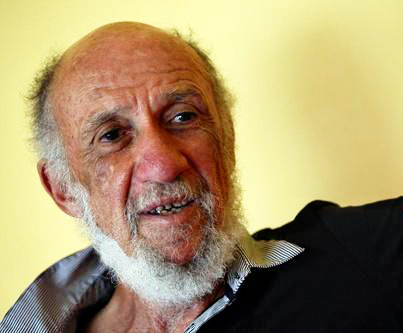
By Richard Falk

August 10, 2016

Prefatory Note
An earlier version was published by Middle East Eye on August 10, 2016. It seems so important at this time for the sake of the future of Turkey that the West look at the country and its political circumstances in a far more balanced way than how the situation has been portrayed since the coup. How to explain this imbalance is another matterthat should be explored at some point, but for now is largely put aside.

Much uncertainty remains in Turkey, but there is enough evidence of positive tendencies to raise a tentative banner of hope. Being a witness to the political atmosphere in Turkey that has emerged after the failed coup of July 15th puts me at odds with the secular consensus in the West, which looks up at the sky and sees only dark, ominous clouds of human rights abuse and autocratic leadership.

What I have experienced and observed so far is quite different, a sky with much blue in it.

There are two opposed, although overlapping, tendencies present that seemed to be responsive to the political priorities that top the post-coup government agenda: sustaining the anti-coup unity by shifting political gears within the AKP leadership circles in the direction of “inclusive democracy” and pragmatism, and with it, a retreat from the polarizing claims of “majoritarian democracy” that greatly intensified after the 2011 national elections and were particularly evident in the clumsy, unacceptable way the Turkish government handled the Gezi Park demonstrations two years later.

The most important concrete embodiment of this post-15 July move toward inclusiveness has been a series of initatives intended to create a common front between the three leading political parties in the country, including the CHP (secular mainstream) and MHP (nationalist rightest) opposition parties.

This has been reinforced by several other developments,Read More »

The global power imbalance

By Johan Galtung

Dear Reader: This editorial 444 – the number calls for attention – is dedicated to a global overview, the world “right now”, so unstable with imbalances everywhere that what we are living is fluxes and jumps.

Let us start with two major relations: Nature-human, the US-the Rest.

Look at the human-nature relations.

We are used to being on top, killing and taming animals, protected against many of nature’s hazards including micro-organisms. But nature comes up with ever smaller viri, and larger, or more, tsunamis and earthquakes, and an erratic climate.

We oscillate between blaming ourselves, including military scheming, and the anthropomorphic “Mother Nature is angry” (Evo Morales).

If nature is angry, she has good reasons for a good riddance of us. And we are slow at a deeper human-nature relations respecting and enhancing both.

Nature is on top and our natural sciences are simply not good enough, taken by surprise all the time. Meteorology is good at covering the whole Beaufort wind range from 0-12; others not.

Maybe we have desouled nature and besouled ourselves too much to establish our own Herrschaft (rule, dominance), at the expense of Partnerschaft (partnership).

Unless this changes, imbalance with nature on top, and surprises, will continue.

Maybe the opposite holds for the US-Rest imbalance; that US exceptionalism serves USA as badly as humans above nature serves us?Read More »

Peace without war in Colombia

By Jonathan Power

August 30th 2016

After 52 years of fighting between the Colombian government and Farc, the left wing, drug-dealing, Marxist, guerrilla grouping, there is a peace agreement.

I’ve always wondered why the US and Nato never intervened militarily. They should have if they were to be consistent. Colombia has long been exhibit A for those who say, “Look what happens when the outside world doesn’t intervene- the local fires just burn brighter and fiercer”. (And it has been said likewise for Sri Lanka during its civil war.)

The facts say the opposite: fires burn brighter and fiercer when there are invasions by the US and Nato. In Kosovo Nato jets, at President Bill Clinton’s command, tore into Serbia to bring “peace” to an unthreatening backwater of Europe and left behind a mafia that de facto had unseated and replaced the government.

Similarly, they blasted into Afghanistan even though the original purpose was not a war across a whole country but merely an attempt to kill off Al Qaeda. Likewise, into Iraq and Libya. As in Afghanistan, all these interventions made the fires burn fiercer.

So why not Colombia? I don’t know the reason that made Clinton decide not to intervene but although this peace agreement has taken a heck of a long time to negotiate is it not better than stoking up from outside a terrible war with hundreds of thousands of casualties?

Clinton said in 1999 thatRead More »

TFF PressInfo # 385 – How did Western Europe cope with a much stronger Soviet Union and Warsaw Pact?

By Jan Oberg

TFF Series ”The New Cold War” # 6

How did Western Europe survive the much stronger Soviet Union & Warsaw Pact 30-40 years ago? A pact that had about 70% of NATO’s military expenditures where today’s Russia has 8%? How did we get on after the Soviet invasion of Hungary and Czechoslovakia – and a Union with much more global military and political influence?

Europe did so through a well-maintained military capacity, or superiority, technical superiority and, of fundamental importance to security – confidence-building measures (CBM).

And through a political leadership by personalities who knew what the 2nd World War had implied and why it must never happen again. One towering figure of course being Willy Brandt, the German chancellor who had himself been a refugee in Norway during the war.

CBMs were meant to both uphold a high level of war-fighting capacity while also seeking military early information/warning, attending each other’s military exercises, etc. They resulted in the establishment of the very important OSCE – Organisation for Security and Co-operation (then C for Conference) in Europe with the Helsinki Final Act of 1 August1975. It contained politico-military, economic, environmental and human rights dimensions – ’baskets’ that were seen as related to each other and which served as dialogue points between the two blocs.

The visionary President Urho Kekkonen of Finland was credited as the main architect of the CSCE – and his Finland was neutral but upheld a co-operation agreement with the Soviet Union.

Finland was also the only country in the European space that could show opinions polls according to which the people felt equidistant to both blocs.

The simple but brilliant idea was this: We need dialogue to feel secure. It was also called Detente. And it implied a disarmament dimension – negotiations about how to mutually scrap weapons in a measured and verifiable manner that both sides had decided they no longer needed.

These negotiations included not only conventional weapons but also the arsenals of nuclear weapons.

In the domain of nuclear weapons, the Non-Proliferation Treaty, NPT, was signed in 1970 and carried four very important provisions:

1) the world shall move towards general and complete disarmament and the nuclear weapons shall be abolished;
2) those who have nuclear weapons shall negotiated them down, in principle to zero and
3) as a quid pro quo for that all non-nuclear weapons shall abstain from obtaining nuclear weapons – and
4) countries who want nuclear energy shall be assisted to introduce this civilian energy technology.

All this happened in the era of Detente and CBM. How had that become possible? Read More »