Syria: Three conflict levels – and the solutions?

By Johan Galtung

There seem to be three levels to the Syrian conundrum.

On top is the conflict over who is to rule Syria, the Assad minority Shia, 13%, mainly Alawite – or Baath rather, more secular, socialist–dictatorship respecting other minorities – Christians, Armenians, Assyrians, Druze, Kurds, Turkoman, or a majority Sunni, 73% dictatorship with no such respect. Both groups fight with brutality, the list of crimes on both sides is long, and the world is watching the unbearable suffering of the Syrian people, even from nerve gases.

Then, in the middle, is the usual geopolitical game of states and regions. In the background are huge alliances, the 28 mainly small NATO countries against the 6+ SCO-Shanghai Cooperation Organization countries with two enormous members. The five veto powers of the UN Security Council are openly involved – USA, UK, France, Russia and China, and Turkey, for their economic, military and political interests, paralyzing the UN Security Council (like the USA blocking a UNSC resolution after the February 2013 Damascus bombing).

And then, at the bottom, feeding into it all, two cultural, religious fundamentalisms. Read More »

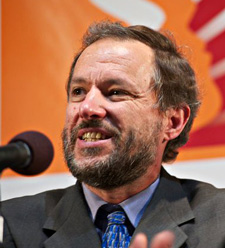
Resolving the Syrian chemical weapons crisis: Sunlight and shadows

By Richard Falk

The Putin Moment

Not only did Vladimir Putin exhibit a new constructive role for Russia in 21st statecraft, spare Syria and the Middle East from another cycle of escalating violence, but he articulated this Kremlin initiative in the form of a direct appeal to the American people. There were reasons to be particularly surprised by this display of Russian diplomacy: not since Nikita Khrushchev helped save the world from experiencing the catastrophe of nuclear war in the Cuban missile crisis of 1962 by backing down and agreeing to a face-saving formula for both superpowers, had Moscow distinguished itself in any positive way with respect to the conduct of international relations.

For Putin to be so forthcoming, without being belligerent, was particularly impressive in view of Obama’s rather ill-considered cancellation only a few weeks ago of a bilateral meeting with the Russian leader because of Washington’s supposed anger at the refusal of the Russian government to turn the NSA whistleblower, Edward Snowden, over to the United States for criminal prosecution under American espionage laws; and finally, considering that Putin has much blood on his hands given past policies pursued in relation to Chechnya and in the autocratic treatment of domestic political opposition, it was hard to expect anything benevolent during his watch.

And so Putin is emerging as a virtual ‘geopolitical black swan,’ making unanticipated moves of such a major characterRead More »

The US has no credibility dealing with chemical weapons

By Stephen Zunes

This is an updated and expanded version of the article “The US and Chemical Weapons: No Leg to Stand On,” originally posted in Foreign Policy in Focus on May 2, 2013.

Had the United States pursued a policy stemming the proliferation of chemical and other nonconventional weapons through region-wide disarmament, when it was proposed in 2003 by Syria, it is likely there would be no apparent use of such ordnance and no present rush to war on that basis, says Zunes.

The Syrian regime’s alleged use of chemical weapons against civilian areas on August 21 constitutes a breach of the Geneva Protocol of 1925, one of the world’s most important disarmament treaties, which banned the use of chemical weapons.

In 1993, the international community came together to ratify the Chemical Weapons Convention (CWC), a binding international treaty that would also prohibit the development, production, acquisition, stockpiling, retention, and transfer or use of chemical weapons. Syria is one of only eight of the world’s 193 countries not party to the convention.

However, US policy regarding chemical weapons has been so inconsistent and politicized that the United States is in no position to take leadership in any military response to any use of such weaponry by Syria. Continue reading at TruthOut

Why Congress should say “NO” on Syria

By Richard Falk

I am not sure this attempt at clarifying the present stage of the Syria debate adds much to my prior posts, yet I hope that it provides a kind of summary that is helpful in following the unfolding debate; all along I have felt that the Syrian impasse presented the UN and the world with a tragic predicament: trapped between doing something to stop the Assad regime from committing atrocities against its own people so as to retain power and the non-viability and illegality of military intervention, a predicament further complicated by the proxy war within the region along sectarian lines, by the strategic involvement of the U.S. and Russia on opposite sides, and the maneuverings behind the scenes by Israel; also, the overall regional turmoil, and past bad feeling in relation to the UN role in the overthrow of Qadaffi posed additional obstacles.

Efforts to shape the political outcome by military means, because of the proxy war dimensions (including an increasingly evident, although still surprising, tacit alliance between Israel and Saudi Arabia) only escalated the violence on the ground in Syria; Turkey, Russia, and the United States have all along oscillated between principled and pragmatic responses favoring one side or the other, and exhibiting an ambivalent commitment to equi-distant diplomacy.

There are three positions that have considerable support in Washington circles, although rarely acknowledged and not popular with the public, partly because of recent foreign policy failures, and partly too removed from perceptions of genuine security interests:

– undertake an attack to uphold ‘red line’ credibility of the president and the United States Government;

– undertake an attack to avoid an insurgent defeat, but on a scale that will not produce an insurgent victory; goal: keep the civil war going;

– undertake an attack to convince Iran that Obama is ready to use force if diplomatic coercion doesn’t work.Read More »

Questioning Obamacare for Syria

By Richard Falk

There is something particularly distressing about the ongoing debate on authorizing an internationally illegal and immoral military attack on Syria: a show of political support on the right. Such a ‘coming together’ of some of the center and much of the right in the American Congress has been sadly absent during Obama presidency until now, whether the issue was health, taxes, social services, keeping the government running, and immigration.

And this support emerges on the rare occasion when a majority of American citizens, not known for their cosmopolitan sentiments or affection for the UN Charter, oppose attacking Syria, as was the British Parliament, and as is public opinion throughout Europe. In such a setting, it is not only international law and the UN are being repudiated in a war/peace situation, but the whole fabric of democratic accountability to law and the judgment of the people.

At least we can conclude that the reactionary tendency in American political life over the course of the last decade or so is consistent in its adherence to irresponsible means in the pursuit of irresponsible ends.Read More »

Eight arguments against going to war with Syria

By Stephen Zunes

The decision by President Barack Obama to first seek congressional approval of any US military action against Syria is good and important, not only on constitutional grounds but because it gives the American people an opportunity to stop it. It is critically important to convince members of Congress not to grant the president that authority.

Here are some of the top talking points that should be raised before members of Congress as to why authorizing US airstrikes on Syria would be a bad idea.
Continue at TruthOut

Any attack on Syria will be counterproductive and illegal – a result of failed conflict management

TFF PressInfo
September 2, 2013

For the discerning journalists, editors and citizens

Summary
• Any U.S. attack on Syria will be a gross violation of international law, including the UN Charter.
• al-Assad’s admission of UN inspectors obviously was seen by Washington as an obstacle for its war plans.
• An attack will come only as a consequence of deliberately ignored opportunities for professional, impartial mediation and peace-making, the lack of backing of Kofi Annan’s plan of April 2012 in particular.
• An attack can under no circumstances be seen in the light of a responsibility to protect since it will cause even more violence and human suffering throughout Syria.
• Again, we see how the vast majority of people in conflict zones who do not resort to violence are being abandoned.
• Any attack is likely to have grave consequences for the region as a whole.
• For these reasons any attack must be condemned as illegal and counterproductive.
• Governments and citizens everywhere must now use whatever time there is to persuade the U.S. to back down.

1. Immediately after President al-Assad accepted UN inspectors, Washington declared it was ”too little too late”. Read More »

Britain leads the way

By Farhang Jahanpour
September 1, 2013

In his most statesmanlike statement, a short while ago (31 August 2013) President Barack Obama announced that he would seek Congress’s approval before ordering military action against Syria. After all the hype about an imminent strike, this statement was a breath of fresh air, and it has renewed many people’s faith in President Obama. Not only would any other action have been against international law, it would have even been against the US Constitution that gives Congress the right to declare war, except in emergencies.

That right had been usurped by a number of recent presidents who exceeded their executive prerogative. The Congress will be back in session during the second week of September and this delay provides a breather and an opportunity for cooler heads to prevail, and hopefully the chance to find a comprehensive solution to the Syrian crisis.

However, it is important to give credit where it is due, namely to the British Parliament that led the way in imposing the views of the majority of the electorate on the government that was going to get engaged in a rash action.Read More »

Syria – Obama’s surprising (and confusing) latest moves

By Richard Falk
September 1, 2013

President Obama’s August 31st remarks from the White House Rose Garden will long be remembered for their strangeness, but the final interpretation of their significance will have to await months if not years. There are three dimensions, at least, that are worth pondering:

1) seeking Congressional authorization for a punitive military attack against Syria in support of the treaty prohibition on recourse to chemical weapons in an armed conflict;

2) reconciling any endorsement of an attack by Congress with United States obligations under international law and with respect to the United Nations and its Charter;

3) assessing the degree to which American war making prerogatives continue to operate within an unacceptable domain of American exceptionalism.

In framing the issues at stake Obama set forth the fundamental policy choices in a rather incoherent manner:Read More »

Contra Syria attack

By Richard Falk

Informed opinion agrees that the response to the presumed Assad regime’s responsibility for the use on August 21st of chemical weapons in Ghuta, a neighborhood in the eastern surrounding suburbs of Damascus, is intended to be punitive. This is a way of signaling that it is a punishment for the use of chemical weapons that does not have the ambition of altering the course of the internal struggle for power in Syria or to decapitate Bashar el-Assad. Of course, if it achieved some larger goal unexpectedly this would likely be welcomed, although not necessarily, by such interested centers of influence on Syrian policy as Washington, Ankara, Riyadh, and Tel Aviv.

Why not necessarily? Because there is a growing belief in influential Western circles, highlighted in a cynical article by Edward Luttwak published a few days ago in the NY Times, [“In Syria, America Loses if Either Side Wins,” Aug. 24, 2013] that it is better for the United States and Israel if the civil war goes on and on, Read More »