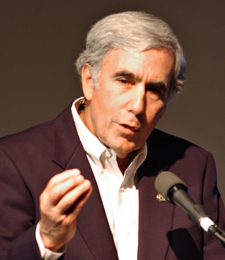
TFF PressInfo 315: Happy Norooz – peace in the new year?

Jan Oberg

By Jan Oberg

Today is New Year – Norooz – for 300 million people. It is Equinox. It is International Day of Happiness – and it is the 12th Anniversary of the US-led war on Iraq

The nuclear deal and Israel

One must hope that the new year brings a fair deal concerning the nuclear issues between Iran and the members of the UN Security Council + Germany.

If the U.S. will not sign because it insists that the counterproductive and unfair sanctions shall not be lifted completely and as soon as technically possible, the deal should be signed with the other parties. The US must have no monopoly on this.

One must also hope that Israel will not attack Iran – but with the re-election of PM Netanyahu that risk has increased.

He seems to be obsessed about a threat from Iran, a country that has not invaded any other country for more than 250 years, has no nuclear weapons and considers nuclear weapons “haram” – strictly forbidden.

With a 10 times larger population Iran has roughly the same military expenditures as Israel.Read More »
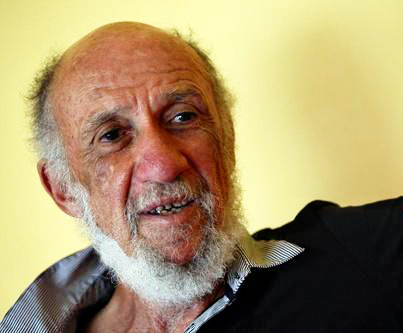
Iran’s nuclear program: Diplomacy, war, and (in)security in the Nuclear Age

Richard Falk

By Richard Falk
March 18, 2015

Perhaps, Netanyahu deserves some words of appreciation, at least from the Israeli hard right, for the temporary erasure of the Palestinian ordeal from national, regional, and global policy agendas. Many are distracted by the Republican recriminations directed at Obama’s diplomatic initiative to close a deal that exchanges a loosening of sanctions imposed on Iran for an agreement by Tehran to accept intrusive inspections of their nuclear program and strict limits on the amount of enriched uranium of weapons grade that can be produced or retained.

We can only wonder about the stability and future prospects of the United States if 47 Republican senators can irresponsibly further jeopardize the peace of the Middle East and the world by writing an outrageous Open Letter to the leadership of Iran.

In this reckless political maneuver the government of Iran is provocatively reminded that whatever agreement may be reached by the two governments will in all likelihood be disowned if a Republican is elected president in 2016, or short of that, by nullifying actions taken by a Republican-controlled Congress.

Mr. Netanyahu must be smiling whenever he looks at a mirror, astonished by his own ability to get the better of reason and self-interest in America, by his pyrotechnic display of ill-informed belligerence in his March 2nd address to Congress. Surely, political theater of sorts, but unlike a performance artist, Netanyahu is a political player whose past antics have brought death and destruction and now mindlessly and bombastically risk far worse in the future.

What interests and disturbs me even more than the fallout from Netanyahu’s partisan speech, are several unexamined presuppositions that falsely and misleadingly frame the wider debate Read More »

A presumption against intervention

Richard Falk

By Richard Falk

Prefatory Note: The post below is a revised and modified version of my chapter in David Held & Kyle McNally, eds., Intervention in the 21st Century – Online by Durham, UK: published by Smashwords for Global Policy Journal, 2015]

Participating in the intervention debates that have raged periodically ever since the Vietnam War in the 1960’s, and of course earlier in less contested settings, I have been struck by the defining encounter between those who are dogmatically opposed to intervention per se and those who rarely confront a call for intervention that they do not feel persuaded by, limiting any doubts as to matters of feasibility and strategic interest.

The traditional focus of policy discussion proceeds on the assumption that it is about forcible intervention by governmental actors to coerce some kind of change in a foreign sovereign state. Those in favor usually rely, at least in part, on a rationale that such an undertaking is necessary and desirable as it would rescue a captive people from a regime responsible for massive crimes against humanity or genocide, or operate as counter intervention (currently the controversy over intervening in the Ukraine to offset and discourage alleged Russian intervention) or as in relation to ISIS where the stated objective of the American led coalition is to destroy or defeat a non-political actor that is exercising governmental control over territory in portions of Iraq and Syria.

Systemic Developments

Four developments over the course of the last half-century are radically reshaping the debate on the viability and advisability of forcible intervention as a diplomatic option.

The first and most important, is the collapse of European colonialism, which has often motivated the West, and especially the United States, to assert its goalsf and protect their interests by way of intervention in what were formerly colonies or states whose sovereignty was curtailed by hegemonic authority. A feature of this post-colonial global setting is that the intervening state, if Western, will tend to justify its actions by setting forth an altruistic and self-justifying argument with strong moralizing overtones.

Related to this matter of motivation on the side of the intervener is the prospect of effective and persevering national resistance creating formidable obstacles to succeeding with an intervention even with the benefit of military dominance. The combination of motivation and anticipated resistance helps explain why so few major interventions have been viewed as successful. One notable continuity linking colonial memories to post-colonial realities is the invariable geographical location of the intervening political actor in the West and that of the target society being in the non-West.

The second development is the rise of human rights Read More »

UN peacekeepers to Ukraine – Yes!

Jan Oberg

By Jan Oberg

Deployment of UN peacekeepers should be agreed with both sides of Ukrainian conflict, says Lavrov — RT Russian politics.

Ukraine has – wisely – suggested that UN Peacekeepers be stationed in Eastern Ukraine. Russia’s foreign minister sounds positive.

That is important and good news – the most constructive for a year.

To get the UN peacekeepers into the conflict zone has been one of TFF’s proposals since the fighting broke out.

In October 1991, TFF was also the first to suggest that the UN be deployed to Croatia. It actually was a few months later thanks to Cyrus Vance, the former U.S. Secretary of State, who in his role as mediator was working on exactly that when he received our report and we then met him a late evening in Belgrade.

Conclusion: Never give up constructive pro-peace proposal-making. One day they do become relevant – when people find out that violence was not such a brilliant idea.

The “New World Order”

Johan Galtung

By Johan Galtung Kuala Lumpur

…is the title of our conference. There will never be any such thing. “New”, yes; “World”, yes –“Order”, No. Wherever there is life there is contradiction, dialectic, forces and counter-forces. At the very obvious level the question arises – Order, in whose interest, against whom? Sow any new order and the seeds of its undoing are already taking root, sprouts are coming. As the Chinese say, “There are human beings without contradictions; they are called corpses.”

Follow that hint; go to the moon. New moons once a month, and order, the order of death, of non-life. The Old Moon Order.

As part of this Perdana Global Peace Foundation Conference, so well composed by Dr Hitam, President Tun Dr. Mahathir unveiled a giant copy of my book just published, Abolishing War: Criminalizing War, Removing War Causes, Removing War as an Institution (TPU and IIUM Press, 2015) together with a smaller book Clash of Civilizations[i]Read More »

TFF PressInfo # 314: From preventing to making peace in Ukraine

By Jan Oberg

Jan Oberg

Lund, Sweden, March 13, 2015

If the parties continue this way, there will be no peace in Ukraine but probably war in Europe. With a little out-of-the-box thinking, we could move in a safer direction.

You’ve heard everybody involved in the Ukraine conflict solemnly declare that there is no military solution.

And what do they all do? Right, they militarise the situation further, use bellicose language, speak bad about each other, take provocative steps, use propaganda and flex their military muscles. It’s thoughtprovokingly thoughtless.

These men – sorry, but the are all men – who are competent in war and other violence run our world. They are conflict and peace illiterates embedded with MIMACs – Military-Industrial-Media-Academic Complexes – which exist in both Russia, EU, NATO and the U.S.

It’s not about evil – they are probably all good spouses, nice to their children or grandchildren and enjoy literature, painting or music in their few hours of leisure. But the system they operate inside is as evil as it is dangerous for us all, for the world’s future.

Their problem – and thus your and my problem – is that they just don’t have a clue about peace-making. No education, institutions or advisers in civilian conflict-management.

And since they lack that they fall back on the convenient but proven illusion that peace will come if we just force “the other” to back down.

And since there is no lack of (tax payers’) money to fund weapons (only to fund social and cultural development) and these weapons are on the government shelves that’s what they use – instead of their intelligence and empathy. 

Far fetched?

If you think so, take a look at these facts:Read More »

On anti-semitism, criticizing Israel and Netanyahu – and blaming Jews and Muslims

By Gunnar Westberg

The following question was asked to the ambassador of Israel to Sweden in one of the most respected programs on the Swedish Broadcasting (Sveriges Radio): “Do the Jews themselves carry any responsibility for the anti-Semitism we now see growing?”. (Translated by me from its official website). The ambassador refused to answer.

At the end of the program the responsible editor expressed a profound apology: “We wholeheartedly apologize for the question. It leads in the wrong direction and puts the guilt on individuals and unexposed groups”. The section was cut from the program recording although the original is stored in a public archive.

It seems like almost everyone in the media world agrees with this apology: “You should not ask such a question.” I agree. But we should ask “Does Israel carry any responsibility for the growing anti-Semitism?” Read More »

The Von Weizsäckers, Germany’s Kennedys

By Johan Galtung

Johan Galtung

President Richard von Weizsäcker passed away 31 January and was very much celebrated in Germany for his brilliant presidency to normalize a Germany with a troubled past, even divided on top of that. But, by and large leaving out his global perspectives mentioned below.

His brother Car Friedrich was a nuclear physicist turned peace activist with a wonderful peace program, in one word: Weltinnenpolitik, world domestic policy (well, it depends on the country, some domestic policies are better than others; I would go for a Swiss coalition governance, federalism, direct democracy).

The president’s nephew Ernst Ulrich is an energy-environment leader, in Germany and through the UN in the world.

I have/had the privilege of knowing them all, and my tribute to Carl Friedrich when he passed away is an editorial dated 2 July 2012. Richard kindly sent greetings to the symposium on “Peace Studies and World Domestic Policy” on the occasion of my 80th birthday.

President John F. Kennedy also had a brother, Robert F. Kennedy; both murdered in (by?) the USA. The president’s nephew, Robert F. Jr., recently published three articles at Other News. Information That Markets Eliminate where, in a position to know, he tells the story of the USA-Cuba past: “JFK’s secret negotiations with Fidel”, “Sabotaging U.S.-Cuban detente in the Kennedy Era” and the future: “We have so much to learn from Cuba”. The titles say it all: efforts, thwarted by CIA; time to catch up.Read More »

TFF PressInfo # 310: Terrorism – small dot in a larger picture

By Jan Oberg

Jan Oberg

What is terrorism? Why do we talk much more about that than other types of deaths? Why is the word misused? What has nuclear weapons – that politicians and media hardly ever talk about – got to do with terror? Why should we all be careful not to exaggerate the phenomenon of terror?

10 x more terrorism than before 9/11

Tell you what: I’ve been critical of the ”war on terror” since September 12, 2001 and particularly since 10/7 when the war on Afghanistan started. If the War on Terror was the answer to 9/11, the U.S. and its friends asked the wrong questions.

Because, what has been the result?

According to U.S. statistics at the time, in the years up to the horrific crime in New York, about 1,000-1,500 people were hit by terror per year worldwide; 1/3 of whom died, the rest were wounded. Most of it happened in South America, some in Europe; small groups such as Baader-Meinhof.

Almost 3,000 were killed on 9/11, many nationalities, far from only American citizens. (About 30,000 die annually from shooting each other).

Today? About 18,000 were killed in terror in 2013.
Although data may not be directly comparable or definitions be the same, the difference between 1,500 and 18,000 cannot be explained by methodological and other variations.Read More »

The Nuclear Zero lawsuits: A conversion of hearts

By David Krieger

The Nuclear Zero lawsuits, initiated by the Marshall Islands, are about the law, but they are about much more than the law. They are also about saving humanity from its most destructive capabilities. They are about saving humanity from itself and about preserving civilization for future generations. They are incredibly important, and I will try to place them in a broader context.

I will begin by sharing two quotations with you. The first is by Jayantha Dhanapala, a Sri Lankan diplomat, former United Nations Under-Secretary General, and long-time and committed leader in the area of nuclear disarmament. He states: “The spectre of the use of a nuclear weapon through political intent, cyber-attack or by accident, by a nation state or by a non-state actor, is more real than we, in our cocoons of complacency, choose to acknowledge.”

The spectre of nuclear use, even nuclear war, is real and most of the world lives in “cocoons of complacency.” It is clear that we must break free from those cocoons, which are as dangerous to the human future as are the nuclear weapons that now imperil us. The Nuclear Zero lawsuits seek to accomplish that.

The second quote is by His Holiness Pope Francis, the leader of the Catholic Church, who has brought new light and compassion to his office. He states: “As long as so great a quantity of arms are in circulation as at present, new pretexts can always be found for initiating hostilities. For this reason, I make my own the appeal of my predecessors for the non-proliferation of arms and for disarmament of all parties, beginning with nuclear and chemical weapons disarmament.” The Pope talks about disarmament in general, but he puts nuclear disarmament, along with chemical weapons disarmament, at the top of his list.

Pope Francis continues: “We cannot however fail to observe that international agreements and national laws — while necessary and greatly to be desired — are not of themselves sufficient to protect humanity from the risk of armed conflict. A conversion of hearts is needed which would permit everyone to recognize in the other a brother or sister to care for, and to work together with, in building a fulfilling life for all.”

“A conversion of hearts.” Can there be any doubt that such conversion is necessary? Can there be any doubt that traditional diplomacy is not getting the job done?Read More »