9/11 Anniversary: What could have been!

Fifteen years ago on 9/11, Al Qaeda terrorists changed the course of history, and the consequences of what happened on that day are still very much with us, and are arguably even growing more complex and more dangerous.

On 11 September 2001, 19 young Arab militants affiliated to Al Qaeda who had received rudimentary flying instruction in the United States hijacked and flew two passenger aircraft at the twin towers of the World Trade Center in New York, one at the Pentagon in Washington and another aircraft was allegedly also flying towards the White House or the Capitol but it was brought down before it reached its target.

Nearly 3,000 innocent people were killed as the result of those terrorist outrages. In response, America launched the “War on Terror” that has killed upward of a million people, destroyed many Middle Eastern countries, ruined the lives of tens of millions, killed nearly 7,000 US troops and injured another 50,000, and has cost the United States a staggering six trillion dollars.

This was the first time in US history that the American mainland had been attacked after the British troops had set fire to the White House in 1814 during the war between the United States and England. Even during the Second World War the continental United States did not receive any direct attacks, and the closest that the Japanese got was to attack the US naval base at Pearl Harbour in Hawaii, on December 7, 1941.

Of course, during the past few decades there have been numerous terrorist attacks on the US and other targets, the most notable being the attack carried out by Timothy McVeigh on the Alfred P. Murrah Federal Building in Oklahoma City, which claimed 168 lives and left over 800 people injured. McVeigh too had religious motivations for his attacks.

He was a religious fanatic and a follower of David Koresh, and he bombed the federal building on the anniversary of the destruction of the Branch Davidian camp in Waco by federal forces, as the result of which Koresh, 54 other adults and 21 children were burnt alive

One can think of the massacre of close to a million Tutsis and Hutus in Burundi and Rwanda. A Human Rights Watch analysis estimated that 77% of the Tutsi population of Rwanda was slaughtered in the Rwandan Genocide of 1994.

Apart from the initial slaughter of hundreds of Palestinians and the ethnic cleansing of nearly 70% of the Palestinian population in 1948, we had the slaughter of as many as 3,500 Palestinian refugees at the Sabra and Shatila Camps in Lebanon by the Christian Phalangists between the 15 and 16 September 1982, under the supervision of the invading Israeli forces led by Ariel Sharon.

However, the 9/11 attacks have assumed a significance far greater than all other terrorist acts in the world.

Most Americans believe Read More »

TFF PressInfo # 388: The War On Terror – A predictable fiasco

By Jan Oberg

This coming Sunday marks the 15th anniversary of what could be called the most counter-productive, if not stupid, war in modern history: The War On Terror. Today that war is much much more dangerous to the world’s future than the terrorists it is allegedly supposed to hunt down. And it has caused thousands of times more suffering, death and destruction – at least a million innocent people killed.

It’s not a war on terrorism but on terrorists and that is as smart as trying to fight all diseases by killing patients. It’s a war fought without any consideration of the one big question: Why did they do it and why do they do it? Media and politics only asking: Who did it? How was it done? Where? How to respond?

Without an intelligent, comprehensive diagnosis of 9/11 it could only go wrong. And it has.

The next problem was that ‘terrorism’ was suddenly defined by states as anything non-state that threatens society and states. Governments and the UN (which consists of them) conveniently omitted terrorism as a term for what states do and have done on a regular basis and on a much larger scale. Such as the nuclear balance of terror.

About 400 people were killed annually and worldwide before 9/11 according to US State Department statistics – reporting of that stopped in 2004 when figures soared after the War On Terror gained momentum. However, according to the 2015 Global Terror Index – the number is now 32,000 – and the far majority killed outside the West. So, the problem has increased exactly 80 times(!)

And the Western leaders who continue this war has no idea about how to stop it or do something more productive and intelligent to the world. Primitive tit-for-tat and disproportional responses has substituted what was once called statesmanship.

And it was predictable that it would be a fiasco!

Many both inside and outside the U.S. came up with Read More »

Vem kan tro på historien om Nine Eleven?

Av Ola Friholt

Det är nu 15 år sedan den ödesdigra dagen 11 september 2001. Sedan dess har kriget mot terrorismen utvecklats och krävt minst två miljoner liv och lika många psykiskt och fysiskt skadade, allt enligt en utredning från USAs läkarsällskap, ”Physicians for Social Responsibility” (med 50 000 medlemmar och medlem av Läkare mot kärnvapen).

Resultatet av kriget mot terrorismen är dessutom negativt även för väst. Idag har attentaten och offren i väst mångdubblats.

Lika anmärkningsvärt är att medborgarnas fri- och rättigheter i väst dramatiskt har urholkats. Kontrollen uppifrån är närmast total med avlyssning utan praktisk begränsning.

Hemliga fångläger med tortyr av godtyckligt fängslade har avslöjats i Polen, Tjeckien, Kosovo och Egypten, utöver de öppet erkända på Guantanamo, i Afghanistan och Pakistan. Ett sextiotal personer har suttit på Guantanamo i fjorton år utan rannsakan och dom från USA, som förr kallats ”Världens största demokrati”.

Den 11 september kan alltså kopplas till urholkning av demokratiska fri- och rättigheter, utomrättsligt dödande i stor skala, godtyckligt fängslande, officiellt påbjuden tortyr m m. Till detta kan läggas intensifierade rustningar och nya krig på bekostnad av fredlig dialog och konfliktlösning. Sveriges regeringar har följsamt godtagit både den officiella bilden av händelserna den 11 september 2001 och dess såväl militära som civila konsekvenser.

Det är ingen tillfällighet att avlyssningsstationerna på Lovön och Lerkil hör till världens största och att rymdforskningsstationen Esrange i Kiruna förmedlar satellitdata till USA/Nato för deras krigföring.

Och Sverige deltog i förmenta antiterrorkrig i Afghanistan och Libyen.

Det finns anledning att omvärdera hela utvecklingen under femton år och ifrågasätta själva den åberopade grunden för denna utveckling: raserandet av World Trade Centre.

Ifrågasättandet av den officiella beskrivningen av den händelsen började nästan omedelbart. Idag finns en hel litteratur som smular sönder den bild som är officiellt accepterad i väst. Vad var det som egentligen skedde, och vem låg bakom?

Betydande analyser gjordes av Andreas von Bülow, tidigare minister för teknologi och forskning i Helmut Schmidts regering i Tyskland, med boken ”CIA och 11 september” (2003) på Alhambra förlag. Professor David Ray Griffin har publicerat flera böcker, på svenska ”Motsägelser om 11 september”, Alhambra 2008, och ”WTC 7 och dess mystiska kollaps”, Alhambra 2010. Dessutom omfattande analyser på Internet, t ex Wood & Reynolds: ”The Star Wars Beam Weapons and Star Wars Directed Energy Weapons” (2006) och D A Khalezov: ”911thology: The Third Truth about 9-11” (2013), 1092 sidor.

För en sunt tänkande människa ter det sig orimligt att makthavare skulle kunna bedriva en politik som drabbar det egna folket. Ändå är detta vardagsmat sedan århundraden, med nittonhundratalet som eländets höjdpunkt. Då offrades långt över 100 miljoner liv även av ledare som kallade sig demokratiska. Det ansågs självklart att utkämpa världskrigen så som de utkämpades.

Likaså krigen för och emot kolonial befrielse och krigen för kontroll över råvarutillgångar och marknader. Och sedan årtionden dör cirka hundratusen människor varje dag i sviterna av världens orättvisor utan att särskilda insatser görs för att förhindra det.

De senaste åren har destabilisering och förstöring av stater stått på stormaktsprogrammet under uppenbart falska förevändningar men utan att väcka förvåning. Ansvariga är främst USA och England under medverkan av övriga Nato. Detta hindrar inte att majoriteten av Sveriges politiska partier och riksdagen liksom regeringen alltmer närmar sig Natomedlemskap, utan att gå in i den debatt som borde vara självklar i en demokrati.

Att ledare är beredda att offra tusentals av sitt eget och andra folk för tvivelaktiga mål är således väl belagt.

Det finns all anledning att tvivla på de förklaringar en stormakts ledare ger.

Den 11. 9. 2001 sägs alltså 19 muslimska flygkapare ha flugit in i World Trade Centres två högsta skyskrapor och därigenom fått dem att rasa till grunden. Read More »

America, the threatened?

By Jonathan Power

September 6th 2016

The French ambassador to the US from 1902 to 1924, Jean-Jules Jusserand, observed that distant powers could not easily threaten the US because “On the north, she has a weak neighbour; on the south, another weak neighbour; on the east fish and on the west, fish”.

The coming of the submarine-based nuclear missile has not changed that. Apart from the fact that no enemy would dare use them for fear of retaliation, and that there is no country in the world that feels that hostile to America (accept North Korea), the fact is America is too big and too far away to be invaded and dominated. There could not be a blitzkrieg by a foreign army across the mid-west or a Vichy America.

The real tragedy of 9/11 is just as a majority of the US electorate had settled into a post-Cold War comfort zone with the new president, George W. Bush, not being overly pushy or confrontational in foreign affairs, America was jolted so badly that a large proportion of its electorate – maybe half – has been paranoid ever since. Enemies are once again seen under the bed.

Enough of the electorate have persuaded themselves that they are insecureRead More »

The sky above Turkey has much blue in it

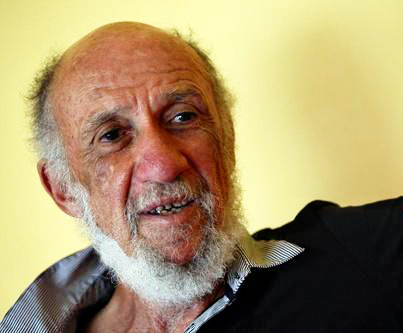
By Richard Falk

August 10, 2016

Prefatory Note
An earlier version was published by Middle East Eye on August 10, 2016. It seems so important at this time for the sake of the future of Turkey that the West look at the country and its political circumstances in a far more balanced way than how the situation has been portrayed since the coup. How to explain this imbalance is another matterthat should be explored at some point, but for now is largely put aside.

Much uncertainty remains in Turkey, but there is enough evidence of positive tendencies to raise a tentative banner of hope. Being a witness to the political atmosphere in Turkey that has emerged after the failed coup of July 15th puts me at odds with the secular consensus in the West, which looks up at the sky and sees only dark, ominous clouds of human rights abuse and autocratic leadership.

What I have experienced and observed so far is quite different, a sky with much blue in it.

There are two opposed, although overlapping, tendencies present that seemed to be responsive to the political priorities that top the post-coup government agenda: sustaining the anti-coup unity by shifting political gears within the AKP leadership circles in the direction of “inclusive democracy” and pragmatism, and with it, a retreat from the polarizing claims of “majoritarian democracy” that greatly intensified after the 2011 national elections and were particularly evident in the clumsy, unacceptable way the Turkish government handled the Gezi Park demonstrations two years later.

The most important concrete embodiment of this post-15 July move toward inclusiveness has been a series of initatives intended to create a common front between the three leading political parties in the country, including the CHP (secular mainstream) and MHP (nationalist rightest) opposition parties.

This has been reinforced by several other developments,Read More »

The global power imbalance

By Johan Galtung

Dear Reader: This editorial 444 – the number calls for attention – is dedicated to a global overview, the world “right now”, so unstable with imbalances everywhere that what we are living is fluxes and jumps.

Let us start with two major relations: Nature-human, the US-the Rest.

Look at the human-nature relations.

We are used to being on top, killing and taming animals, protected against many of nature’s hazards including micro-organisms. But nature comes up with ever smaller viri, and larger, or more, tsunamis and earthquakes, and an erratic climate.

We oscillate between blaming ourselves, including military scheming, and the anthropomorphic “Mother Nature is angry” (Evo Morales).

If nature is angry, she has good reasons for a good riddance of us. And we are slow at a deeper human-nature relations respecting and enhancing both.

Nature is on top and our natural sciences are simply not good enough, taken by surprise all the time. Meteorology is good at covering the whole Beaufort wind range from 0-12; others not.

Maybe we have desouled nature and besouled ourselves too much to establish our own Herrschaft (rule, dominance), at the expense of Partnerschaft (partnership).

Unless this changes, imbalance with nature on top, and surprises, will continue.

Maybe the opposite holds for the US-Rest imbalance; that US exceptionalism serves USA as badly as humans above nature serves us?Read More »

TFF PressInfo # 385 – How did Western Europe cope with a much stronger Soviet Union and Warsaw Pact?

By Jan Oberg

TFF Series ”The New Cold War” # 6

How did Western Europe survive the much stronger Soviet Union & Warsaw Pact 30-40 years ago? A pact that had about 70% of NATO’s military expenditures where today’s Russia has 8%? How did we get on after the Soviet invasion of Hungary and Czechoslovakia – and a Union with much more global military and political influence?

Europe did so through a well-maintained military capacity, or superiority, technical superiority and, of fundamental importance to security – confidence-building measures (CBM).

And through a political leadership by personalities who knew what the 2nd World War had implied and why it must never happen again. One towering figure of course being Willy Brandt, the German chancellor who had himself been a refugee in Norway during the war.

CBMs were meant to both uphold a high level of war-fighting capacity while also seeking military early information/warning, attending each other’s military exercises, etc. They resulted in the establishment of the very important OSCE – Organisation for Security and Co-operation (then C for Conference) in Europe with the Helsinki Final Act of 1 August1975. It contained politico-military, economic, environmental and human rights dimensions – ’baskets’ that were seen as related to each other and which served as dialogue points between the two blocs.

The visionary President Urho Kekkonen of Finland was credited as the main architect of the CSCE – and his Finland was neutral but upheld a co-operation agreement with the Soviet Union.

Finland was also the only country in the European space that could show opinions polls according to which the people felt equidistant to both blocs.

The simple but brilliant idea was this: We need dialogue to feel secure. It was also called Detente. And it implied a disarmament dimension – negotiations about how to mutually scrap weapons in a measured and verifiable manner that both sides had decided they no longer needed.

These negotiations included not only conventional weapons but also the arsenals of nuclear weapons.

In the domain of nuclear weapons, the Non-Proliferation Treaty, NPT, was signed in 1970 and carried four very important provisions:

1) the world shall move towards general and complete disarmament and the nuclear weapons shall be abolished;
2) those who have nuclear weapons shall negotiated them down, in principle to zero and
3) as a quid pro quo for that all non-nuclear weapons shall abstain from obtaining nuclear weapons – and
4) countries who want nuclear energy shall be assisted to introduce this civilian energy technology.

All this happened in the era of Detente and CBM. How had that become possible? Read More »

The – sad – US nominations

By Johan Galtung

The US mountain, so rich in human talent, labored and produced the two dwarfs for the huge job. A radical Republican strongman[i] and a conventional Democrat, disliked by 62% and 67%–bad for electing the president of a country that still puts some stamp on the world.

Trump challenged, successfully, the Republican machine. The Democratic machine got a Hillary who challenged absolutely nothing. In both parties, in the name of unity, a veil was drawn over these basic US conflicts today, not between the parties, but within. Cruz did not give in, Sanders did–maybe bribed by some verbal rephrasing.

Take the issue-complex “foreign policy-war”.

An isolationist Trump could save American lives” (and many more non-American lives). But doing so to save money is not good enough; take the issues head on. “Clinton and Trump jostle for a position over North Korea” is more to the point: Trump is open to negotiate directly with Kim Jung-un, Hillary sticks to conventional isolation-sanctions-multilateralism. Trump might become the first US president to take North Korea on the word: “peace treaty-normalization-a nuclear-free Korean peninsula”. Hillary’s line leads nowhere.

What is missing is an open debate on the two untouchables: US foreign policy and the US right and duty to war.

So there they are… Continue reading here.

Comment from Birgitta Hambraeus:

”To the point as usual, Johan! I appreciate your analysis!
What do you think will happen to Nato if Trump is elected president?”
Varma hälsningar!
Birgitta

TFF PressInfo # 384: The Clintons celebrated – but likely disastrous for the world

By Jan Oberg

Hillary Rodham Clinton was nominated last night by the Democratic Party as its candidate for the U.S. Presidency. She may well win on November 8.

What a tragedy for Western democracy that the leader of what is still called the free, democratic world cannot produce better candidates than Trump and Clinton through a disgustingly commercialized and corrupt political process where candidates like Jill Stein – did you ever hear of that candidate? – doesn’t have a chance because she cannot mobilize the funds.

As a European intellectual with a life-long commitment to peace and democracy, I find little reason to celebrate.

And why the total focus on a few individuals at the top but not the structures that will run them both, such as the Military-Industrial-Media-Academic Complex (MIMAC); the cancer in many societies, including Russia, that President Eisenhower warned the world about in his farewell speech already in 1961?

How short the media memory! Hillary Clinton’s nomination celebrated all over the mainstream press as a victory for the party – preventing it from splitting – and for all women.

But how can people – women in particular – really believe in such genderism: that she will be a better president for the US and the world because she’s a woman? Hasn’t the world learnt anything from the inverse racism:that Obama would be a great president because he is black?

How blind the media to militarism, war and other violence: Not one media focuses on the Clinton’s well-documented fascination with violence and war.

It’s time to refresh the memory of the Clintons:

Bill Clinton’s record

From 1994 BC broke all promises made by his predecessors and other Western politician to Gorbachev about “not expanding NATO an inch”. He started out in Tblisi, Georgia. I happened to be there, spoke with the U.S. representative to the country and got a sense what was coming. Later too in Yugoslavia.

There is a straight line from that fatal arrogance to today’s Second Cold War in Europe, Ukraine having – predictably – to be the this-far-and-no-longer country of that mindless and reckless expansion that should never have happened.

BC’s interventionist record is also forgotten: He bombed in Afghanistan, Sudan, Iraq, Bosnia, Kosovo and Serbia – the latter much much worse from any point of view than the Russian annexation of Crimea. It was based on the fake Rambouillet “talks” between Serbs and Kosovo-Albanians, his public lies about there being an ethnic cleansing of all Albanians in Kosovo coming from Slobodan Milosevic whom he called a new Hitler.

No such plan was ever found – and I know a bit about it because I was a goodwill adviser both to three governments in Belgrade and to the non-violent Kosovo-Albanian leadership under Ibrahim Rugova.

It was Clinton’s Secretary of State, Madeleine Albright, who masterminded much of it and is on record for saying that it was politically justifiable that the sanctions on Iraq had killed 500.000 innocent people. And they continued.

And she, having survived as a refugee child in Belgrade, Serbia, with her Czechoslovakian family during the Second World War and spoke Serbian is on record for hatred of the Serb people.

Conveniently, the West has forgotten it all. BC is such a charming man (who just told us at the reality show-like democratic convention how much he loves his wife).

His administration was one of the most militarist.

Hillary Clinton’s record

There is no excuse for having forgotten her record. GFrom 2009 to 2013, she served as Secretary of State under Obama, the US president who has been engaged in warfare during more days than any other US President according to the New York Times.

HC has supported all the wars she could and she was a mastermind of the war in Libya. One remembers the film clip showing her happiness at Khadafi’s death.

She is a Cold Warrior, anti-Russia, anti-Putin Russians will be great for fighting Putin.

Her war-promoting record is as long as it is well-documented.

The most solid documentation is that of professor Stephen Zunes. Read More »

Are we heading toward global autocracy, ecological collapse and political malaise?

By Richard Falk

What follows are preliminary reactions to both the BREXIT vote and the world according to Trump, but also a commentary on the related alienation of large segments of the public that are being badly served by both the established elites and their demagogic adversaries.

The failures of neoliberalism, the successes of digitization, the scourge of random violence, and more broadly, the dilemmas posed by late modernity are among the root causes of this global crisis of legitimate governance, which is deepened while being mishandled by unprecedented ecological challenges, extremely irresponsible geopolitical leadership, and a variety of ultra-nationalist backlashes against the encroachments of economic globalization.

Imagining the World After the Cold War

After the end of the Cold War there were various projections that tried to anticipate the likely future of the world in broad interpretative strokes. Three of the most influential conjectures by three prominent American authors received attention in the public sphere: those of Francis Fukuyama, Samuel Huntington, and Robert Kaplan.

Fukuyama challenged conventional political imagination with his provocative claim that with the collapse of the Soviet version of state socialism and the triumph of capitalist liberalism the world had reached ‘the end of history.’ It was also somewhat dubious that Fukuyama validated his views by reference to the Hegelian contention that history is made by the march and interplay of ideas rather than through the agency of material forces.

In this respect history came to a supposedly glorious end because there was no grander possible political vision than that of market-based constitutionalism, epitomized by the American political system. Even the most casual observer of the global scene must have noticed the befogged Western optic through which Fukuyama saw the world.

Huntington, no less provocative or biased, although less comforting for the West, anticipated a ‘the clash of civilizations’ as the sequel to the Cold War, especially stressing the confrontation between the liberal West and the non-West or simply ‘the rest.’ His suggestive emphasis was on blood-soaked fault lines between states, civilizations, and peoples associated with Islam and the Western polities descending from the Enlightenment tradition as it unfolded in Europe, taking root in North America and elsewhere.

Kaplan, also punctured the Fukuyama triumphalist tone of geopolitical serenity, by writing Read More »