Gareth Porter’s CV

Gareth Porter became a TFF Associate in January 2015

Gareth Porter

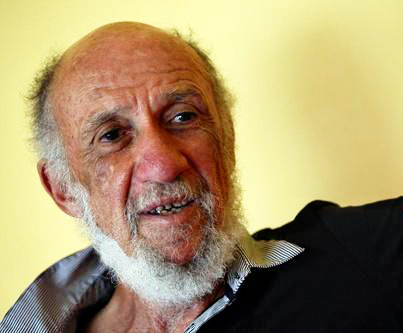
Gareth Porter is an independent investigative journalist and historian who specialises in covering issues related to the U.S. national security state. His books on the Vietnam War and the Iran nuclear issue have reflected a new approach to understanding the outcomes of U.S. national security policy in terms of the institutional and personal interests of the decision-makers.

Porter was the winner of the 2012 Gellhorn Prize for Journalism, named after the renowned American foreign correspondent Martha Gellhorn, given annually by the UK-based Gellhorn Trust for journalism that uncovers government lies and propaganda.

He covered U.S. policy toward Iraq, Afghanistan, Iran, Pakistan, and Syria for Inter Press Service from 2004 to 2014, and his stories were widely republished on news sites such as Huffington Post, Truthout, Antiwar.com and Counterpunch.

Since late 2014, Porter has been writing a weekly column of news analysis or Middle East Eye, a London-based news and analysis site. His longer investigative articles are published regularly at Truthout, and have also appeared on Foreign Policy, Salon, The Nation, the Huffington Post, Firedoglake, Counterpunch and many other websites.

Porter was Saigon bureau chief of Dispatch News Service International in 1971 while working on his Ph.D. in Southeast Asian studies and international politics at Cornell University. He later reported on trips to Southeast Asia for The London Observer, Asian Wall Street Journal and Pacific News Service.

He was Co-Director of the Indochina Resource Center in Washington, D.C., an anti-war education and lobbying organization, from 1973 to 1975, and helped write the last piece of legislation aimed at ending the U.S. war in Indochina definitely, which was filed in February 1975.

Porter’s books
Porter is the author of five books, including one of a widely-used college textbook on global environmental politics and three books on Vietnam and the U.S. war in Indochina. His latest book, Manufactured Crisis: The Untold Story of the Iran Nuclear Scare, published by Just World Books in February 2014, reveals the true story of the Iran nuclear issue that has been hidden and distorted by government propaganda and complete lack of media scrutiny.

In a review in The Nation historian Andrew Bacevich has called his book, Perils of Dominance: Imbalance of Power and the Road to War (University of California Press in 2005), “without a doubt, the most important contribution to the history of U.S. national security policy to appear in the past decade.”

In the 1980s, Porter taught Southeast Asian politics and international studies at American University, City College of New York and the Johns Hopkins School of Advanced International Studies.

From 1990 to 2005, he worked for an environmental organization and then was a consultant on sustaining development and global environment.


Gareth Porter on Wikipedia.

The Western freedom of expression hypocrisy

By Johan Galtung

Johan Galtung

Society is tri-partite: State, Capital, and People with their associations, the Civil Society. There is hard-won and applaudable freedom of expression for People, directed at the State and its feudal predecessors, Clergy and Aristocracy. But how about Capital?

Consider this. Somebody can pay for access to the media – papers, radio, TV – with total freedom of expression of strong views, filling pages and hours of reading space and listening-viewing time; one way. Uncontradicted, nobody writing or voicing contrary views, sowing doubts, coming up with data to the contrary, values, theories against. One-way flow of expression, and not merely a flow of bla-bla words but to induce behavior, even changing behavior; aimed at getting inside readers-listeners-viewers, capturing their spirit to issue new commands to their bodies. Could a tyrant dictator ask for more?Read More »

Eastern Europe is the opposite of Ukraine

By Jonathan Power

Economically Ukraine continues to go down the chute. No other East European has messed up its economic potential, as has Ukraine. During Soviet times Ukraine with its industrial prowess and wonderful fertile soil, making it the Soviet Union’s breadbasket, was a success (by communist standards). Now 25 years of political upheaval, economic mismanagement and greed by the oligarchs have taken a dreadful tool on living standards. The stoicism of ordinary people is to be wondered at. One reason why many easterners want to return to Russia is because they think they will have higher living standards.

In an essay in the December, 2014, issue of Foreign Affairs Andrei Shleifer, a professor of economics at Harvard and Daniel Treisman, a professor of political science at the university of California have presented an analysis of what went right in the other east European countries, and, a for a time, in Russia under President Vladimir Putin. They write: “The East European countries have transformed their militarized, over industrialized and state-dominated systems into service-orientated market economies based on private ownership and integrated into global commercial networks. No longer distorted to fit Marxist blueprints, their economic institutions, trade, and regulatory environments today look much like those of other countries at similar income levels.

These changes notwithstanding, observers often blame post-communist reforms for poor economic performance. Two common charges are Read More »

Jonathan Power’s CV

Jonathan Power became TFF Associate in 1991.

Jonathan Power is a foreign affairs columnist, film maker and author. For 17 years his column ran weekly in the International Herald Tribune. His BBC documentary film, “It’s Ours Whatever They Say”, won the silver medal at the Venice Film Festival. His last book “Conundrums of Humanity – The Big Foreign Policy Questions Of Our Day” – was described by one reviewer as “epic” and by another as worthy of the Nobel Prize. His forthcoming book is entitled “Ending War Crimes, Chasing The War Criminals”.

On the North Carolina killings

Interview with Richard Falk

Richard Falk

Prefatory Note
A short interview on how to interpret the ghastly murder of three young Muslims living in the North Carolina university town of Chapel Hill. Should such a grisly event be viewed as a tragic response of a deranged neighbor whose emotions took a violent turn after a dispute over parking in their common residential community or is it better understood as one more indication of the toxic realities associated with the interplay of gun culture and Islamophobia?

My responses seek to give reasons for adopting this wider understanding of why such incidents, although horrible on their own, are also bringing death to canaries in the mines of American society. As such the embrace of the movie American Sniper can be seen as another dimension of how ‘the long war’ unleashed after 9/11 to satisfy a range of global ambitions is increasingly casting its dark shadow across the domestic life of the country.

We are, indeed, living in a globalizing world where the wrongs done without will be in due course superseded by the wrongs done within. I thank Dan Falcone for his questions that gave me the opportunity to offer these responses.

Dan Falcone
In light of the recent shooting of Muslims in North Carolina, Russian Television was pondering if the killings would have received a quicker, more widespread and more responsive media reaction had the perpetrator been a Muslim, instead of victims, as seen in this case. My thought is that this question is beyond the hypothetical. What are your thoughts?

Response
I think there is every reason to believeRead More »

The Nuclear Zero lawsuits: A conversion of hearts

By David Krieger

The Nuclear Zero lawsuits, initiated by the Marshall Islands, are about the law, but they are about much more than the law. They are also about saving humanity from its most destructive capabilities. They are about saving humanity from itself and about preserving civilization for future generations. They are incredibly important, and I will try to place them in a broader context.

I will begin by sharing two quotations with you. The first is by Jayantha Dhanapala, a Sri Lankan diplomat, former United Nations Under-Secretary General, and long-time and committed leader in the area of nuclear disarmament. He states: “The spectre of the use of a nuclear weapon through political intent, cyber-attack or by accident, by a nation state or by a non-state actor, is more real than we, in our cocoons of complacency, choose to acknowledge.”

The spectre of nuclear use, even nuclear war, is real and most of the world lives in “cocoons of complacency.” It is clear that we must break free from those cocoons, which are as dangerous to the human future as are the nuclear weapons that now imperil us. The Nuclear Zero lawsuits seek to accomplish that.

The second quote is by His Holiness Pope Francis, the leader of the Catholic Church, who has brought new light and compassion to his office. He states: “As long as so great a quantity of arms are in circulation as at present, new pretexts can always be found for initiating hostilities. For this reason, I make my own the appeal of my predecessors for the non-proliferation of arms and for disarmament of all parties, beginning with nuclear and chemical weapons disarmament.” The Pope talks about disarmament in general, but he puts nuclear disarmament, along with chemical weapons disarmament, at the top of his list.

Pope Francis continues: “We cannot however fail to observe that international agreements and national laws — while necessary and greatly to be desired — are not of themselves sufficient to protect humanity from the risk of armed conflict. A conversion of hearts is needed which would permit everyone to recognize in the other a brother or sister to care for, and to work together with, in building a fulfilling life for all.”

“A conversion of hearts.” Can there be any doubt that such conversion is necessary? Can there be any doubt that traditional diplomacy is not getting the job done?Read More »

A visit to NATO’s HQ in Brussels: Nuclear weapons, fear and blame

By Gunnar Westberg

A memory: Russia as a candidate for NATO membership

Members of International Physicians for the Prevention of Nuclear War, IPPNW, have for many years regularly visited the NATO Headquarters in Brussels. We also had good contacts with Russian military officers and Foreign Office politicians. In the middle of the nineties members of NATO’s commission on Nuclear Weapons asked if we could arrange a meeting in Moscow, “because we meet the Russians only under very formal circumstances”. Some open discussions over the vodka were hoped for.

We arranged the meeting and got a group of leading Russian military brass and politicians on the participant list. But NATO hesitated. We were told they could not afford the trip… Finally only one officer, a Canadian, came from Brussels. So there we were with a group of disappointed Russian officers. The NATO representative in Moscow showed up for a couple of hours. She assured the meeting that the relationship between NATO and the Russian military leaders was excellent. Actually, she was looking forward to the time, not too far away, when Russia would be a member of NATO.

That was the dream. But more and more countries from the dissolved Warsaw pact became NATO members. And the connections deteriorated step by step.Read More »

When a terrorist not a terrorist

By Richard Falk

Richard Falk

February 20, 2015

What the Chapel Hill police in North Carolina initially pitched to the world as ‘a parking dispute’ was the deliberate killing of three young and devout Muslim American students by an ideologically driven ‘new atheist’ killer named Craig Stephen Hicks.

What the The Economist unhesitatingly calls ‘terrorism in Copenhagen’ involved the attempted shooting of a Danish cartoonist who repeatedly mocks the Prophet and Islamic beliefs as well as the lethal shooting of a Jewish security guard outside a synagogue.

A friend understandably poses a serious question on Twitter that might have been dismissed as rhetorical overkill just a few years ago: “Are only Muslims capable of terrorism?”

I find it deeply disturbing that while the Chapel Hill tragedy is given marginal media attention except among groups previously worried about Islamophobia and racism, The Economist considers that important principles of Western liberal democracy are at stake apparently only in the European context.

In the words of Zanny Minton Beddoes, the new editor of the magazine: “Jacob Mchangama, a lawyer and founder of a human-rights think-tank called Justitia, told me it would be a disaster if his country were to grow faint-hearted in its defense of free speech. ‘There can be no truce in the struggle between secular democracy and extremism,’ he says. Above all, politicians should avoid the trap of saying or implying that violence was really the fault of provocateurs, or that religious insult was to be equated with physical injury. Giving in to that sort of relativism would be letting down those followers of Islam who were brave enough to stand up for free speech, and indulging in a sort of “bigotry of low expectations”, said Mr Mchangama, whose paternal forebears were Muslims from the Comoros Islands. A good point.”

I am quite sure that this is not a good point, at least as phrased by Mr. Mchangama.

Of course, governments should take action to protect all who are violently threatened, but to refuse to regard Islamophobic messaging as a species of hate speech while so regarding anti-Semitic slurs or Holocaust denial is to combine two things that are both unacceptable: ignoring the root causes of political extremism and pathological violence; and prohibiting and punishing anti-Semitic utterances as hate speech while treating anti-Islamic or Islamophobic speech as requiring protection from the perspective of ‘freedom of expression.’ Read More »

North Korea’s nuclear bomb once again

By Jonathan Power

17th February 2015

If there is such a thing as a “frozen conflict” the best place to look is not in Eastern Europe but in Korea where after years of merciless war that ended in 1953 there was an armistice, a line was drawn across the Korean peninsular and its two halves went their separate ways- one, the south, to fast capitalist development and the other, the north, to stultifying dictatorship that seemed to do only one thing competently – build nuclear bombs. Today there is no war on the Korean peninsular but there is no peace.

Presidents Bill Clinton, George W. Bush and Barack Obama have all tried to negotiate an end to North Korea’s nuclear bomb program and to bring to a close the military stand-off between north and south. All their attempts have come to naught, not just because of North Korean stubbornness but also because of Republican majorities in Congress which have constantly undermined what seemed to be breakthroughs in negotiations.

Now Obama has summoned up the strength to return to the ring. The two countries’ nuclear envoys have been discussing the idea of “talks about talks”. A majority of long time observers are doubtful that after two decades of on/off negotiations that real progress can be made.

But they forget the major progress made by Clinton Read More »

I am not a Dane

By Jan Oberg

Jan Oberg

NO to being included in the Denmark of the Government and Parliament

Written in the wake of the official Danish reactions to the tragic, horrific murders in Copenhagen of a Danish film director and a Jewish Danish guard outside the synagogue in Copenhagen on Saturday February 14 – a crime committed by a 22 years old Danish Muslim with a heavy criminal record and one foot in Denmark and one in a Palestinian refugee camp in Jordan.

I’m a Danish citizen. I’ve worked for the UN Charter norm of peace by peaceful means for 40 years. Have been a member of the Danish government’s Commission for Disarmament and Security all through the 1980s. I’ve worked in war and conflict zones in Somalia, all parts of Yugoslavia, Burundi, Iraq, Georgia, Iran.

I have friends and colleagues in many countries and cultures. I know things can be seen in more than one way – and how the West may also be perceived from the outside.

I will use my freedom of expression and wisdom of expression and our democracy to struggle against the warring Denmark which Prime Minister Helle Thorning-Schmidt insists that we Danes shall all be united around.

Denmark is not only a victim. It has also caused many victims.

It has violated international law and participated in mass murders on the Iraqi and other people, innocent people. On the initiative of then prime minister Fogh Rasmussen it has fought a cultural battle (kulturkamp) not with but against other cultures – related to the Muhamad caricatures. His government was also responsible for dragging Denmark into being an occupation power during four dark years in Iraq – and thus co-responsible for today’s situation there. Likewise in Afghanistan and Libya.

Over a couple of decades Denmark has developed a political xenophobia which I would never have thought even remotely possible a couple of decades ago because of basic values such as welfare for all, solidarity, equality, peoples’ colleges, philosopher poet Grundtvig, disarmament, the compassion for the Jews in October 1943, the fundamental belief in human dignity and tolerance.

The Danmark which the Prime Minister demagogically includes ”all we Danes” in and insists that we all be united around in her misplaced, all-motherly manner, is not the Denmark I want to be included in.

If so, I am not a Dane these days.

I want a Denmark for peace by peaceful means – and in that struggle we dissidents may meet, however few or many we seem to be.

But I draw my line at a national(istic) forced inclusion in the warring, xenophobic and segregated Denmark that has been created the last few years.

And this is not easy for me to write.