U.S. leadership against Russia crippled by its own hypocrisy

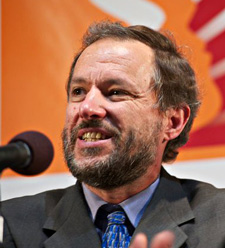
By Stephen Zunes

Washington’s major limitation towards Russia is not a lack of military leadership, but a lack of moral leadership

The fragile ceasefire between the U.S.-backed Ukrainian government and Russian-backed rebels could help pave the way to a peaceful resolution to the conflict—or simply postpone a worsening of the crisis. Unfortunately, Washington’s leadership of international efforts against Russian aggression has been severely compromised by its own hypocrisy and double standards.

As with Russia in eastern Ukraine, the United States has a long history of arming, training, and even providing personnel in support of rebel groups in such countries as… Continue reading here.

May peace prevail on earth – not only on Peace Day but every day

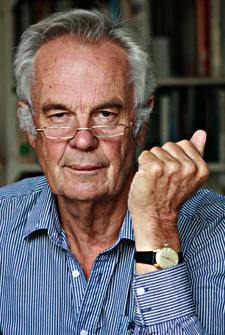
By Johan Galtung

Johan Galtung

What a good idea, this day! To reflect, take stock, to enjoy peace, to deplore non-peace.21 sep day of peace

And the first reflection is this: peace is the normal condition of humanity, just like health. There is so much plain, simple, decent behavior around, so much mutual aid, a helping hand, companionship, friendship, good neighborhood when bad luck strikes at its worst. And we sense mutuality, unquestioning reciprocity; not always but mostly.

Go to an airport, stay close to where they come out, arrival, and are met by their nearest–watch the embraces, the warmth, the eyes glittering, the smiles, laughter. There we are. Harmony, resonance–with the occasional deep, joint sadness, sorrow; something has struck.

Go to a restaurant, not too stiff, formal–more ordinary eatery. And you see it again, the pleasure, food, drinks, togetherness, the shared pleasure – the jokes, the smiles.

Most of the time – then some incident, issue arises.Read More »

TFF PressInfo 280: Danish F16s to fight ISIS: Danish government more loyal with the U.S. than with its own citizens

By Jan Oberg, TFF
Lund, Sweden September 26, 2014

What’s your image of Denmark? Apart from the Little Mermaid, Carlsberg beer and H.C. Andersen perhaps something with decency, welfare, development aid, equality and peace?

Unfortunately, that image is outdated. During the last good 15 years Denmark has participated in wars on/in Yugoslavia and Afghanistan, it was an occupying country in Iraq for four years and a main bomber nation of Libya.

The government’s decision earlier today to send 7 F16s to fight with the U.S. increases the risk of terror actions against Denmark.

It must have been known for quite some time since, about a month ago, the Danish government decided to send a Hercules transport plane with humanitarian aid to Iraq. Most likely, it was a set-up because it was immediately changed into a Hercules transport plane + 55 soldiers to assist the U.S. and the Kurds.

Today’s decision is a violation of the UN Charter – the spirit of the Preamble as well as Article 1 which states that peace shall be established by peaceful means – and, later, only when everything has been tried and found in vain can a military action be decided.

Denmark must now calculate with Danish casualties and, even more worse, with taking responsibility for scores of innocent civilians’ death – something that can’t be avoided when targeting individuals from the air.

The decision documents that Denmark has learnt nothing from the earlier – failed – wars and that it does not have alternative expertise.

The common sense, solidarity and humanity that characterised Denmark, at least to some extent, about 20 years ago is now eradicated and replaced by thoughtless militarism; its only guideline has been and is: Accept willingly and unconditionally what the US does and follow it when it calls upon you to do its dirty job – His Master’s Voice.

If you think I exaggerate: There is not one major policy or decision the last 30-40 years where Denmark has shown the courage to stand up against Washington.

Millions of dollars are allocated to state-financed research institutes, military analysis centres and mainstream thinking that “explains” and legitimizes the policies. (The only peace research institute, COPRI, which was very well evaluated by international scholars was destroyed by the government of Anders Fogh Rasmussen who also made Denmark an occupying power – only to be rewarded with the position of NATO Secretary-General).

It is my judgement that the decision to participate in the war on Iraq was the largest foreign policy blunder in Denmark since 1945.

I wrote ”Predictable Fiasco” in which the present situation in Iraq was predicted fairly precisely and I presented a 20-point plan on what to do instead of war.

Thus I don’t know how to characterise a decision by a Social Democratic-led government to go to war in Iraq for a second time!

PM Helle Thorning Schmidt presented the decision around lunch time today Friday September 26. Each of her arguments and assumptions were dubious, anti-intellectual and constructed to suit the event

1) She said that this was not a war because ISIS is not a state (!!) – now you know the level of what followed.

But this is war no matter what her spin doctors may have invented. Those who in the thousands will be killed – ISIS people as well as civilians – can’t see it as anything but war. And nothing but military equipment is being used.

2) As mentioned above, the decision violates the UN Charter.

3) Mission creep is already a fact.Read More »

The threat of ISIS should be taken seriously (Part 1)

By Farhang Jahanpour

Part 2 of this series.

A shorter version of this article was published by IPS

The Origins

When all of a sudden ISIS (Islamic State in Iraq and Sham) emerged on the scene, and in a matter of days occupied large swathes of mainly Sunni-inhabited parts of Iraq and Syria, including Iraq’s second city Mosul and Saddam Hussein’s birthplace Tikrit and called itself the Islamic State, many people, not least Western politicians and intelligence services, were taken by surprise.

This feeling of shock and repeated reversals in the past has been due to widespread ignorance or the willful neglect of history, and general unwillingness by politicians and pundits to look at the reality as it is or to explore the root causes of the issues in the Middle East from a historical, religious and ethnic point of view.

Most politicians have been afflicted by short-termism and they stumble from one crisis to the next without an overall strategy and without the ability to look beyond their noses.Read More »

ISIS, militarism and the violent imagination

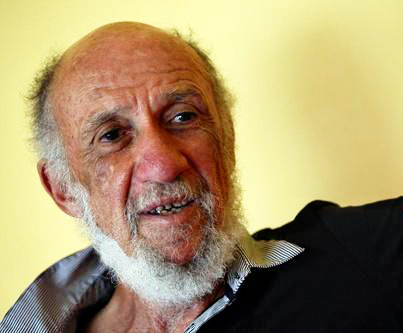
By Richard Falk

Richard Falk

Before ISIS

The beheading of American and British journalists who were being held hostage by ISIS creates a truly horrifying spectacle, and quite understandably mobilizes the political will to destroy the political actor who so shocks and frightens the Western sensibility, which is far from being free from responsibility for such lurid incidents.

Never in modern times has there been a clearer example of violence begetting violence.

And we need to ask ‘to what end?’ Political leaders in the West are remarkably silent and dishonest about what it is that they wish to achieve in this region beset since 2011 by a quite terrifying outbreak of political extremism, whether from above as in the cases of Syria, Egypt, and Israel or from below as with ISIS and al-Nusra.

It is difficult to recall that at the start of 2011, just three years ago, progressive voices around the world were inspired by the Arab upheavals, especially in Egypt and Tunisia, that burst upon the political scene unexpectedly.

These extraordinary events appeared to repudiate the prevailing patterns of authoritarian, exploitative, and corrupt collaboration between oppressive domestic elites, neoliberal economic forces, and the regional imperial juggernaut that had kept this humanly disastrous reality stable for so long. Yet even during that time of optimism about the Arab future, a closer scrutiny of what was happening disclosed many reasons to be worried. It is helpful to look to this recent past to have some comprehension of the perplexing present.

A Revolutionary Spirit Without Revolutionary Action

The goals of these upheavals were far too ambitious to be realized by such limited challenges directed at the established order. These movements were essentially confined to getting rid of a hated ruler. Read More »

The long shadows of history

By Johan Galtung

Johan Galtung

As Carl Gustav Jung said, and the Chinese before him–the shadows are long and dark. Jumping does not help, they follow us. Thus, the USA is wrong in believing that they can get away with the misdeeds of the past, that people will forget; they are not historians. Moreover, when done by the USA, deeds are not evil, at worst “tragic”, and not only for the victims but also for the perpetrators accused.

Take Ferguson, Mo. and the militarization of the US police. The s-word “slavery” is whispered in the shadows – and shouted in books like Walter Johnson, River of Dark Dreams, Slavery and Empire in the Cotton Kingdom. It was forced labor to put it mildly, with chains and whips. And in the world No. 1 in prisoners, the USA, we find a disproportionate number of blacks for petty crimes on forced labor with chains–sold to employers; prisons even on the stock exchange.

Take the indigenous, the g-word “genocide” is whispered, and the e-word is shouted in G. C. Anderson Ethnic Cleansing and the Indian.

Shadows take shape in the collective memory, the conscious part. In the deep culture: “one day they will come and do to us what we did to them”; making the fear of a major revolt self-fulfilling.

The darkest shadows are inside the collective subconscious. The feeling of being on the wrong side of history, not only losing wars and an empire, has come to many, even if not yet to that bipartisan Congress. Despair, apathy, suicide; individually or as mass murder. A feeling of sliding downhill in the country used to always outdo itself.

The leadership tries to find somebody outside to blame, revives Russia from the Cold War, ever more Muslims from the war on Islam declared by NATO in 1992 as the successor to the Cold War – all the time against the shadows whispering, watch yourself USA, these calamities are basically of your own making. You may jump at others, execute them–but the shadow follows you faithfully, growing darker.

How does one process dark shadows?

By confronting them!Read More »

A hard fist inside a velvet glove

By Jonathan Power

Despite Ukraine, Syria, Iraq, Libya, Afghanistan, Israel/Palestine and Southern Sudan the world is a lot more peaceful than it was at the end of the Cold War and shows no sign of returning to the bad old days when there were some 25 wars going on every year. Now it is down to about a dozen.

The task today is to keep that number going down – a difficult job when the outbreak of conflict in Syria, Libya and Ukraine have turned the graph upwards a few notches for the first time.

Protagonists in political quarrels tend to push the non-violent activists to one side – as they have done in Syria, Libya, Gaza and Ukraine.

This is not a good tactic as these situations have clearly shown. In Syria whole parts of cities have been reduced to rubble. Likewise in Gaza. In Ukraine this is starting to happen.

In the current issue of Foreign Affairs Erica Chenoweth and Maria Stephan argue that the prospects for civil resistance to bring about political change are commonly undersold.Read More »

TFF PressInfo 279: Hot Russian-US discussion in Moscow

By Jonathan Power

September 16, 2014
 
A couple of days ago I was on the Moscow metro. In the interchange I asked two twenty something young women the direction. Then they asked me did I like Russia? I asked them the same question and they said “no”. They didn’t like the way President Vladimir Putin was restricting freedom.

Then I asked them what they thought of Ukraine. They said that it upset them. They had some Russian-speaking friends living in eastern Ukraine and the friends didn’t feel the militias represented them.

Interestingly, the women said they knew there were Russian troops in Ukraine.

This was one of the most explicit but rare condemnations of Russia that I came across.

I also talked to two groups of students at Moscow’s prestigious Institute of World Economy and International Relations, where I had been invited to speak by the US-Russian Forum, where top think-tankers and academics tried to thrash out their differences.Read More »

Flaws in US Thought – And Some Remedies

By Johan Galtung

Johan Galtung

Kuala Lumpur, September 8

Obama faces a “three-headed monster” (INYT 5 Sep 2014): Russia-Ukraine, ISIS, and Asia with a US “pivot”. Show NATO strength in Eastern Europe; crush ISIS (Colin Powell’s 9/11 remedy for Al-Qaeda); 60% of US force and “all but China” treaties in Asia-Pacific.

It is not going to work.

Not with Obama-Biden-Kerry, nor with McCain; be it one monster with three heads or three with one each. There is no way in which Donbass will become a peaceful, integrated part of a unitary two-nation Ukraine; the Sunni-Arab world will find ways to integrate and undo Sykes-Picot; and no way in which one Asia-Pacific will choose USA over China. They want both, as the PM of Malaysia, Najib Razak, expresses it so well; eulogizing both.

For possible solutions or ways out see below; first a focus on the head of the US monster with a heavily flawed brain. Of course there are many US voices on top, heated discussions; however, policy, action produced by thought, comes as if from one brain to show unity.

However, the flaws are also many, producing and reproducing bad policies: Read More »

Russell Tribunal Session on Palestine

By Richard Falk

Richard Falk

Prefatory Note

On September 24 a special session of the Russell Tribunal will examine war crimes allegations against Israel arising from the 50-day military operation that commence on July 8th.

The Tribunal has developed a record of examining the criminality of state actors that enjoy impunity internationally because they are insulated from accountability by what I have called a ‘geopolitical veto’ in this case exercised by the United States and several major European countries.

Where governments and the UN fail to implement international law, there exists a right of peoples to play a residual lawmaking function. It is somewhat analogous to the residual role that the General Assembly is empowered to play when the Security Council is unable or unwilling to perform its primary role in relation to international peace and security.

To fill this normative vacuum the Russell Tribunal has long played made an honorable contribution to what might be called ‘the empowerment of legal populism.’ I encourage attentiveness to this event, including publicizing its occurrence and disseminating the results of its deliberations.

As the announcement below indicates, I am proud to be a member of the jury for the session along with a series of truly distinguished and qualified high profile international personalities known both for their professional achievement and for their principled stands as ‘citizen pilgrims’ dedicated to a humane future shaped by global justice.

Israel’s Crimes in Gaza during Operation Protective Edge – Extraordinary session of the Russell Tribunal

24-25 September – Brussels – Albert Hall, BrusselRead More »