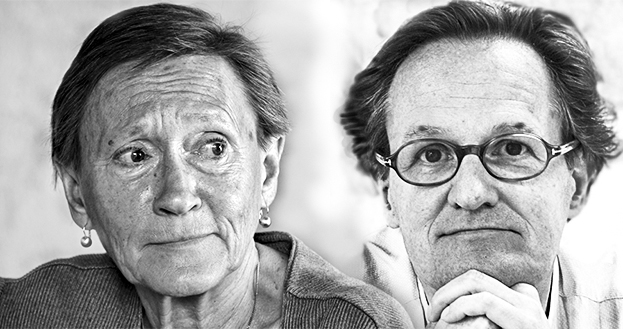
TFF PressInfo 355: The deeper reason Syria negotiations are doomed

By Jan Oberg

Negotiations were supposed to start in Geneva today, January 25. The media is full of analyses of why it won’t happen and how virtually everybody disagrees with everybody else about who should be there and who should not. That’s all surface, however.

Objectively speaking is it of course hugely difficult. No one would envy chief UN envoy, Italian-Swedish diplomat Staffan de Mistura. That said, a totally different perspective may be helpful:

It has to do with a simple distinction that few still in the international community are able to make – that between the conflict and the violence in the conflict zone. Almost all conflicts can be mitigated or solved – but the more violence infused into the conflict (and the longer it lasts), the more difficult it will be to find a solution – because on top of the original conflict you build anger, sorrow, wish for revenge, traumas and justifications for counter-violence.

It’s a simple as that.

Everybody confuses the two – the underlying conflict that should have been addressed from Day One and the violent means that should not have been delivered from outside in the shape of arms, ammunition and bombings.

However, the world’s decision-makers continue – seemingly unable to learn – to put weapons before peace.

The Syrian conflict had to do with peaceful demonstrations, an authoritarian human rights violating national leadership, an environmental crisis that had made people migrate into cities; it had to do with an immensely complex history, society with many groups and fractions – and with the interests of neighbouring countries. And it came in the wake of failed wars and weaponization/wars of Afghanistan, Iraq and Libya.

And all conflicts have to do with grievances, incomptaible goals and wishes, fears, trauma, economic and other structures as shaped through history – and they have to do with the West’s historical influence – most violent and detrimental – in the region.

All of it is left aside. The focus is on nine other amateurish, superficial matters – see below.

So, yes, turmoil all over the place – but also something somebody somewhere should have learned something from. They did not. They put the outdated military “security and stability” before peace – and lost it all.

The Western world – read US/NATO, Russia joining later – un/anti-intellectually brought it all on the old hopelessly false and counterproductive formula’s 9 elements: Read More »
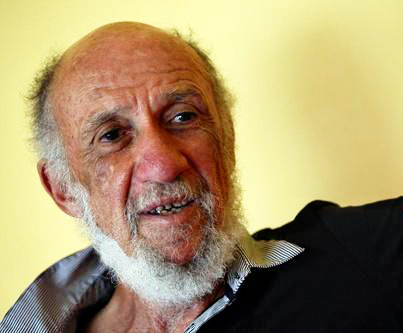
TFF PressInfo # 354: Open Letter – Political responsibility in the Nuclear Age

By Richard Falk, David Krieger and Robert Laney

Prefatory Note
What follows here is An Open Letter to the American People: Political Responsibility in the Nuclear Age. It was jointly written by Richard Falk in collaboration with David Krieger and Robert Laney. The three of us have been long connected with the Nuclear Age Peace Foundation, NAPF.

The NAPF focuses its effort on the menace posed by nuclear weaponry and the urgency of seeking nuclear disarmament. The nuclear agreement with Iran and the North Korean nuclear test explosion are reminders of the gravity of the issue, and should serve as warnings against the persistence of complacency, which seems to be the prevailing political mood judging from the policy debates that have taken place during the early stages of the 2016 presidential campaign.

This complacency is encouraged by the media that seems to have forgotten about nuclear dangers since the end of the Cold War, except for those concerned with proliferation of the weaponry to countries hostile to the United States and the West (Iran, North Korea).

Our letter proceeds on the assumption that the core of the problem is associated with the possession, development, and deployment of the weaponry, that is, with the nine nuclear weapons states. The essence of a solution is to eliminate existing nuclear weapons arsenals through a phased, verified process of nuclear disarmament as legally mandated by Article VI of the Non-Proliferation Treaty (1968).

We would be grateful if you could help us reach the widest possible audience through reposting and dissemination via social media networks.*

• •

Dear fellow citizens:

By their purported test of a hydrogen bomb early in 2016, North Korea reminded the world that nuclear dangers are not an abstraction, but a continuing menace that the governments and peoples of the world ignore at their peril. Even if the test were not of a hydrogen bomb but of a smaller atomic weapon, as many experts suggest, we are still reminded that we live in the Nuclear Age, an age in which accident, miscalculation, insanity or intention could lead to devastating nuclear catastrophe.

What is most notable about the Nuclear Age is that we humans, by our scientific and technological ingenuity, have created the means of our own demise. The world currently is confronted by many threats to human wellbeing, and even civilizational survival, but we focus here on the particular grave dangers posed by nuclear weapons and nuclear war.

Even a relatively small nuclear exchange between India and Pakistan, with each country using 50 Hiroshima-size nuclear weapons on the other side’s cities, could result in a nuclear famine killing some two billion of the most vulnerable people on the planet. A nuclear war between the U.S. and Russia could destroy civilization in a single afternoon and send temperatures on Earth plummeting into a new ice age.

Such a war could destroy most complex life on the planet. Despite the gravity of such threats, they are being ignored, which is morally reprehensible and politically irresponsible.

We in the United States are in the midst of hotly contested campaigns to determine the candidates of both major political parties in the 2016 presidential faceoff, and yet none of the frontrunners for the nominations have even voiced concern about the nuclear war dangers we face. This is an appalling oversight. It reflects the underlying situation of denial and complacency that disconnects the American people as a whole from the risks of use of nuclear weapons in the years ahead.

This menacing disconnect is reinforced by the media, Read More »

TFF PressInfo # 353: “Transnational Affairs” – TFF launches new online “flip” magazine

Lund, Sweden, January 18, 2016

Today, on Martin Luther King Jr. Day, TFF launches its new online “flip” magazine, “Transnational Affairs”.

Social media posts may soon be forgotten, too far down your feed to find.

We now curate them – 10-15 a day – at “Transnational Affairs” and include other important debate articles, blog posts, analyses and videos you’ll only find here.

That’s why you should click “follow” on this magazine – and Like it too – a treasure trove of quality materials for the concerned citizen, media person, student and researcher.

We curate “Transnational Affairs” to help you understand – easily flipping – what happens in our troubled world and what could be done to make it much better.

“Transnational Affairs” reflects the diversity of TFF’s work and themes – such as peace by peaceful means, nuclear issues, Iran, Syria, Burundi, the Balkans, non-violence, UN matters, world order change, the weakening of the U.S. Empire, refugee and why and how war can be replaced by more intelligent methods.

“Transnational Affairs” is based on our 30 years in business and our commitment to truly independent research and public education.

Furthermore, it’s a completely new and exciting way of browsing on your tablet or phone – you “flip” the magazine’s content.

Learn, be inspired, act – begin here. There are already 560 articles…

TFF PressInfo # 351: The Nobel Foundation taken to court on the Peace Prize

Lund, December 10, 2015

On the day of the Nobel Peace Prize Award Ceremony at Oslo City Hall

To whom it may concern, including the media

We know – and Alfred Nobel knew – how devastating war and arms races are, and how little security we get for all the money we spend on military forces.

The campaign to reclaim the Nobel Peace Prize is first and foremost a campaign to revive the idea that global peace requires global cooperation on disarmament and replacing the law of force with the force of law. Every day more and more of us see, from the Middle East warfare, from the refugee crisis, and many other chilling reminders, the mandatory urgency of a change in world politics.

Alfred Nobel decided to give one fifth of his fortune for a prize to promote disarmament and resolution of all conflicts through negotiations and legal means, never through violence.

Can such a prize, with a so clearly stated goal, be turned to serve the opposite idea and be given again and again to recipients who promote arms races and believe in militarism and war?

This question will soon be answered, after Mairead Maguire, Jan Oberg, Davis Swanson, and Lay Down Your Arms took the case to the Stockholm District Court on Friday 4th of December 2015. Here is the full text of the summons.
and all other relevant information is available at the Nobel Peace Prize Watch.

Test case: the award to the European Union in 2012

The court case will test one of the most obvious violations of the Nobel idea Read More »

TFF PressInfo # 349 – Burundi’s crisis and the world’s inability to prevent violence

By Jan Oberg

Lund, Sweden, November 9, 2015


The big – not great – powers of the world have embassies everywhere, plenty of intelligence services, special forces on the ground and satellites in space. They can even hit and kill individuals they don’t like.

They can intervene here and there and everywhere – particularly if they have economic or strategic interests or their own nationals are in danger.

These very weeks they can squander incredible sums of taxpayers’ money on new nukes and huge paranoia-based military exercises in a Europe – to which over a million refugees come because these big – not great – powers have contributed to the destruction of their houses, villages, life opportunities, whole countries and cultures.

So it’s amazing what the big ones can do. It would be impressive if it wasn’t so destructive and self-defeating. Again and again.

The only things they don’t seem capable of, however, is to:

a) fulfil their self-appointed mission called Responsibility to Protect and prevent violence where they have no interests and to

b) contribute to making life better for all and create genuine peace, justice and development.

Take Burundi.

There is a colonial history as well as a history of genocide, extreme poverty and corruption, ten years of economic and other mismanagement under the ever more authoritarian rule of Pierre Nkurunziza.*

Since April this year, there have been tons of indicators that something really bad could happen. The trained observer cannot fail to see the pattern, the incremental, systematic increase of repression of the people.

It’s all well summarised in this background article. 

And what do the big powerful do over 6 months with this potential crisis, possibly civil war or genocide – knowing full well about it?

Absolutely nothing!Read More »

TFF PressInfo # 348 – After 70 years: The UN falls short, and yet…

By Richard Falk

The United Nations turns 70 today. It isn’t “we, the peoples” – it is “we, the governments”. It’s in need of reform but we must also remember that its first Secretary-General Trygve Lie said in 1948 – that it will never be stronger or better than the member states want to make it.

Whatever you think of it, we certainly can’t do without it, nor without its Charter that is still the most Gandhian document, all governments have ever signed.

If its member governments were not so navel-gazing, it would be the best vehicle for global governance – for globalising democracy in a world where the economy and the military as well as communication and culture are all globalizing while politics is still anchored in parliaments in increasingly irrelevant nation-states.

And why not set up a People’s Assembly? Establish UN Embassies in each member state and let people vote for who shall represent their country in the UN?

All doable with a little creativity and good will – for the common good, the common future.

Below, please find the thoughts at the UN’s 70th Anniversary of one of the finest international law and peace experts we have who has also worked with the UN for many years.

– Jan Oberg

Prefatory note

A shorter somewhat modified version of this post was published in Al Jazeera Turka, but only in Turkish translation. The thesis set forth is that the UN has disappointed the expectations of those who took seriously its original promise of war prevention, but that it has over its lifetime done many things that need doing in the world.

It also provided a meeting place for all governments, and has developed the best networking sites for all those concerned with the state of the world and what can be done by way of improvement. The UN System faces an important test in the upcoming Climate Change Conference to be held in Paris at the end of November. The event is billed as the make or break session for the governments of the world to agree finally on a strong enough framework of constraint governing the release of greenhouse gasses to satisfy the scientific consensus.

If Paris is generally regarded as successful, the UN stock will rise steeply, but if it should fail, then its stature and role of the Organization could become even more marginalized. Either way, the UN as of 2015 is a very different kind of political actor than when it was founded in 1945, disappointing to those that hoped for permanent peace and some justice, while pleasing to those that sought from the outset a wider global agenda for the Organization and felt that its best contributions would likely be in a wide range of practical concerns where the interests of major political actors more or less overlap.

After 70 Years: The UN Falls Short, and Yet..

When the UN was established in the aftermath of the Second World War hopes were high that this new world organization would be a major force in world politics, and fulfill its Preamble pledge to prevent future wars. Seventy years later the UN disappoints many, and bores even more, appearing to be nothing more that a gathering place for the politically powerful.

I think such a negative image has taken hold because the UN these days seems more than ever like a spectator than a political actor in the several crises that dominate the current agenda of global politics. This impression of paralysis and impotence has risen to new heights in recent years.

When we consider the waves of migrants fleeing war-torn countries in the Middle East and Africa or four years of devastating civil war in Syria or 68 years of failure to find a solution for the Israel/Palestine conflict or the inability to shape a treaty to rid the world of nuclear weapons, and on and on, it becomes clear that the UN is not Read More »

TFF PressInfo # 346 – Ten articles on the nuclear treaty with Iran

By Farhang Jahanpour

Lund, Sweden, October 21, 2015

It is with pleasure we send you ten recent articles about Iran, the West and the background to the treaty concluded about Iran’s nuclear technology. They are written by Dr. Farhang Jahanpour, Oxford University, who is also a member of TFF’s board.

Given the generally insufficient and/or biased knowledge in media and politics about Iran and this cluster of issues, TFF is proud to have a world renowned expert with Iranian roots sharing his knowledge.

1. Iran and the Non-Proliferation Treaty

2. Nuclear states do not comply with the Non-Proliferation Treaty

3. The early history of Iran’s nuclear programme

4. The recent stages of Iran’s nuclear programme

5. Iran and nuclear weapons, a dangerous delusion

6. The Rubicons that have been crossed

7. Iran’s commitments under the Nuclear Treaty are just short of surrender

8. Israel’s opposition to the Nuclear Treaty with Iran

9. Iran’s nuclear deal and the regional countries

10. The nuclear deal’s impact on Iranian domestic and foreign policy

PressInfo # 347 – The world beyond global disorder

By Johan Galtung

Johan Galtung turns 85 on UN Day 2015

The global nation-state based system is in deep crisis. The West’s relative decline is obvious, except to the West itself. This multi-dimensional crisis will, of course, give way to something new – but what?

Lack of vision – sometimes even of knowledge and empathy – among those in power seems a defining characteristics of our times.

Individually as well as nationally, we are living in iTimes, not weTimes. Add to that blowbacks from history and Western knee-jerk militarist responses – and the next few years will be tough.

The creativity and innovation we find in commercial and social entrepreneurship and in the arts, seem frighteningly absent in the world of politics.

Who would get elected anywhere on having an exciting vision for the the world the next 25 or 40 years? No, you must know about national affairs and economy – while, by the way, national economy doesn’t exist anymore.

Few young people, including students or young scholars, find it attractive to join party politics.

But can humanity survive with only criticism, negative energy, bad news and no vision?

Will we work for a better world if we can’t see it?

Dr. Johan Galtung has devoted his life to the vision of a less violent, more peaceful world – from the local to the civilisational level – implementing the norm of the Charter of the UN – turning 70 on October 24, 2015 – that peace shall be established by peaceful means.

Galtung – one of a handful of peace visionaries with a macro perspective – himself turns 85 on UN Day. He has mediated in more than 100 conflicts since 1957 and published 164 books. And he still travels the world speaking and writing. More about him here by Antonio. C. S. Rosa.

He is one of the youngest and most innovative minds in world affairs, always asking the essential, healing question: What can be done?

That’s what the good doctor does – helps conflicting parties address their problems, reduce their violence and develop a vision of a better future – together or side-by-side with respect.

Making the seemingly incompatible more compatible through creativity, dialogue, vision.

Here is his latest column – which TFF publishes every week. It synthesizes where we stand and ought to go.

As humanity.

And with humanity.

– Jan Oberg

And now Galtung himself…

Keynote, 13th Session World Public Forum “Dialogue of Civilizations” – Rhodes, Greece, 9 Oct 2015

The strength of this forum is its civilization focus; let us use it for analysis and remedies. Major forms of disorder use violence; war is state organized violence. The most belligerent states are the United States of America and Israel, both with civilization roots.

National Evangelism, the US Protestant Christian civilization – more national than evangelical – justifies US warfare as exceptionalism of a people chosen by God, with a manifest destiny to run the world. Orthodox Judaism justifies Israeli warfare to conquer and expand from Nile to Euphrates as a religious right and duty to the Eternal One.

The third most belligerent country, the UK, no longer believes it is God-chosen but chosen by the USA; not quite the same but something.

The root causes – and soften the ideas

But the root cause of global disorder lies in the Occident – with Islam – seeing itself as the single, universal civilization valid for all at all times, all others being mistakes. Missionary activity, slavery, colonialism, exploitative trade, robbery capitalism, follow.

The USA got from Judaism the idea of Chosen People-Promised Land. Yet Israel is Read More »

TFF PressInfo # 345 – Nobel Peace Prize and Lawsuit

Lund, Sweden, October 10, 2015

The Nobel Peace Prize 2015 is certainly a little step in the right direction to honour at least parts of Alfred Nobel’s will.

It doesn’t violate the Will of Alfred Nobel which has happened so many times before.

And it’s good that the new chairperson made explicit reference to Nobel’s Will since the Committee has, for years, ignored the intentions and the criteria in it.

It’s good too that it was oriented toward civil society and dialogue rather than governments and violence.

But it is still a far cry from Nobel’s international vision of a world in which there is much less militarism, armament, armies and warfare.

This is what media and many others have still not understood well. As long as somebody nice gets is – Malala last year – everything seems fine.

The Will is very short and should be read by those who report or comment professionally Read More »

TFF 30th Anniversary Benefit Event

Lund, Sweden, September 5, 2015
Updated September 5 and our apologies if you’ve received this before.
We want to catch all and miss no one over all these years.

Dear friend!

We are happy to invite you to the TFF 30th Anniversary Benefit Event !
September 11-12, 2015

Live Lectures by videostream
Exciting lectures on world affairs and peace over two days – See program below.

This is not an invitation to visit the foundation in person.
It is an online, live video streamed event that you will be able to follow from anywhere in the world
Here is the link and it’ll also be shown via Facebook, Twitter and on our website.
And all the lectures will be available later as videos on our own video channels.

Open House at the foundation
Saturday September 12 at 14:00-17:00
It’s at Vegagatan 25 in Lund, Sweden – deadline for your registration September 7.

1. Lectures on-site with live streaming

We’ll shortly tell you the links where you may see it all and where videos will later be available.

Lecture program

Friday September 11

Live, video streamed:

16:00
September 11: Alternatives to the devastating War On Terror – Jan Oberg

17:00
TFF 30 Perspectives – TFF Associates and Board on the better world we dream of – And cheers!

Saturday September 12

Live, video-streamed 10:00-18:00

10:00
Iran And the Nuclear Issues – Gunnar Westberg

11:00
Integration – Why and how? Example: Afghan Youth In Sweden – Christina Spännar, Sweden

12:00
Nuclear abolition is necessary and possible – Gunnar Westberg, Sweden

13:00
West and East: Ukraine and New Cold War? – Jan Oberg

14:00
Human Rights And War Crimes – Jonathan Power, UK/Sweden

15:00
Women, Self-Esteem and Violence – Annette Schiffmann, Germany

16:00
Yugoslavia – What Should Have Been Done? – Jan Oberg (in Memoriam Håkan Wiberg), DK/Sweden

17:00
Media and Peace – Sören Sommelius, Sweden

18:00
Burundi’s Crisis And Possible Ways Out – Burundi expert

2. Open House hours 14-17
Buffet, drinks, coffee and tea, cakes and other sweets.
You must register your visit by September 7 at the latest at TFF30@transnational.org or call 0046 738 525200.

3. Peace with peaceful means
The day is devoted to the – ongoing – struggle for ”peace by peaceful means“ as the UN Charter puts it. Gandhi said that the “means are goals in-the-making”. To realize that noble goal remains the mission of TFF. Today we show you how and promote all related activites with the help of social media and new video technologies.

4. This is a Benefit Event – Your support to TFF please!

TFF is unique in being totally independent of government and corporate funds. It’s people-financed. No one related to TFF has a salary; we’re all-volunteer.
This provides for truly free research and permit us to be critical and constructive and practise our freedom of expression. Not everyone can boast that today!
Wars, nuclear and conventional arms, bombing raids and occupations etc. are financed by your tax money. Sadly and unfairly, no tax funds go to realise the UN norm above.

We think that people who believe that peace is better than violence should also pay something to the research, education and activism in favour of that UN norm.
If you can come to Lund on our big day or sit somewhere following our rich lecture program, we urge you strongly to make a donation. Every day over 30 years, TFF has given the world something useful.

You can do it right in the middle of our homepage – click the “Give” button or under the headline “Support” in the right-hand column where many options exist, including PayPal. It easy, fast and secure!
Cash – but no cheques – can also be donated at the event.* *

Thank you so much!

5. Videos
We’re proud to present the first two short videos – 3 more to come – in which the founders talk about various aspects of 30 years in the service of peace on the basis of questions asked by board member Annette Schiffmann. Watch, comment and subscribe!

The First

The Second

6. Brand new Online Magazine
The announced online magazine launched to mark our Anniversary is now here!

“Transnational Affairs – TFF Magazine for conflict-resolution, non-violence and peace-building”

Excited as we are, we’ll be back to you soon with more details!

Yours truly

Christina & Jan
Founders

* If you are able to come in person, you must register to TFF30@transnational.org or call 0046 738 525200 by Tuesday September 8 at the latest.

* * This does not apply to you if you have already made a donation in 2015.